
Assa Abloy B stock holds steady as principal owner trims stake but maintains long-term commitment
Published on 08/20/2026 at 12:20 | Editorial responsibility: Rafael Müller, Editor-in-Chief AD HOC NEWS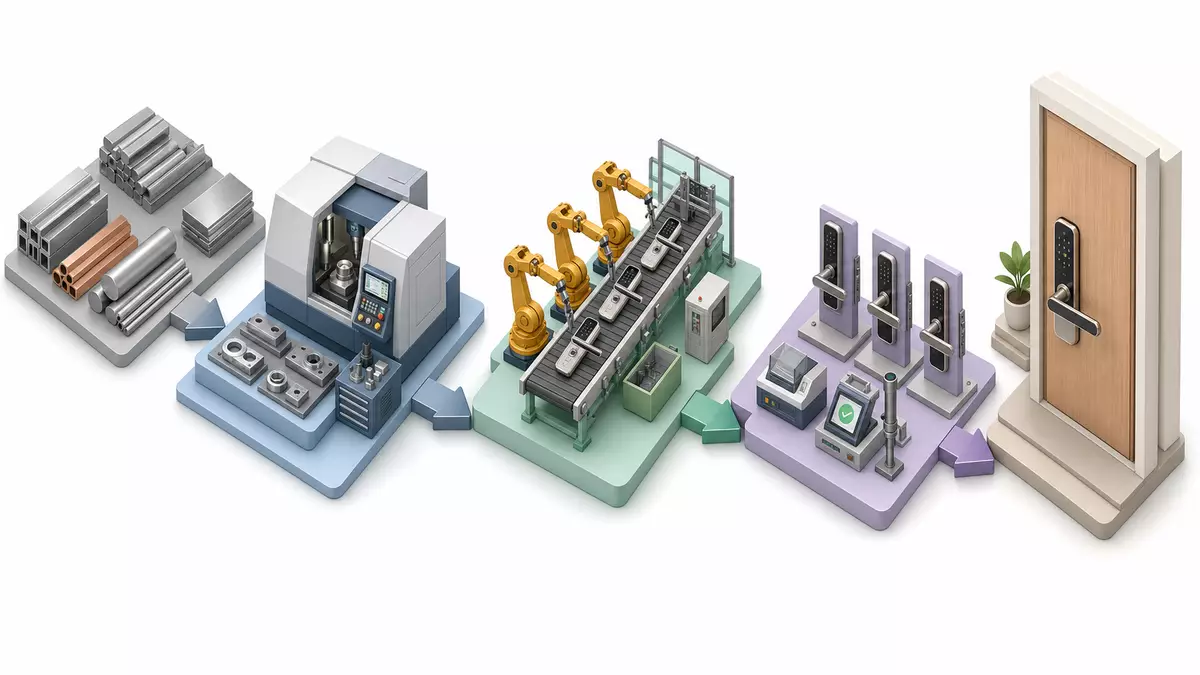
Assa Abloy B (ISIN SE0007100581) stock is trading against the backdrop of a partial divestment by its principal owner in May 2026, which still leaves that shareholder with 29% of the voting rights in the group as of August 18, 2026. This ownership shift comes as the wider investment portfolio has delivered a negative total return of -7.9% year-to-date, compared with a positive 10.6% move for the Swedish SIXRX index over the same period.
Principal owner trims stake but keeps control
A recent earnings call transcript for the owner of Assa Abloy B confirms that a partial divestment of holdings in Assa Abloy was executed in May 2026. After this transaction, the owner continues to hold 29% of Assa Abloy voting rights, maintaining its role as the principal shareholder while freeing capital for other uses. This balance between reducing exposure and sustaining influence is a central element of the current investment story around Assa Abloy B.
For investors, the fact that the principal owner still controls 29% of the votes signals ongoing strategic commitment, even with a smaller economic stake. Large voting blocks can stabilize governance, making hostile takeovers less likely and giving management a reliable partner for long-term decisions. At the same time, the divestment sends a clear message that capital allocation across the broader portfolio is being actively managed and is not static.
Portfolio performance and valuation context
The same earnings call data shows that as of August 18, 2026, the owner’s portfolio value stood at SEK 75 billion and had delivered a total return of -7.9% so far in 2026, while the SIXRX benchmark index gained 10.6% in the same period. That performance gap of 18.5 percentage points illustrates how exposure to industrial holdings, including Assa Abloy, has lagged the broader Swedish equity market during the year.
Within this portfolio, net asset value was SEK 203 per share at the end of June 2026, with the share price at SEK 193, implying a discount of 5% at that date. As of the day before the earnings call, net asset value per share had risen to SEK 204 while the share price closed at SEK 188, widening the discount to 8%. This shift from a 5% to an 8% discount between late June and mid-August means the market has become more cautious about the portfolio’s industrial investments even as underlying asset values have edged higher.
This discount matters for Assa Abloy B indirectly because the owner’s share price reflects investor sentiment toward its major holdings, including Assa Abloy. When the market assigns a wider discount to net asset value, it is effectively pricing in greater uncertainty or lower expected returns from the underlying companies, which may cap short-term upside for Assa Abloy B even if operational performance is solid.
Industrial investment strategy and implications
The owner’s strategy described in the earnings call emphasizes active management of its industrial investments while keeping sizable stakes in core companies such as Assa Abloy. By divesting part of the Assa Abloy holding and simultaneously retaining 29% of voting rights, the investor demonstrates a willingness to rebalance exposure while continuing to support strategic decisions at Assa Abloy.
For Assa Abloy B shareholders, this kind of stewardship can be positive. A principal owner with a large voting share can promote long-term initiatives such as digital security solutions, acquisitions, and efficiency programs that may not pay off immediately but build competitive advantages over several years. At the same time, partial divestments remind minority shareholders that even long-term owners may adjust their positions when valuations or capital needs change.
The year-to-date underperformance of the owner’s portfolio versus the SIXRX index suggests that the market currently favors other segments or individual equities over industrial holdings. If Assa Abloy can deliver stronger operating results in upcoming quarters, that could help narrow the portfolio’s performance gap and potentially reduce the net asset value discount, improving sentiment around Assa Abloy B.
Representative product: digital door locks
Assa Abloy B is widely associated with door opening solutions, and a representative example of its business is its range of digital door locks for residential and commercial properties. These products combine mechanical locking systems with electronic access control, allowing property owners to manage entry via keycards, PIN codes, or smartphone apps rather than traditional keys.
Digital door locks illustrate how Assa Abloy B seeks to move up the value chain from purely mechanical hardware to integrated security solutions. Such products can generate recurring revenue through software services or maintenance contracts, and they tend to carry higher margins than commoditized hardware. As smart-home adoption and connected-building technologies expand globally, demand for secure, user-friendly digital access solutions is likely to remain a strategic driver for the company’s growth.
Stock context and closing view
Assa Abloy B is primarily listed on the Stockholm exchange with trading in Swedish kronor, making it part of the Scandinavian industrial segment rather than a US primary listing. Investor attention today centers less on short-term price swings and more on the long-term alignment between the company and its principal owner, which still holds 29% of voting rights after the May 2026 divestment. That governance structure, combined with the portfolio’s current -7.9% total return versus a 10.6% gain for the SIXRX index year-to-date, frames the backdrop against which Assa Abloy B stock is being assessed by market participants.
Fact box
Company: Assa Abloy B
ISIN: SE0007100581
Ticker: ASSA B
Exchange: Nasdaq Stockholm
Sector / Industry: Industrials / Building products and security solutions
Index membership: Part of the Swedish equity benchmark universe


