

Black Friday shoppers beware: online shopping fraud is Switzerland’s most common cyber risk
Published on 11/16/2026 at 07:00 | dgap, AD HOC NEWS| Helvetia Baloise Holding AG / Key word(s): Study 16.11.2026 / 07:00 CET/CEST Media information Basel, 16 November 2026 Every year, Black Friday, Cyber Week and the Christmas shopping season attract millions of consumers online with enticing offers. At the same time, cybercriminals deliberately use consumers’ increased willingness to spend as a gateway to conduct scams. A representative survey conducted by research institute Ipsos on behalf of Helvetia shows that one in three adults in Switzerland has already been affected by cybercrime, either personally or within their household. Among those affected, online shopping fraud is the most common type of cybercrime, accounting for 42% of cases. Young adults are more likely to fall victim to cyber fraud than older people. Key findings at a glance: Roughly one in three people in Switzerland (31%) has already been affected by cybercrime, either directly (21%) and/or indirectly (12%). Among those affected by cybercrime, online shopping fraud is the most common type (42%), followed by phishing (29%) and the hacking of personal accounts (24%). Young adults aged 18 to 29 are particularly affected, with 34% having experienced cybercrime directly. This is significantly higher than among 50-to-59-year-olds, for example, where the figure is only 15%. Cybercrime results in financial losses in 52% of cases. The losses frequently range from CHF 101 to CHF 1,000 (38% of cases involving financial losses), while around a quarter (28%) result in losses exceeding CHF 5,000. 41% of respondents consider the risk of becoming a victim of cybercrime in the future to be very high (10%) or fairly high (31%). Only 15% are insured against cybercrime, while a further 33% would consider taking out cover in the future. Meanwhile, 19% believe they do not need cyber insurance, either now or in the future. Online shopping fraud is the most common type of cybercrime One in five adults in Switzerland (21%) has already been a victim of cybercrime, while 12% live in the same household as someone who has fallen victim to it. These are the findings of a representative survey of 1,000 people aged 18 to 74 in German- and French-speaking Switzerland. Online shopping fraud was the most common type of cybercrime experienced by those affected (42%), followed by phishing attacks (29%) and hacked user accounts (24%). “Many cybercrimes today do not start with a technical attack, but with a seemingly attractive offer. The risk of falling for fake online shops or fraudulent sales platforms increases during promotional periods in particular,” states Tobias Seitz, cyber insurance expert at Helvetia in Switzerland. Figure 1: Type of cybercrime “What type of cybercrime or online fraud have you been affected by? (Multiple answers possible)” 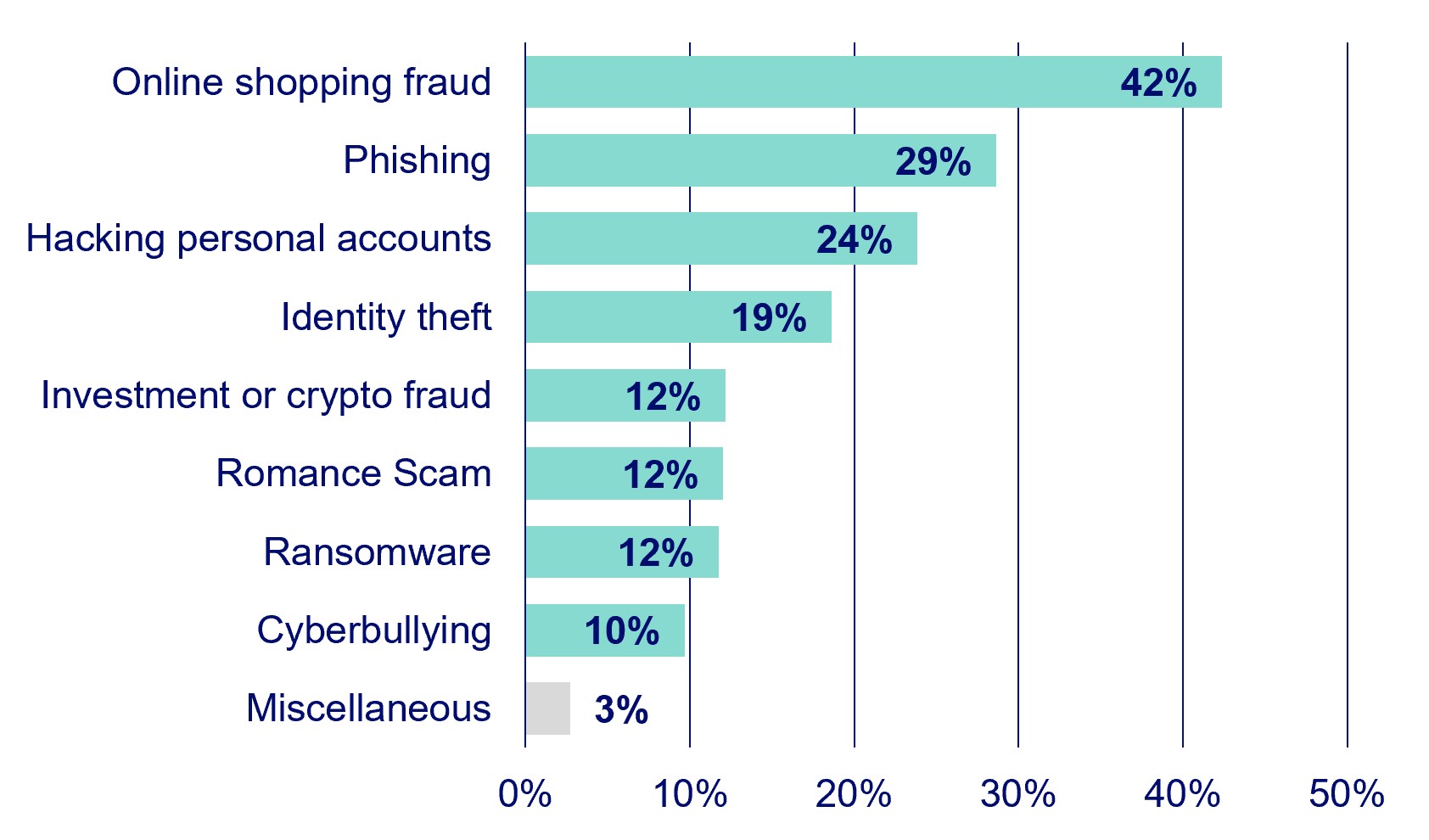 Young adults are particularly likely to be affected The study reveals significant differences between age groups. While 34% of 18- to 29-year-olds have already been personally affected by cybercrime, the proportion is considerably lower among both 50- to 59-year-olds and 70- to 74-year-olds, at 15% each. “Although, or perhaps precisely because, older generations did not grow up with digital technologies, they tend to behave more cautiously online than younger people,” explains Tobias Seitz, commenting on the study findings. Figure 2: Personal experiences of cybercrime “Have you personally been a victim of cybercrime or online fraud?” 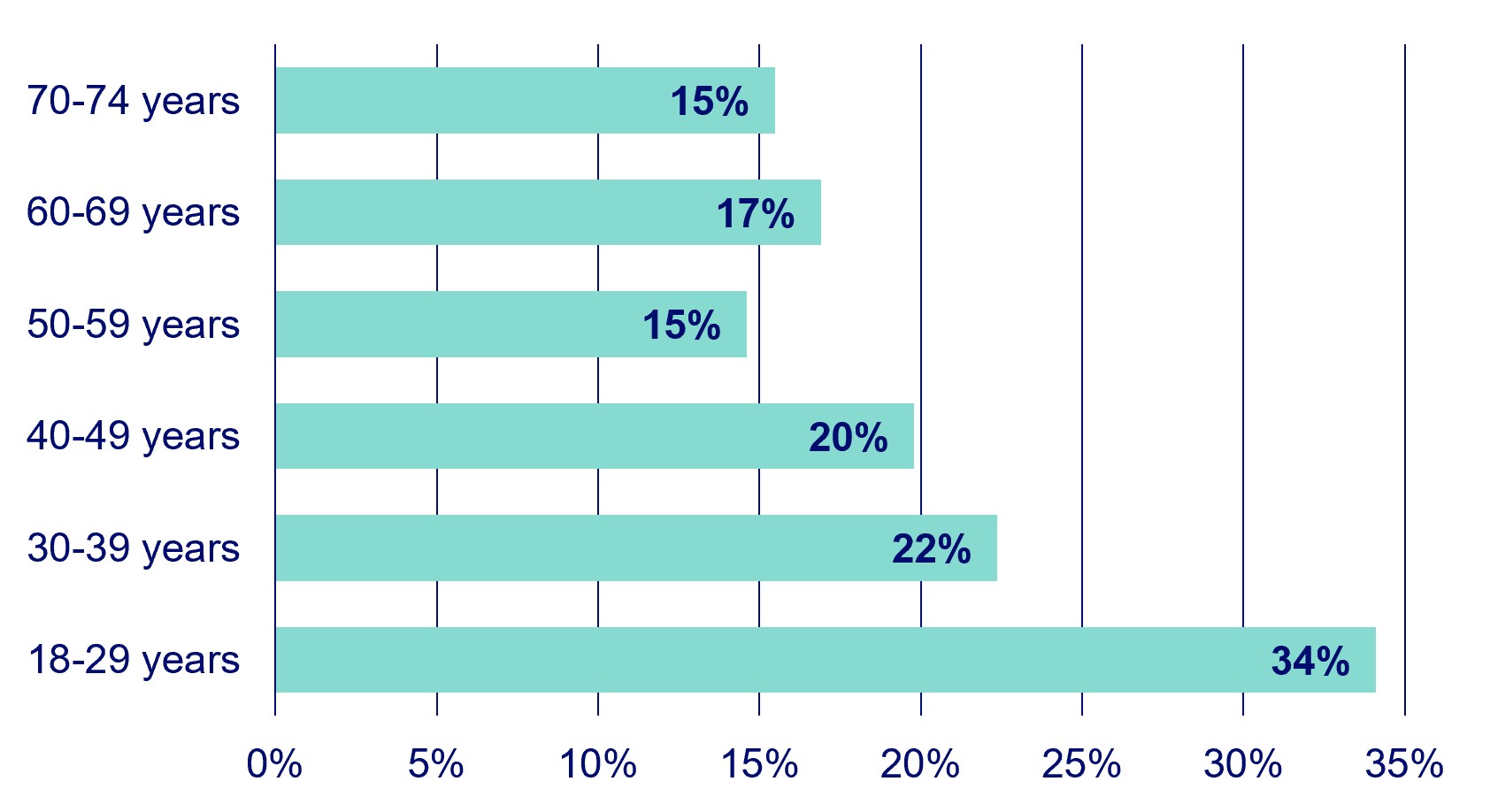 Differences are also apparent when it comes to education levels. People with lower levels of education are more likely to report such incidents (36%) than those with medium or higher levels of education (19% in each group). By contrast, differences between the language regions are minimal. In French-speaking Switzerland, 23% of respondents say they have been personally affected by cybercrime, compared with 21% in German-speaking Switzerland. Differences between women and men are also relatively minor, with 24% of men and 18% of women having already been victims of cybercrime. Women are more likely to cite phishing (35% versus 23%) as the type of fraud, while men more frequently report investment or cryptocurrency fraud (16% versus 8%). Cybercrime often causes significant financial losses Cybercrime has consequences for many victims. Some 52% of those affected have suffered financial losses. More than one in four people who suffered financial losses (28%) lost more than CHF 5,000. In 15% of cases, the losses even exceeded CHF 10,000. In most cases (38%), however, the amount lost was between CHF 101 and CHF 1,000. Figure 3: Financial losses caused by cybercrime “How much did you lose?” 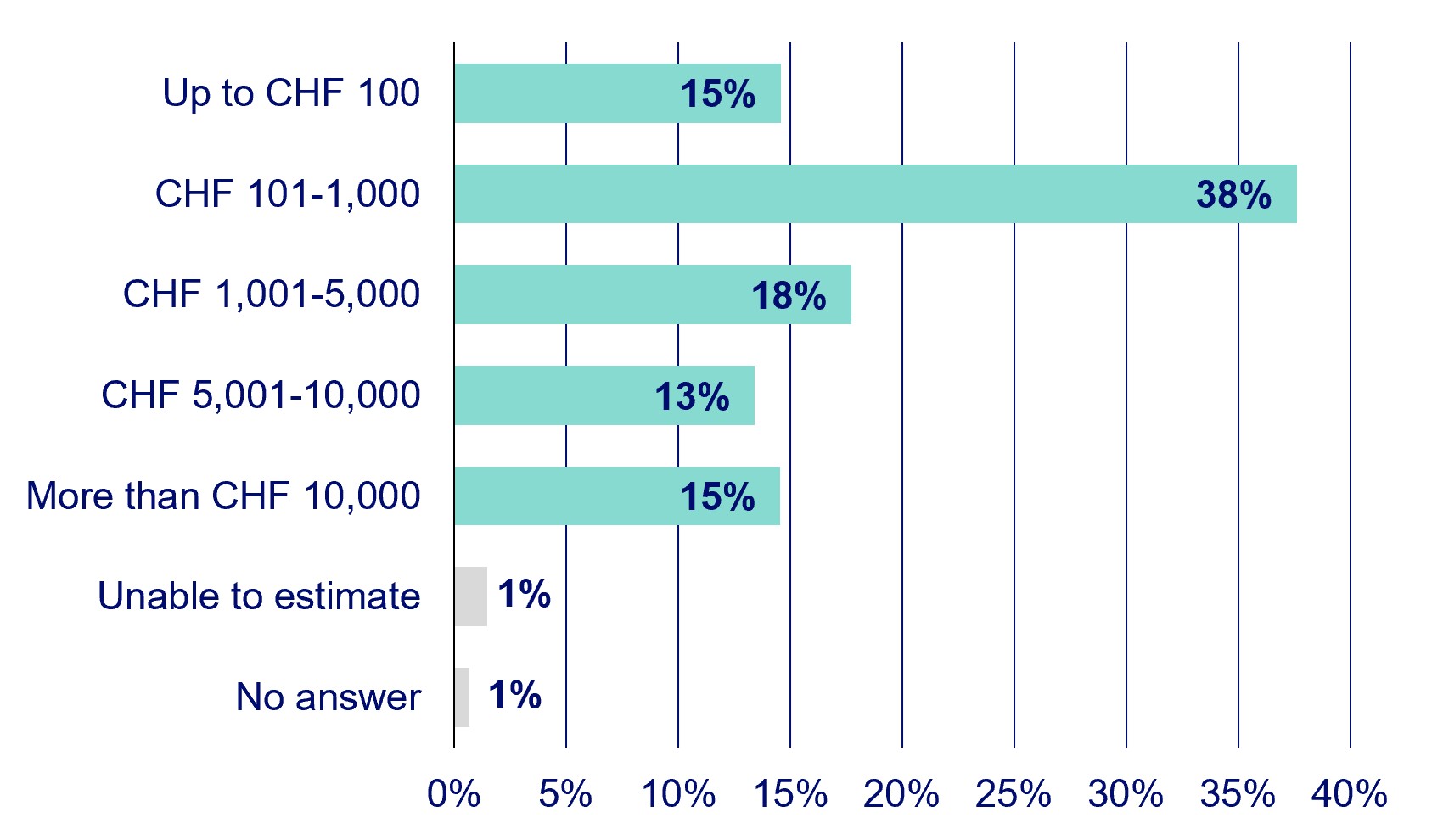 “Digital fraud has long ceased to be a minor offence. In addition to considerable financial losses, cybercrime often causes a great deal of frustration and requires significant time and effort to resolve. Taking preventive measures is therefore worthwhile in more ways than one,” advises Tobias Seitz. Four in ten people consider their cyber risk to be high Cybercrime is a concern for the Swiss population, not only because of incidents they have already experienced. Four in ten people (41%) consider their risk of falling victim to cybercrime in the future to be very high (10%) or fairly high (31%). Among people with lower levels of education, 18% consider their risk to be very high. Meanwhile, only 9% of people with medium or higher levels of education share the sentiment. By contrast, differences between genders and age groups are relatively small, indicating that cybercrime is widely perceived as a risk and affects the population as a whole. High awareness, but low insurance coverage Nevertheless, only 15% of people in Switzerland have cyber insurance. A further 33% are open to taking out such cover, while 19% would not currently consider doing so. “The risks in day-to-day digital life are increasing, as is awareness of the potentially significant financial consequences. The essential next step is to translate this awareness into concrete protective measures,” states Tobias Seitz, cyber insurance expert at Helvetia. Tips for safe online shopping Helvetia recommends taking the following precautionary measures in particular: Only make payments on trusted websites and use two-factor authentication wherever possible. Before making a purchase, check the online shop’s legal notice, contact details and web address. Be sceptical of offers with prices that seem unrealistically low. Check reviews and feedback from other customers. Keep order confirmations and proof of payment. About the survey The findings are based on a representative survey of 1,000 people aged 18 to 74 in German- and French-speaking Switzerland. The survey was conducted in October 2026 by market research institute Ipsos on behalf of Helvetia. The weighted sample is representative of Switzerland’s resident population in terms of key socio-demographic characteristics.
About Helvetia Baloise Helvetia Baloise is Switzerland’s largest multi-line insurer and one of Europe’s leading insurance groups. Every day, more than 20,000 employees work hard to support around 13 million customers with insurance, pension, and financial solutions. These customers range from individuals and small to medium-sized enterprises (SMEs) through to international customer groups, which also benefit from areas such as specialty insurance and reinsurance. Headquartered in Basel, Switzerland, Helvetia Baloise operates in eight European markets as well as in global specialty markets, combining its strong Swiss roots with a clear international focus. Helvetia Baloise creates safety and security and opens up opportunities, both today and in the future. Through profitable growth and business operations geared towards long-term stability, we create tailored solutions for our customers, provide an attractive and reliable investment for our shareholders, promote strong partnerships and offer rewarding career prospects for our employees. Helvetia Baloise Holding Ltd shares (HBAN) are listed on the SIX Swiss Exchange. Disclaimer This document has been produced by the Helvetia Baloise Group, and the recipient is not entitled to copy or modify, offer, sell or otherwise pass it to third parties without the consent of the Helvetia Baloise Group. The English version of the document is authoritative and binding. Versions of the document in other languages are for information only. Every reasonable effort has been made to ensure that the facts and opinions presented in this document are fair and reasonable. It should not be assumed that information and figures quoted from external sources have been verified or confirmed by the Helvetia Baloise Group. Neither the Helvetia Baloise Group as such nor its decision-making bodies, senior managers, employees and advisors or other persons accept any liability for losses arising directly or indirectly from the use of this information. The facts and information presented in this document are as up to date as possible, but may change in the future. Both the Helvetia Baloise Group as such and its decision-making bodies, senior managers, employees and advisors or other persons reject any explicit or implied liability or warranty for the accuracy or completeness of the information contained in this document. This document may contain forecasts or other forward-looking statements relating to the Helvetia Baloise Group that, by their nature, involve general and specific risks and uncertainties, and there is a danger that the forecasts, predictions, plans and other explicit or implied content of forward-looking statements may turn out to be incorrect. We would point out that a number of important factors may contribute to the actual outcomes varying greatly from the plans, objectives, expectations, estimates and intentions expressed in such forward-looking statements. These factors include: (1) changes to the general economic situation, particularly in the markets in which we operate, (2) developments in the financial markets, (3) interest-rate changes, (4) exchange-rate fluctuations, (5) changes to laws and regulations, including accounting principles and financial reporting practices, (6) risks associated with the implementation of our business strategies, (7) the frequency, scope and general level of claims, (8) mortality and morbidity rates, (9) policy renewal and lapse rates and (10) the extent to which economies of scale and scope can be realised. In this context, we would point out that the above list of important factors is not exhaustive. When assessing forward-looking statements, you should therefore examine the named factors and other uncertainties carefully. All forward-looking statements are based on information available to the Helvetia Baloise Group on the date of their publication. The Helvetia Baloise Group is only obliged to update such statements when required to do so by applicable law. End of Media Release View original content: EQS News |
| Language: | English |
| Company: | Helvetia Baloise Holding AG |
| Aeschengraben 21 | |
| 4001 Basel | |
| Switzerland | |
| Internet: | www.helvetia-baloise.com |
| ISIN: | CH0466642201 |
| Valor: | 46664220 |
| Listed: | SIX Swiss Exchange |
| EQS News ID: | 2435124 |
| End of News | EQS News Service |
| |
en | CH0466642201 | HELVETIA BALOISE HOLDING AG | boerse | 70519363 |


