
Qualcomm stock holds near $165 as Q3 2026 guidance offsets earnings miss and insider sale
Published on 08/14/2026 at 08:04 | Editorial responsibility: Rafael Müller, Editor-in-Chief AD HOC NEWS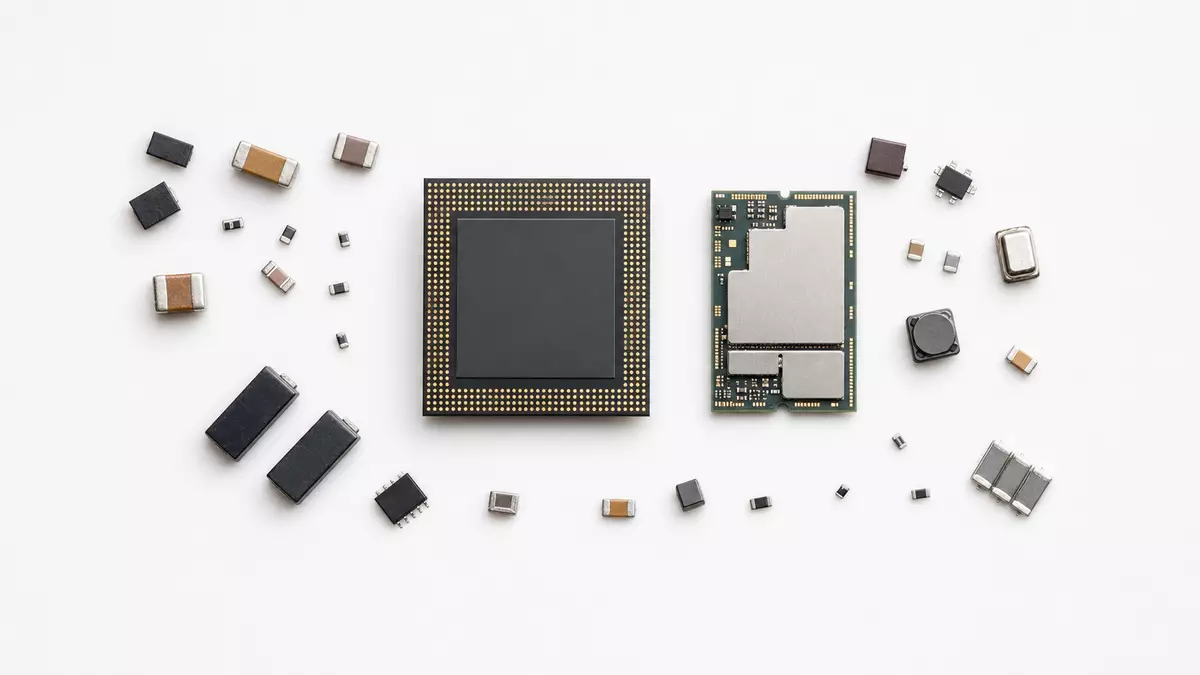
Qualcomm Inc. (ISIN US7475251036) stock is trading near $164 on Nasdaq as of August 13, 2026, reflecting a mixed reaction to fiscal third-quarter 2026 results that combined an earnings-per-share miss with solid revenue, stronger automotive and IoT growth, updated guidance and a recent insider sale by its finance chief. Per a detailed earnings overview reported in a MarketBeat summary, non-GAAP EPS in fiscal Q3 2026 came in at $2.21, slightly below a $2.23 consensus, while revenue reached $9.9 billion at the high end of guidance.
Q3 2026 earnings: modest EPS miss, revenue at guidance high
According to a transcript of Qualcomm's fiscal third-quarter 2026 earnings call, the company delivered revenue of $9.9 billion in the quarter, with management emphasizing that this result landed at the high end of its prior outlook despite a 4 percent year-over-year decline tied to a broader mobile market contraction. Non-GAAP earnings per share were $2.21 in fiscal Q3 2026, which, as summarized in a MarketBeat-based overview, fell $0.02 short of the roughly $2.23 analyst consensus and marked a decrease from the $2.77 per share earned in the same quarter a year earlier, a drop of $0.56 that highlights pressure on profitability as handset demand normalizes. The Q3 2026 earnings call transcript details that QTL licensing revenues were $1.3 billion with an EBT margin of 69 percent, in line with internal expectations, underscoring the continued strength of Qualcomm's intellectual-property monetization even as chip margins face short-term cost headwinds.
The same Q3 2026 call document shows that Qualcomm's QCT segment delivered revenue of $8.5 billion, a 5 percent decline year over year due to the contraction in the global smartphone market. Within that, handset revenue dropped to $5.1 billion and was down 20 percent compared with the year-ago quarter, reflecting weaker unit volumes and changes in memory and component pricing that impacted OEM bill-of-materials decisions. At the same time, QCT automotive revenue jumped to $1.6 billion, representing 61 percent year-over-year growth driven by accelerating demand for advanced driver-assistance systems, digital cockpits and connectivity, while QCT IoT revenue climbed to $1.8 billion, a 9 percent increase supported by industrial networking and robotics applications. The same Q3 2026 earnings documentation highlights this mix shift as a key strategic narrative, with shrinking handset revenue offset by expanding automotive and IoT contributions.
Guidance and consensus: flat to higher EPS, analysts recalibrate targets
Looking ahead to fiscal fourth quarter 2026, Qualcomm has provided guidance for revenue in a range of $9.7 billion to $10.5 billion, signaling an expectation of sequential top-line growth compared with the $9.9 billion delivered in Q3 2026 as Android-related demand improves even as Apple-related revenue declines. For non-GAAP EPS in Q4 2026, management forecasts a corridor of $2.05 to $2.25, indicating that earnings per share are projected to be roughly flat to slightly higher relative to the $2.21 booked in the just-reported third quarter. The Q4 2026 guidance discussion further notes a QCT EBT margin outlook of 23 percent to 25 percent, with management cautioning that short-term supply chain cost pressures and new business investments will temper profitability even as automotive and IoT revenue expand.
The MarketBeat-based overview of Qualcomm's latest results indicates that sell-side analysts, on average, now expect the company to deliver roughly $7.76 in non-GAAP EPS for the full fiscal year 2026. That consensus implies that Qualcomm must generate $5.55 in cumulative EPS across the remaining quarters after recording $2.21 in fiscal Q3 2026 to meet the $7.76 full-year target, underscoring how closely the upcoming Q4 performance and early fiscal 2027 trajectory will be watched by investors. At the same time, Qualcomm has raised its long-term nonhandset revenue ambitions, with the Q3 2026 call detailing a new fiscal 2029 target of $40 billion for nonhandset businesses and highlighting fiscal 2027 as a pivotal year in which accelerated growth from automotive, IoT and other connectivity segments is expected to offset a sharper revenue reduction from Apple. The long-range outlook commentary frames this pivot as central to Qualcomm's equity story, shifting investor focus from cyclical handset swings toward structural growth in connected vehicles, edge computing and AI-enabled devices.
In the wake of the Q3 2026 earnings release and guidance update, multiple analyst firms have adjusted their price targets and views on Qualcomm. A report on recent insider activity and analyst moves notes that one research house assumed coverage with a buy rating while setting a $235 price target, reduced from a previous $265 level as it trimmed fiscal 2026 and 2027 EPS estimates in response to near-term gross margin challenges and below-consensus guidance. Another firm raised its price target to $400, arguing that the accelerated timeline for Apple reducing its reliance on Qualcomm chips could, counterintuitively, improve the company's long-run earnings profile by freeing capacity and focus for higher-margin, diversified opportunities in automotive and AI-driven computing. A third analyst group lowered its price target to $165 from $200 and maintained a Neutral stance, citing concerns about competition in accelerator and CPU markets even as Qualcomm pushes deeper into those segments. A detailed note on insider transactions and analyst target changes shows that the range of revised targets brackets Qualcomm's current trading zone and illustrates a split between more optimistic and more cautious interpretations of the company's transition away from Apple volume.
Insider sale and valuation: CFO trims holdings as shares consolidate
The same insider-activity report highlights that Qualcomm's executive vice president, chief financial officer and chief operating officer, Akash Palkhiwala, recently sold shares in a series of transactions executed at prices between $161.7729 and $165.3368. Following those trades, he directly beneficially owns 20,684 shares of Qualcomm common stock. The insider sale comes at a time when Qualcomm shares are quoted around $163.07 and are down 4 percent year-to-date, according to the market snapshot embedded in that report. The insider transaction summary stresses that the sale coincided with the Q3 2026 earnings release and guidance update, meaning investors have interpreted the move in the broader context of Qualcomm's evolving business mix and margin trajectory rather than as an isolated signal.
An earlier analysis of Qualcomm's valuation around the time of the Q3 2026 report places the shares approximately at $163 on Nasdaq as of August 12, 2026, with price snapshots showing levels between $162.71 and $163.07 and a year-to-date performance of negative 3.91 percent. Using the fiscal Q3 2026 EPS of $2.21, that same valuation review calculates that at the $163 share price, Qualcomm is trading at 18.4 times quarterly annualized earnings and about 21 times the current-year EPS consensus of $7.76. The valuation-focused commentary interprets this multiple as evidence that investors are willing to pay a premium for Qualcomm's shares despite the modest Q3 earnings miss and insider selling, reflecting confidence in the company's long-term growth prospects in automotive connectivity, IoT and AI accelerators.
Additional real-time quote data captured in a stock-price overview shows Qualcomm trading at $164.22, with the page indicating a positive single-session percentage move that pushed the shares higher into the mid-$160 range. While the exact intraday percentage change is not the primary focus, this data point reinforces that the stock has recently been holding near or slightly above the $163 valuation mark discussed in earlier analyses, suggesting a consolidation pattern rather than sharp volatility in the immediate aftermath of Q3 2026 earnings and related news. The live stock-price overview supports the narrative that Qualcomm's shares are digesting a mix of positive and negative factors while staying anchored in a relatively tight trading band.
Automotive and IoT: growth engines behind Qualcomm's strategy
Beyond the headline numbers and guidance, the composition of Qualcomm's revenue in fiscal Q3 2026 sheds light on where the company's future growth is likely to come from. QCT automotive revenue of $1.6 billion in Q3 2026, up 61 percent from the prior-year quarter, underscores how quickly the firm's in-vehicle compute and connectivity platforms are gaining traction with automakers and tier-one suppliers. This growth reflects rising semiconductor content per vehicle, with digital instrument clusters, infotainment systems, advanced driver-assistance features and vehicle-to-cloud connectivity all increasing their reliance on sophisticated system-on-chip designs and software platforms. By comparison, QCT IoT revenue of $1.8 billion, up 9 percent year over year in Q3 2026, points to steady expansion in edge devices, industrial sensors, robotics and networking infrastructure that depend on Qualcomm silicon and reference designs.
As handset revenue fell 20 percent year over year to $5.1 billion in fiscal Q3 2026, the relative contribution of automotive and IoT to QCT revenue became more pronounced. The fact that automotive grew more than six times faster than IoT on a percentage basis in the quarter, yet still remains smaller in absolute dollar terms, suggests considerable runway ahead if current adoption trends continue. Qualcomm's long-term target of $40 billion in nonhandset revenue by fiscal 2029, highlighted in the Q3 2026 call, effectively embeds an assumption that automotive and IoT will scale substantially from their current combined quarterly run rate of $3.4 billion. Investors tracking the stock increasingly focus on these segments, not only because they diversify Qualcomm away from the cyclical smartphone market but also because they could carry structurally higher margins once early investment phases give way to operating leverage.
For instance, in automotive, each new platform win can translate into per-vehicle revenue over a model's lifespan, with opportunities to upsell additional features or software subscriptions. In IoT, the proliferation of connected devices across manufacturing, logistics, healthcare and smart cities adds breadth to Qualcomm's addressable market. The raised nonhandset revenue target to $40 billion by fiscal 2029 signals management's confidence that these drivers will accelerate meaningfully by fiscal 2027, the year it expects growth from automotive and IoT to offset the accelerated reduction in Apple-related revenue. For Qualcomm stock, this strategic pivot is critical to supporting the roughly 21 times current-year EPS multiple identified in the valuation discussion, as investors will need to see tangible progress toward those nonhandset milestones to justify a premium valuation.
Apple exposure and margin dynamics
A central element of Qualcomm's transition story is the evolving relationship with Apple. The Q3 2026 earnings materials highlight that for the upcoming iPhone launch cycle, Qualcomm's share of Apple modem volumes is expected to be materially lower than the 20 percent level previously assumed, with management forecasting a 50 percent sequential revenue decline from September to December tied to the Apple business. This accelerated exit timeline reduces Qualcomm's near-term revenue base but aligns with its strategic desire to redeploy engineering and capacity toward nonhandset areas such as automotive and edge computing. The shift also has implications for profitability, as Apple-related volume historically contributed significant scale to Qualcomm's modem operations.
Near-term, Qualcomm's guidance flags that QCT margins are under pressure from supply chain costs and investments in new business areas, resulting in a Q4 2026 EBT margin outlook of 23 percent to 25 percent. This compares with the 69 percent EBT margin achieved in QTL licensing for Q3 2026, underscoring the difference between the capital-light, royalty-driven licensing model and the more capital-intensive chip manufacturing and systems design business. Some analysts have reacted by lowering price targets, pointing to risks that competitive dynamics in accelerators and CPUs could squeeze margins further if Qualcomm has to invest heavily to keep pace with rivals. Others see the margin headwinds as transitory, arguing that once automotive and IoT volumes scale and the Apple exit is fully digested, Qualcomm could achieve a more balanced, higher-margin portfolio.
For investors, the key question is how quickly the company can translate its long-term nonhandset revenue ambitions into concrete quarterly numbers without sacrificing profitability. The quantified comparison between the Q3 2026 EPS of $2.21 and the prior-year quarter's $2.77, and between the Q4 2026 EPS guidance range of $2.05 to $2.25 and the Q3 2026 base, provides a framework for assessing whether earnings are stabilizing, declining further or beginning to recover. Similarly, the move from the current-year EPS consensus of $7.76 toward the longer-range nonhandset revenue target of $40 billion by fiscal 2029 will be monitored as a measure of Qualcomm's ability to execute on its diversification plan.
Snapdragon platforms: core to Qualcomm's growth narrative
A cornerstone of Qualcomm's product strategy across smartphones, PCs, automotive and IoT is its Snapdragon family of system-on-chip platforms. These chips integrate CPU cores, GPU capabilities, modem connectivity, AI accelerators and power-management features into a single package designed to deliver high performance at low power consumption, making them well suited for mobile and edge applications. In the smartphone market, Snapdragon platforms power devices across multiple price points, from premium flagships with advanced camera and gaming features to mainstream models that focus on balanced performance and battery life.
Beyond phones, Snapdragon platforms increasingly underpin Qualcomm's ambitions in connected cars and smart devices. In automotive, specialized Snapdragon offerings provide the compute backbone for digital cockpits, driver-assistance systems and in-vehicle infotainment, enabling richer user experiences and over-the-air software updates. In IoT, Snapdragon-based modules and reference designs support industrial sensors, surveillance systems, consumer wearables and other connected endpoints. As Qualcomm shifts its revenue mix away from traditional handset dependence toward these newer segments, Snapdragon acts as the unifying architecture that can be adapted and tuned for different form factors and use cases.
This role makes Snapdragon highly relevant to the equity story behind Qualcomm stock. The growth in QCT automotive and IoT revenue seen in fiscal Q3 2026, combined with the company's long-term nonhandset revenue targets and analysts' recalibrated price views, suggests that investors are increasingly valuing Qualcomm on its ability to extend Snapdragon and related technologies into high-growth areas such as autonomous driving, industrial automation and AI at the edge. The execution of this roadmap will influence whether the premium valuation multiples identified in recent analyses remain justified.
Qualcomm shares and current market context
Based on recent trading snapshots, Qualcomm shares ended regular trading at $164.79 on August 13, 2026, with extended-hours activity lifting the price to $165.65 later that day. A broader news overview frames this move as part of a market environment where semiconductor and AI-related stocks have been seeing renewed interest, though individual company performance still depends on specific earnings and guidance outcomes. With Qualcomm's shares roughly flat to slightly negative for the year at around negative 3.91 percent performance as of August 12, 2026, investors appear to be balancing caution about near-term handset and margin pressures against optimism about automotive, IoT and AI growth.
For US retail investors, the current state of Qualcomm stock as of August 13, 2026, can be summarized by a few key numbers: a share price in the mid-$160s on Nasdaq, fiscal Q3 2026 revenue of $9.9 billion down 4 percent year over year, non-GAAP EPS of $2.21 down $0.56 from the prior-year quarter, Q4 2026 EPS guidance of $2.05 to $2.25, a full-year 2026 EPS consensus of $7.76, and a long-term nonhandset revenue target of $40 billion for fiscal 2029. Overlaying these figures with the insider sale at prices between $161.7729 and $165.3368 and the analyst target range spanning $165 to $400, the picture emerges of a stock consolidating at a valuation that prices in both execution risk and substantial upside potential if Qualcomm delivers on its diversification and margin-improvement plans.
Read more
More on Qualcomm stock
Snapdragon chips power devices and vehicles
Qualcomm's Snapdragon platforms serve as the computational heart of many smartphones, connected vehicles and IoT devices, combining processing power, graphics, AI acceleration and advanced connectivity in a single chip portfolio that underpins the company's growth in automotive and edge computing markets.
Nasdaq-listed Qualcomm stock price snapshot
As of August 13, 2026, Qualcomm stock closed regular Nasdaq trading at $164.79 and traded at $165.65 in extended hours, placing the shares just above the $163 valuation level highlighted in recent analyses and reinforcing that the stock is currently consolidating in the mid-$160 range while investors digest the Q3 2026 earnings miss, updated guidance, insider activity and long-term nonhandset growth targets.
Fact box
Company: Qualcomm Inc.
ISIN: US7475251036
Ticker: QCOM
Exchange: Nasdaq
Price (as of August 13, 2026, 4:00 p.m. ET): $164.79 USD
Market cap: $Market cap data as of latest available date
Sector / Industry: Information technology / Semiconductors and wireless communications
Index membership: S&P 500


