Air Liquide’s €200M Bet Underpins SK Hynix’s $1 Trillion AI Chip Machine
03.06.2026 - 17:35:16 | boerse-global.de
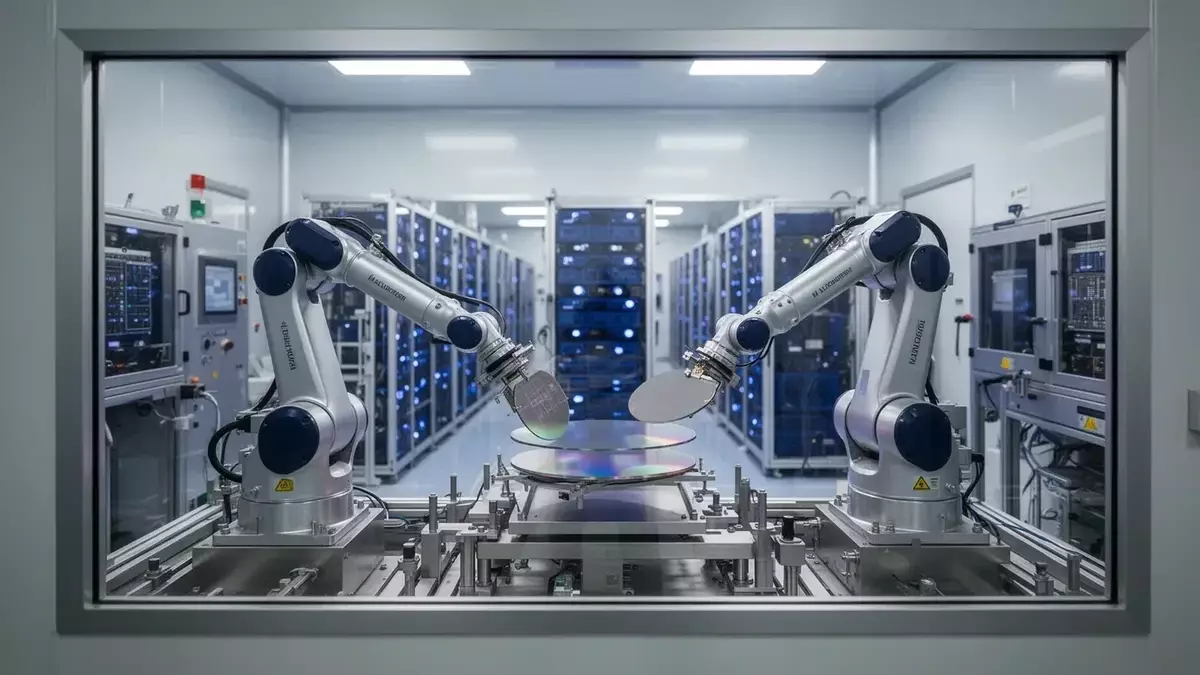
A French industrial gas giant is sinking nearly €200 million into South Korea to keep SK Hynix’s next-generation memory factory running. Air Liquide has signed a long-term supply deal for ultra-high-purity gases and compressed air destined for the chipmaker’s new P&T7 packaging and test facility in Cheongju, with operations slated to begin by the end of 2027. The move guarantees the infrastructure SK Hynix needs to scale its High Bandwidth Memory production — the core component powering Nvidia’s AI systems.
That demand is already rewriting the company’s financial record books. SK Hynix breached the $1 trillion market capitalisation mark on 2 June 2026, reaching roughly $1.06 trillion as its stock more than doubled over the preceding twelve months. The valuation rests on first-quarter numbers that leave little room for debate: operating profit hit 37.61 trillion won (about $25 billion), a 405% surge from the year-ago period, while revenue nearly tripled to 52.58 trillion won. The operating margin stood at 72%.
The primary driver is HBM, which now accounts for around 30% of total DRAM shipments and is expected to represent 41% of DRAM revenue in 2026. SK Hynix commands a 58% share of the global HBM market — a lead it reinforced at the Computex 2026 trade show in Taipei, where Nvidia chief Jensen Huang personally autographed an HBM4E wafer with the plea “Please Make More.” Huang’s message underscored the urgency behind Nvidia’s upcoming “Vera Rubin” system, set for full production in the second half of 2026 and already straining supply chains.
SK Group Chairman Chey Tae-won used the same Taipei stage to announce a doubling of wafer production capacity within five years, warning that structural memory shortages could persist until at least 2030. New fabrication plants typically take three to five years to build, so the company is accelerating its capital expenditure. The price dynamics support that urgency: DRAM contract prices, already up 90–98% in the first quarter, are expected to climb another 58–63% in the second quarter of 2026.
Should investors sell immediately? Or is it worth buying SK Hynix?
Goldman Sachs has responded by raising its 2028 operating profit forecast for SK Hynix by 24%, to roughly $300 billion. The bank’s analysts argue that memory chips have shed their commodity cyclicity and now rank as strategic AI infrastructure.
Yet the euphoria has triggered profit-taking. Over the 18 trading days through 3 June, foreign investors sold a net 60 trillion won (about $43 billion) in Seoul, with SK Hynix and Samsung Electronics accounting for 83% of that exodus. Analysts interpret the selling as tactical rather than a structural exit from semiconductors. In Frankfurt, SK Hynix depositary receipts edged up 0.72% to €1,385.00 on Wednesday.
Meanwhile, the group is reshaping its supply chain. On 28 May, Doosan acquired 70.6% of SK Siltron, the wafer-making subsidiary, for about $3.3 billion. That includes SK Group’s 51% stake; negotiations continue for Chairman Chey’s personal 29.4% holding. The move frees up capital as SK Hynix pursues a development race with Samsung on HBM5 — a contest likely to define market leadership through 2028.
SK Hynix at a turning point? This analysis reveals what investors need to know now.
From 11 to 13 July, SK Group will convene its “New Icheon Forum” under the banner “AI acceleration,” where Chey and top executives from key affiliates are expected to sharpen the group’s artificial intelligence strategy. The message from both the factory floor and the trading floor is clear: the only limit is how fast the infrastructure can be built.
Ad
SK Hynix Stock: New Analysis - 3 June
Fresh SK Hynix information released. What's the impact for investors? Our latest independent report examines recent figures and market trends.