Airbus Expands Assembly Capacity as Engine Drought and Cost Hikes Fuel CEO’s Broader Frustration
Published on 06/17/2026 at 16:05 | Redaktion boerse-global.de
Airbus chief executive Guillaume Faury has broken with the typically diplomatic tone of European industrial leadership, using the inauguration of a second A321neo assembly line in Toulouse to launch a sharp critique of the bloc’s regulatory and cost environment. Speaking on Monday, Faury described a personal sense of “irritation” at the continent’s slow response to competitive pressures from the United States and China, pointing to higher French labour costs, significantly more expensive energy, and a “terrible” web of regulatory barriers that he says are eroding the competitiveness of Europe’s industrial base. The A321neo, he acknowledged, is a European success story — but one that depends on a supportive framework that is no longer guaranteed.
The new assembly hall occupies the very site once used for the A380 superjumbo, a symbolic shift from the era of massive quadjets to the single-aisle workhorses that now dominate Airbus’s backlog. Yet even as the company accelerates production of its most sought-after narrowbody, finished fuselages are piling up outside the factory, waiting for engines from Pratt & Whitney. That bottleneck has dogged delivery targets for months and was a key factor behind a disappointing first-quarter 2026 performance, when Airbus delivered fewer jets than expected due to timing issues, rework on fuselage panels, and persistent powerplant scarcity.
Despite those headwinds, Airbus is sticking to its full-year guidance of roughly 870 deliveries, an adjusted EBIT of €7.5 billion and free cash flow of €4.5 billion before customer financing. The company’s order book continues to swell, reaching 9,247 aircraft at the end of May — a net increase of 276 units from April, with 7,493 of those being A320neo-family jets. The order inflow got a further boost on June 15, when Europe’s largest air ambulance provider, Avincis, signed a deal for up to 15 H145 helicopters to be deployed across Scandinavia, Italy and Spain for emergency medical services and offshore transport. Avincis simultaneously ordered another 15 helicopters from Leonardo, bringing its total new fleet commitment to 30 machines. For Airbus Helicopters, the contract underscores the sustained demand for the H145, of which more than 1,800 examples globally have logged over 8.5 million flight hours.
Should investors sell immediately? Or is it worth buying Airbus?
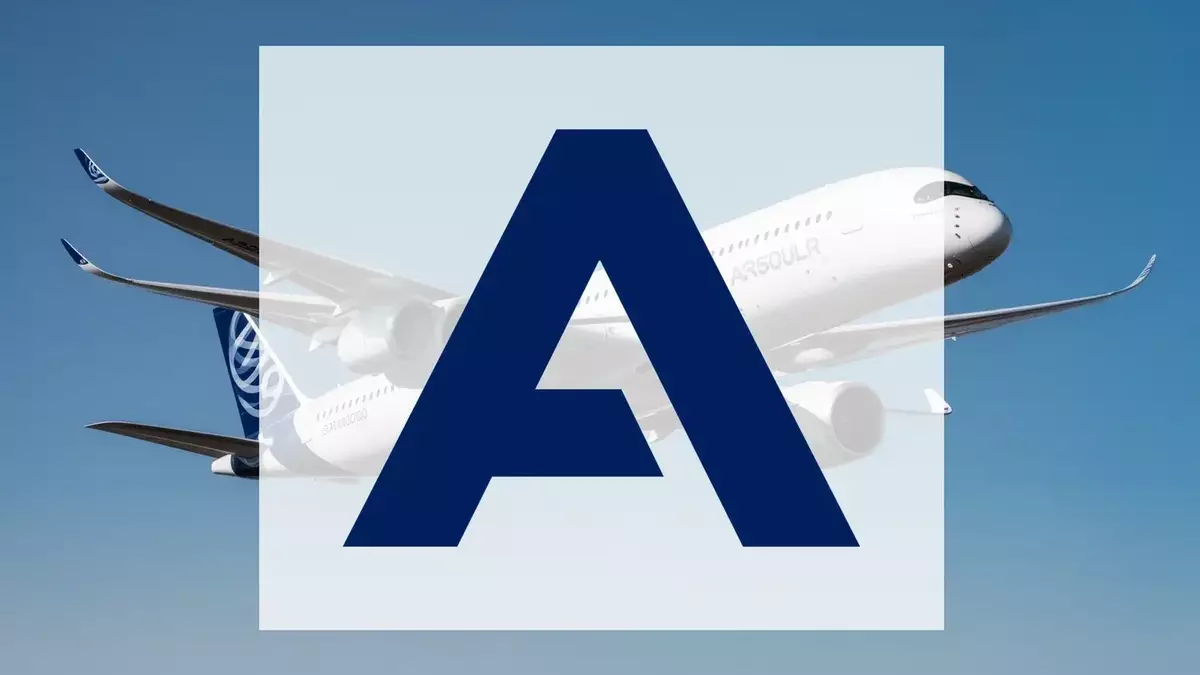
Away from the rotorcraft side, Airbus is also making headway on long-haul ambitions. The first A350-1000ULR destined for Qantas completed its maiden flight on June 2 from Toulouse, lasting three hours and 43 minutes and climbing to roughly 41,000 feet. A two-month test programme involving around 80 flight hours now follows, with Qantas expecting its first delivery in April 2027 — later than originally planned due to supply-chain disruptions that forced Airbus to push back the timeline. The ULR variant is central to Qantas’s Project Sunrise, which aims to operate non-stop flights from Australia to London and New York.
Meanwhile, Airbus used the VivaTech conference in Paris from June 17 to 20 to showcase an “invisible shield” concept that weaves together artificial intelligence, connectivity and space technology to protect against physical and digital threats. Among the displays was the Optimate demonstrator from Airbus UpNext, an automation system designed to assist pilots during ground taxiing. While these defence and space applications remain a small slice of the group’s revenue, they help diversify the portfolio as the commercial arm works through its production snags.
Delivery data for the first five months of 2026 show Airbus has handed over 262 aircraft — more than Boeing in the same period — but the figures also reveal a lingering fragility. In May alone, only about 70% of the planes actually delivered came from that month’s production; the rest were drawn from inventory, suggesting that factory throughput has yet to stabilise enough to hit the annual target of 870 without relying on stockpiled units.
The stock has rebounded sharply from its 52-week low of €38.40 reached in March, closing at €45.60 on Tuesday — a gain of roughly 18%. Over the past 30 days, the shares have risen about 11.2%, but they remain 6.9% below the start of the year and 17% off the January peak of €55.00. The market’s next real test will come with the half-year results, typically released at the end of July, which should show whether Airbus can sustain its production recovery — or whether the engine logjam and cost pressures Faury railed against will continue to hold back Europe’s flagship aerospace manufacturer.
Ad
Airbus Stock: New Analysis - 17 June
Fresh Airbus information released. What's the impact for investors? Our latest independent report examines recent figures and market trends.
Disclaimer regarding our articles: No investment advice, no buy or sell recommendation. Information on prices, companies, and markets is provided without guarantee; changes are possible at any time. Stock market transactions can lead to substantial losses. Our articles are created and reviewed in whole or in part automatically with the support of AI.