Almonty Stock Sheds 5.5% in a Day, Yet the Sangdong Mine Is Finally Producing Saleable Tungsten
Published on 07/27/2026 at 13:03 | Redaktion boerse-global.de
The arithmetic looks brutal on the surface. Almonty Industries shares slid 5.52 percent on Friday to C$18.81, pushing the stock 43.6 percent below its 52-week high of C$33.35 reached on April 17, 2026. The monthly decline stands at 18.22 percent, and the equity now trades beneath its 200-day moving average of C$19.15 — a threshold many technicians interpret as a bearish signal for long-term sentiment.
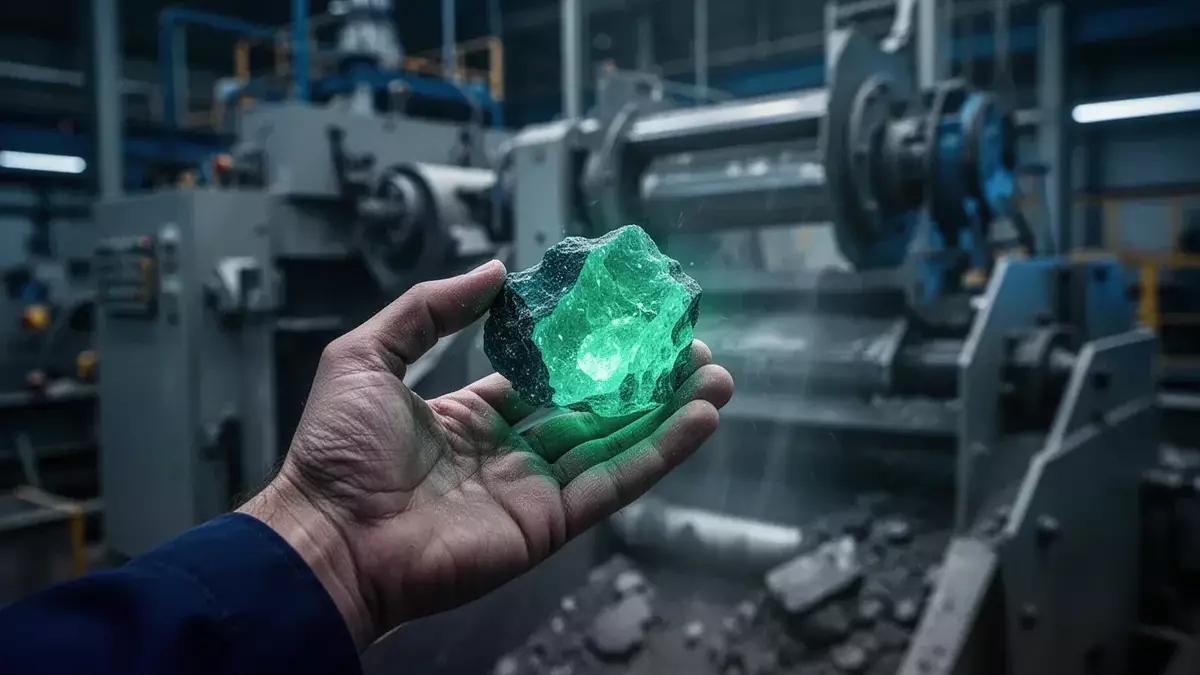
Yet the operational picture tells a fundamentally different story. The Sangdong mine in South Korea has begun producing saleable tungsten concentrate, marking the company's transition from development-stage miner to active, revenue-generating producer. The disconnect between price action and operational progress is stark, and it demands a closer look at what is actually driving the selling.
Structural Selling, Not Fundamental Deterioration
The most immediate explanation for the pressure on Almonty's stock has nothing to do with tungsten grades or offtake contracts. The company is voluntarily delisting from the Toronto Stock Exchange, effective July 31, 2026, followed by the Australian Securities Exchange on September 1, 2026. Such moves almost always trigger temporary liquidation pressure. Regional funds and retail investors restricted from holding positions on the Nasdaq or in Frankfurt are forced to sell, regardless of their view on the company's prospects.
This structural selling explains why the stock has fallen even as the company hits major milestones. The relative strength index sits at 38.8, approaching oversold territory, which suggests the cleansing process may be nearing its limits rather than signaling a fundamental breakdown.
Should investors sell immediately? Or is it worth buying Almonty?
The $490 Million Contract That Changes the Revenue Picture
While the chart watchers focus on moving averages, the commercial foundation of the business has strengthened considerably. On July 14, 2026, Almonty announced a significant expansion of its long-term offtake agreement with Global Tungsten & Powders. The Sangdong Phase I delivery term extends from 15 to 21 years, while the contracted volume jumps 40 percent to 4.41 million MTU.
The improved pricing terms lift expected annual revenue to roughly $490 million at current tungsten prices. Management estimates the contract alone adds at least $30 million in additional annual revenue. For a company with a market capitalization of €3.33 billion, securing such long-term price visibility in the commodities space is rare and valuable.
Crucially, the agreement covers only Phase I production at Sangdong. It does not include the planned Phase II expansion, which would roughly double the mine's annual processing capacity, nor does it encompass output from Almonty's other operations. That leaves room for further upside that is not yet priced into the stock.
The Grade Question Hangs Over Near-Term Momentum
The market's skepticism is not entirely misplaced. While Sangdong is now processing material through its newly commissioned mill, the plant is currently running on stockpiled low-grade ore. Higher-grade feed is expected to follow as the process advances, but the timing of that transition is the single most important operational variable in the near term.
Sangdong's average ore grade is roughly three times higher than that of Almonty's Portuguese Panasqueira mine. Whether the company can deliver that grade uplift on schedule will determine how quickly the expanded offtake agreement translates into reported revenue. If the transition to higher-grade material proceeds smoothly, Almonty could convert its contract visibility into cash flow before investor patience runs thin. If it stalls, the gap to the 52-week high could widen further.
Russell Index Inclusion Adds Institutional Ballast
On the positive side of the ledger, Almonty's June 2026 inclusion in the Russell 1000 and Russell 3000 indices opens the door to institutional investors who were previously unable to hold the stock. The consolidation of trading onto the Nasdaq under ticker ALM and the Frankfurt exchange should improve liquidity over time, even if the near-term delisting process creates temporary disruption.
DA Davidson responded by raising its price target while maintaining a buy rating, citing higher long-term tungsten price assumptions that the bank itself describes as conservative relative to current spot levels. If tungsten prices remain elevated — driven by Western defense procurement and constrained Chinese supply — the expanded contract volumes and higher realized prices could drive revenue growth well beyond what is currently discounted.
Almonty at a turning point? This analysis reveals what investors need to know now.
The Volatility That Comes With a Turning Point
The stock's annualized 30-day volatility stands at over 81 percent. The shares trade 20.99 percent below their 50-day average. These are not the hallmarks of a calm, orderly market. They are the fingerprints of a stock caught between structural selling from exchange departures and genuine operational progress that could redefine the company's earnings power.
Year-to-date, Almonty shares are still up 55.84 percent. Over twelve months, the gain is 281.54 percent. The current correction looks more like a cleansing of the shareholder register than a repudiation of the company's strategic position as a conflict-free tungsten supplier to Western defense and industrial markets.
The next concrete signal will be the speed at which Sangdong's ore mix shifts from initial low-grade stockpiles to higher-grade feed. Combined with the coming quarterly reports on shipped volumes and realized APT prices, those numbers will determine whether the expanded offtake terms actually arrive in reported revenue — or whether the market's skepticism proves justified.
Ad
Almonty Stock: New Analysis - 27 July
Fresh Almonty information released. What's the impact for investors? Our latest independent report examines recent figures and market trends.
Disclaimer regarding our articles: No investment advice, no buy or sell recommendation. Information on prices, companies, and markets is provided without guarantee; changes are possible at any time. Stock market transactions can lead to substantial losses. Our articles are created and reviewed in whole or in part automatically with the support of AI.