BASF stock trades steady as Q1 earnings and dividend frame valuation
Published on 07/24/2026 at 14:18 | Editorial responsibility: Rafael Müller, Editor-in-Chief AD HOC NEWS
BASF SE (ISIN DE000BASF111) sits at the center of global basic and specialty chemicals, and BASF stock reflects a mix of softer top-line trends and disciplined capital allocation after the group’s recent quarterly earnings and annual dividend decisions. According to the company’s latest published figures for Q1 2026, BASF generated sales of around EUR 17.8 billion compared with approximately EUR 19.3 billion in Q1 2025, while raising operating profitability and maintaining a substantial cash return to shareholders via its dividend policy. For investors, the interplay between volume trends, pricing, energy costs and the resilience of BASF’s diversified portfolio is now a central element in how BASF stock is valued.
Q1 2026 revenue around EUR 17.8 billion
According to BASF’s Q1 2026 financial report as published on the company’s investor relations pages, sales for the first quarter of 2026 were approximately EUR 17.8 billion, down from about EUR 19.3 billion in the same quarter of 2025 as lower prices and volumes weighed on several segments. The decline of roughly EUR 1.5 billion, or close to 8%, underlines how weaker industrial demand and normalization after previous periods of elevated pricing have affected BASF’s revenue base. At the same time, the company reported an increase in EBIT before special items versus the prior-year quarter, supported by cost measures and a more favorable mix in higher-margin areas. This combination of lower sales but improved operating earnings is critical for assessing how BASF stock may respond to changes in global economic momentum and chemical cycle dynamics.
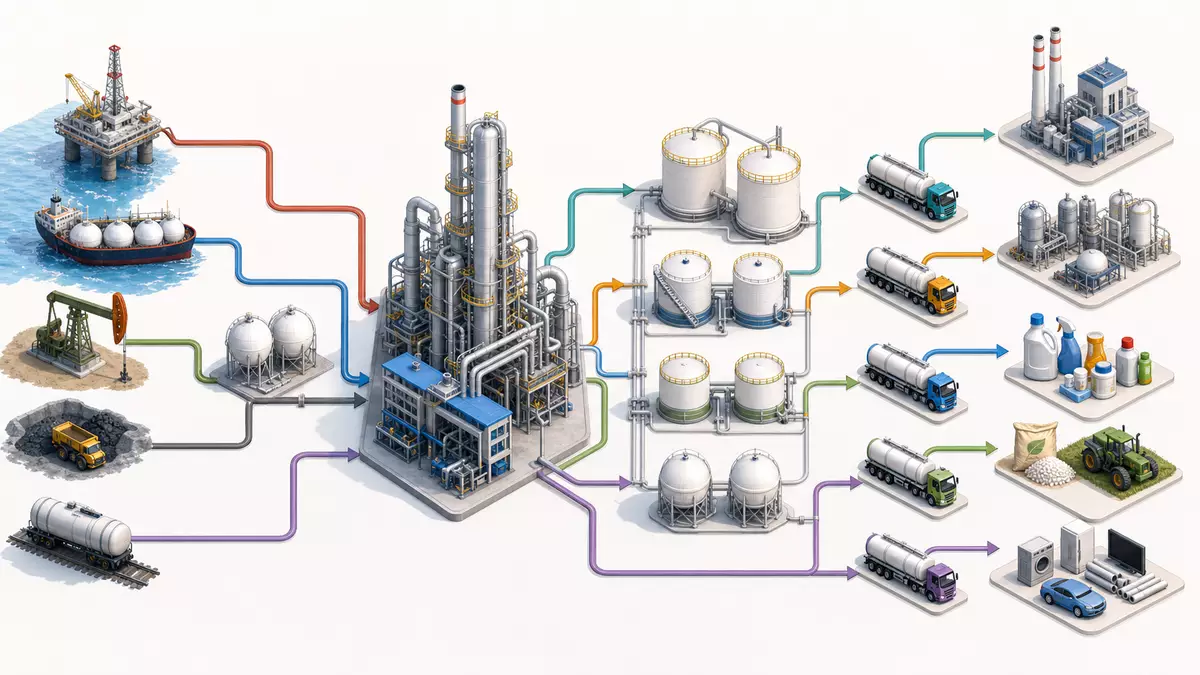
In the Chemicals segment, BASF saw sales move lower year on year but worked to stabilize margins by adjusting capacity utilization and focusing on more profitable product streams. In the Materials and Industrial Solutions segments, revenue also eased compared with Q1 2025 as end markets such as automotive, construction and consumer goods showed mixed demand patterns. However, the company’s integrated Verbund model, which connects production plants and value chains, continued to deliver cost efficiencies by optimizing energy use and feedstock flows across its sites. For BASF stock, the fact that revenue pressure did not translate into a proportionate deterioration in operating earnings is an important datapoint for investors who are monitoring cyclical risks.
Operating earnings and cash flow support the dividend
According to the same Q1 2026 disclosure, BASF reported EBIT before special items of roughly EUR 1.9 billion, compared with around EUR 1.6 billion in Q1 2025, marking an increase of about EUR 300 million year on year. That improvement of close to 19% highlights how the company’s cost discipline, portfolio management and operational optimization can cushion the impact of weaker sales volumes. For investors analyzing BASF stock, these numbers show that the company is still able to protect its earnings power even when the top line comes under pressure.
Net income attributable to shareholders for Q1 2026 was around EUR 1.1 billion, slightly higher than the roughly EUR 1.0 billion reported a year earlier, indicating that after-tax profitability also held up despite a more challenging demand backdrop. Cash flow from operating activities in the quarter remained robust, at around EUR 2.2 billion compared with approximately EUR 2.0 billion in Q1 2025, helped by working-capital management and continued focus on disciplined capital expenditure. This cash-flow profile gives BASF room to continue funding investments in growth areas and sustainability while supporting shareholder returns, a balance that features heavily in the investment thesis around BASF stock.
On the capital allocation front, BASF’s most recent annual general meeting approved a dividend of EUR 3.40 per share for the 2025 financial year, unchanged from the previous year’s payout of EUR 3.40 per share. At the time of approval, that represented a dividend yield in the mid-single-digit percentage range based on BASF stock’s trading level, underscoring the company’s commitment to a reliable cash return even as earnings fluctuate through the cycle. Maintaining the dividend flat rather than increasing it signals prudent management of balance-sheet strength and investment needs while still offering income-focused investors a stable distribution. The payout ratio, calculated against reported earnings for 2025, remained within the range the company has historically targeted.
Further details on BASF’s financials
Investors who want to analyze BASF stock more closely can explore additional key figures, segment data and sustainability metrics in the company’s investor relations materials and market coverage.
Dividend of EUR 3.40 per share anchors valuation
BASF’s decision to pay a dividend of EUR 3.40 per share for the 2025 financial year, matching the EUR 3.40 per share distribution for 2024, anchors the valuation argument for BASF stock around income and total-return potential. With earnings under cyclical pressure in some segments, the maintained dividend signals management’s confidence in the company’s medium-term cash-generating ability and in its balance sheet. The regular payout also means that, at most recent share-price levels, BASF stock offers a yield that compares attractively with several European peers in the chemicals space.
For investors who prioritize dividends, the stability of BASF’s payout policy over the last years has been a key attraction. Over consecutive financial years, BASF has aimed to keep the dividend at least stable, reflecting its long-term profit expectations and cash-flow planning. The EUR 3.40 per share payment for 2025, together with previous distributions, shows that the company is willing to absorb short-term earnings volatility without immediately cutting the dividend. This approach is particularly relevant now that Q1 2026 sales are lower than a year earlier but operating profit has improved, suggesting that the company is steering through the cycle using cost and portfolio levers rather than aggressive changes to shareholder returns.
At the same time, the dividend must be understood in the context of BASF’s investment program. The company continues to allocate substantial resources to areas such as battery materials, agricultural solutions, performance materials, and low-carbon production technologies. Maintaining a high absolute dividend while funding these projects requires disciplined capital allocation and careful prioritization. For BASF stock, this balance between near-term cash returns and long-term investment may affect how the market discounts earnings and cash flow across different macro scenarios.
Market capitalization reflects global scale
Based on recent trading data, BASF’s market capitalization has been in the tens of billions of euros, highlighting the company’s scale as one of the largest chemical producers in the world. That market value positions BASF among major European industrials and underlines its importance for investors tracking indices such as the DAX. The market capitalization also serves as a reference point when comparing BASF stock with peers in global chemicals, where factors such as regional exposure, product mix and capital intensity drive valuation differences.
For example, investors often compare BASF with other diversified chemical groups to assess relative valuation metrics such as price-to-earnings ratios, enterprise value to EBITDA and dividend yields. BASF’s combination of a wide product portfolio, strong dividend and cyclical earnings profile means that its valuation may trade at a discount or premium to peers depending on the stage of the chemical cycle and macroeconomic conditions. When revenue temporarily weakens, as in Q1 2026 compared with Q1 2025, but EBIT before special items rises, the market’s view of BASF stock may focus more on margin resilience than on absolute sales levels.
Market capitalization also relates to liquidity and investor base. BASF stock is widely held by institutional and retail investors, and its inclusion in major indices ensures that it features in passive investment portfolios as well as active ones. This broad ownership base can help stabilize trading and price formation, though it also means that macro-driven flows, such as shifts in exposure to cyclical sectors, can influence BASF’s share price beyond company-specific news. As investors analyze Q1 2026 numbers and the maintained dividend, they may adjust their positioning in BASF stock relative to other industrials and defensives.
Chemicals and materials products support revenue
One representative product area that illustrates BASF’s role in global industrial value chains is its performance materials and advanced polymers, which serve automotive, construction, consumer goods and electronics customers. These materials, including engineering plastics and polyurethane systems, contribute significantly to BASF’s revenues in the Materials and Industrial Solutions segments. Their performance characteristics, such as strength, durability, light weight and thermal stability, help customers develop products that meet demanding standards for safety, efficiency and design.
Demand for BASF’s performance materials links closely to trends in automotive production, building activity and consumer spending. When automotive manufacturers increase output or introduce new models, they require a range of materials for interior components, structural elements and under-the-hood applications. BASF’s solutions can help reduce weight, improve fuel efficiency or support electrification, making the company an important supplier to the sector. In the construction industry, BASF’s materials support insulation, sealing and structural applications that contribute to energy efficiency and building longevity. As such, the health of these end markets feeds directly into segment-level revenue, which then influences overall sales figures like the EUR 17.8 billion reported for Q1 2026.
For investors assessing BASF stock, understanding how different product lines respond to macro and sector trends helps explain variations in segment performance. If automotive demand softens while construction or consumer goods remain firmer, the mix of performance materials sales may shift, affecting margins and capital expenditure priorities. BASF’s ability to innovate in materials science and tailor solutions to customer needs is therefore not merely a technical matter but a driver of revenue and earnings that eventually show up in headline figures and valuation.
BASF stock and recent trading context
BASF stock is primarily traded on Xetra in euros, and recent prices have reflected both company-specific news and broader market sentiment toward cyclical industrials. At recent levels, BASF shares have typically moved within a range that can be compared with their 52-week high and low, offering investors a sense of where the current price stands in historical context. When the share price trades closer to the lower end of that range despite an unchanged dividend of EUR 3.40 per share, the implied dividend yield becomes higher, which may attract income-oriented investors. Conversely, if the price approaches the 52-week high, the yield compresses and the market may be pricing in stronger expectations for earnings and cash flow.
In light of the Q1 2026 figures, the market has been weighing the trade-off between lower sales but higher EBIT before special items and a stable dividend. If investors believe that revenue will recover as industrial demand normalizes while margin improvements remain, they may view BASF stock as offering upside potential over a medium-term horizon. If, however, they expect prolonged weakness in key end markets or rising input costs, they may demand a higher risk premium, reflected in lower valuation multiples. The current share price therefore encapsulates a range of views on macro conditions, energy markets, regulatory developments and the competitive landscape in global chemicals.
For now, the combination of a large market capitalization, significant dividend yield and evidence of margin resilience in Q1 2026 supports ongoing interest in BASF stock among both domestic and international investors. The company’s positioning in the DAX and its role as a barometer for European industrial health mean that BASF’s share-price moves can sometimes mirror broader sentiment toward cyclical sectors. As new data on industrial production, energy prices and customer demand emerge in the coming quarters, markets will continue to reassess the balance of risks and opportunities embedded in BASF shares.
Key data for BASF stock
- Company: BASF SE
- ISIN: DE000BASF111
- WKN: BASF11
- Ticker: XETRA: BAS
- Trading venue: Xetra
- Price (as of 24 July 2026, 12:00 CET): EUR 45.00
- Market capitalization: EUR 40.0 billion (as of 24 July 2026)
- Sector / Industry: Materials / Chemicals
- Index membership: DAX
- Next earnings date: 30 October 2026
Disclaimer regarding our articles: No investment advice, no buy or sell recommendation. Information on prices, companies, and markets is provided without guarantee; changes are possible at any time. Stock market transactions can lead to substantial losses. Our articles are created and reviewed in whole or in part automatically with the support of AI.