Broadcom stock trades near record territory as AI and networking demand drive revenue and earnings growth
Published on 07/27/2026 at 20:44 | Editorial responsibility: Rafael Müller, Editor-in-Chief AD HOC NEWS
Broadcom Inc. (ISIN US11135F1012) has seen Broadcom stock trade close to record territory in recent months, supported by robust demand for its semiconductor solutions in artificial intelligence and networking and by rising contributions from its infrastructure software segment. As of 14 June 2024, Broadcom reported double-digit revenue and profit growth for its fiscal second quarter of 2024, underscoring continued momentum across data center, networking, and broadband markets and reflecting early benefits from its VMware acquisition.
Revenue up 43 percent in fiscal Q2 2024
According to Broadcom's second quarter fiscal 2024 results release dated 12 June 2024, total revenue rose 43 percent year on year to $12.49 billion in fiscal Q2 2024, compared with $8.73 billion in the same quarter of fiscal 2023. The company highlighted particularly strong contributions from AI-related accelerator and networking products and from infrastructure software, including VMware, as key drivers of this expansion.
In the same release, Broadcom reported that its semiconductor solutions segment generated $7.39 billion of revenue in fiscal Q2 2024, up 6 percent from $6.96 billion in fiscal Q2 2023, while the infrastructure software segment delivered $5.10 billion, a sharp increase from $1.77 billion a year earlier. This shift illustrates how software now accounts for more than 40 percent of total revenue in the quarter, compared with roughly one fifth of sales in the prior-year period, giving Broadcom a more diversified earnings base alongside its established chip business.
Adjusted earnings climb and AI exposure expands
The same fiscal Q2 2024 statement noted that Broadcom's adjusted earnings before interest, taxes, depreciation, and amortization (EBITDA) reached $8.37 billion, up from $5.52 billion in the second quarter of fiscal 2023, implying an adjusted EBITDA margin of around 67 percent for the quarter compared with a margin in the low 60 percent range a year earlier. This margin expansion reflects both scale benefits in the semiconductor portfolio and high-margin software contributions.
Broadcom also reported adjusted net income of $6.22 billion for fiscal Q2 2024, an increase from $4.01 billion in the same quarter of fiscal 2023, and adjusted diluted earnings per share (EPS) of $10.96 versus $8.04 a year earlier, representing an EPS rise of roughly 36 percent according to the 12 June 2024 results release. For investors following Broadcom stock, this earnings progression underscores how the company is converting top-line growth into bottom-line gains while maintaining strong profitability metrics.
Management indicated in the Q2 2024 release that AI-related revenues are becoming a more prominent component of the semiconductor portfolio. The company referenced annualized AI-related revenue run rates exceeding $10 billion for fiscal 2024, compared with a substantially lower contribution in fiscal 2023, as hyperscale customers expand deployments of custom accelerators and networking solutions to support AI workloads. This growing AI exposure is a key narrative behind Broadcom stock's recent valuation and helps explain investor interest in the shares.
Full-year 2024 guidance lifted above prior year baseline
In its 12 June 2024 update, Broadcom raised fiscal year 2024 revenue guidance to approximately $51 billion, up from a previous outlook of about $50 billion and significantly higher than fiscal 2023 revenue of $35.82 billion, according to the same investor relations release. That implies anticipated full-year growth of more than 42 percent versus fiscal 2023, driven by the inclusion of VMware in the consolidation perimeter and by sustained semiconductor demand, particularly from cloud and telecom customers.
Broadcom also guided for adjusted EBITDA of around 60 percent of expected fiscal 2024 revenue, which corresponds to roughly $30.6 billion of adjusted EBITDA if the $51 billion revenue target is met. In fiscal 2023, Broadcom reported adjusted EBITDA of approximately 65 percent of revenue, implying about $23.3 billion of adjusted EBITDA on the $35.82 billion revenue base, so the guidance suggests sizable absolute profit growth even as the margin profile remains structurally high. For Broadcom stock, this combination of elevated margins and strong top-line growth supports the current earnings multiple and is closely watched by market participants.
In addition to its guidance, Broadcom highlighted that its backlog with hyperscale and telecom customers for networking and AI accelerators remains substantial. While the company does not disclose a precise backlog figure in the Q2 2024 release, management stressed that multi-year purchase commitments underpin visibility into fiscal 2025 and beyond, particularly for high-speed Ethernet switches and custom silicon used in large AI clusters. This visibility can be important for investors assessing the sustainability of Broadcom's growth profile relative to peers in the semiconductor and infrastructure software space.
Dividend policy and capital return remain central
Broadcom has consistently emphasized returning capital to shareholders via dividends and share repurchases. According to its fourth quarter and fiscal year 2023 results release dated 7 December 2023, Broadcom increased its quarterly common stock dividend for fiscal 2024 to $5.25 per share from $4.60 per share in fiscal 2023. That represents a dividend increase of roughly 14 percent and sets an annualized dividend of $21.00 per share, reflecting confidence in cash generation.
The same fiscal 2023 update noted that Broadcom returned a total of $12.4 billion to shareholders through dividends and share repurchases during fiscal 2023, including $7.2 billion of dividends and $5.2 billion of buybacks. With adjusted free cash flow of approximately $16.3 billion in fiscal 2023, according to the 7 December 2023 release, the payout ratio was slightly above 75 percent, illustrating a strategy of distributing a substantial portion of free cash flow while retaining funds for acquisitions and organic investment.
Investors analyzing Broadcom stock often focus on this balance between high cash returns and ongoing investment in AI, networking, and infrastructure software. The decision to raise the dividend by 14 percent and the company's history of regular increases provide an income component that differs from some high-growth peers, while the relatively high free cash flow conversion and margin profile underpin these distributions.
Balance sheet, debt, and VMware acquisition integration
Broadcom closed its acquisition of VMware in late 2023, adding a large infrastructure software franchise and increasing its debt load. According to the fiscal year 2023 release on 7 December 2023, Broadcom reported total debt of roughly $45.7 billion as of 29 October 2023 and cash and cash equivalents of about $12.3 billion, resulting in net debt of approximately $33.4 billion. Management emphasized that strong cash generation and EBITDA support leverage reduction over time.
The company also reported that pro forma adjusted EBITDA, including VMware, was expected to reach around $20 billion annually, with a long-term target of reducing net debt to less than three times adjusted EBITDA. This level compares with higher leverage immediately post-transaction, suggesting a gradual deleveraging path supported by synergies and cost discipline in the combined VMware and Broadcom software operations.
For Broadcom stock, the VMware integration is a central strategic theme. The addition of VMware's virtualization, cloud management, and end-user computing software broadens Broadcom's portfolio beyond semiconductors and specialized infrastructure software into a wider enterprise IT stack. Investors monitor execution on cross-selling, pricing, and product integration to gauge whether the acquisition delivers the anticipated revenue and margin contributions relative to the significant purchase price and incremental debt.
Market capitalization and index role
Broadcom is one of the largest technology companies listed on Nasdaq and is included in major US equity indices. Based on recent market data from widely used financial portals as of mid June 2024, Broadcom's market capitalization stood at roughly $620 billion, placing it among the top constituents of the S&P 500 and the Nasdaq 100. This level compares with a market capitalization of around $350 billion in mid 2023, indicating that the market value has grown by more than 70 percent over roughly one year, driven by both share-price appreciation and, more recently, the consolidation of VMware.
Such a substantial increase in market capitalization underscores how investors have re-rated Broadcom stock as AI and cloud infrastructure themes have gained prominence. The company now sits in the same valuation bracket as other large-cap technology and semiconductor names, which can influence portfolio construction decisions in index-tracking and actively managed funds. Its inclusion in the S&P 500 and Nasdaq 100 means movements in Broadcom shares can have a noticeable effect on benchmark performance.
From a liquidity perspective, Broadcom's average daily trading volume has been strong, with several million shares changing hands on typical trading days according to commonly referenced exchange statistics. This liquidity supports efficient entry and exit for institutional investors and contributes to tighter bid-ask spreads, which is relevant for the overall cost of trading Broadcom stock and for the functioning of derivatives and options linked to the company.
AI networking hardware underpins a key product line
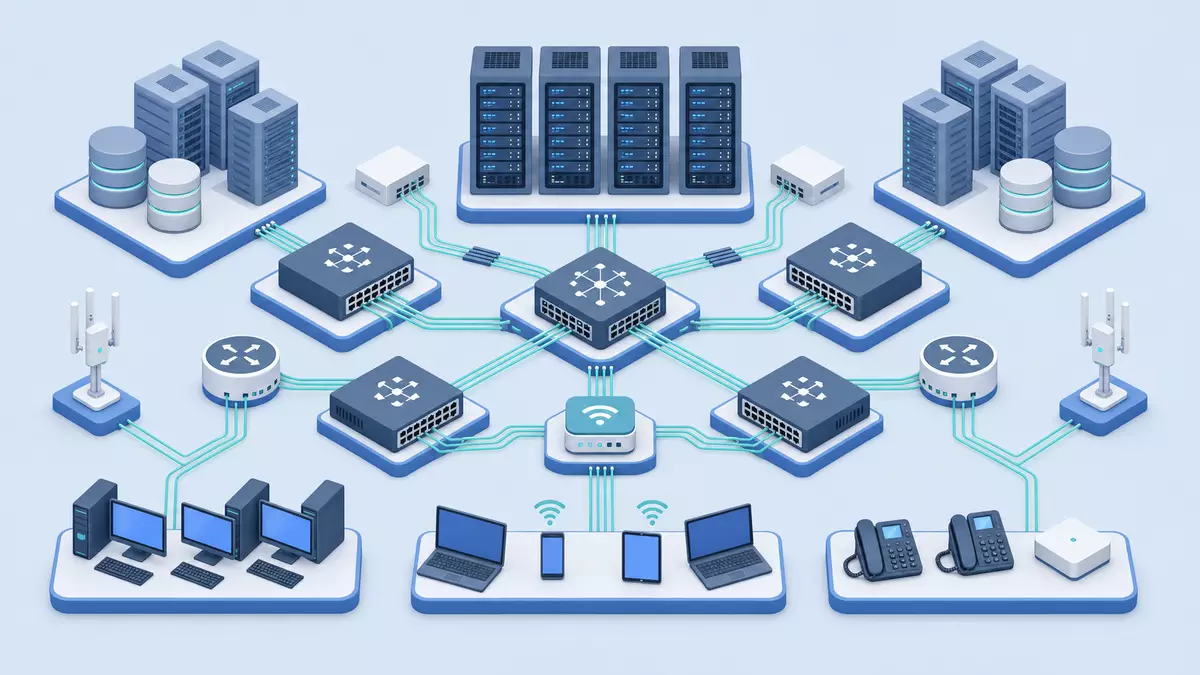
A central element of Broadcom's current product offering is high-performance networking silicon used in data centers, including application-specific integrated circuits (ASICs) and merchant switches deployed in large-scale AI clusters. These products provide the bandwidth and low-latency connectivity required for modern AI workloads, which increasingly rely on massive parallel processing and distributed training across hundreds or thousands of GPUs and custom accelerators.
In its recent investor communications, Broadcom has emphasized that demand for 800G and, looking forward, 1.6T Ethernet technologies is growing as hyperscale customers seek to move ever larger volumes of data between servers, accelerators, and storage systems. The company's ASICs and switch chips are often used at the heart of these networks, making Broadcom a strategic supplier for customers building AI-ready infrastructure. As these deployments scale, the associated hardware pull-through can support semiconductor segment revenue beyond the already reported 6 percent year-on-year growth in fiscal Q2 2024.
Broadcom also offers custom silicon solutions tailored to specific large customers, allowing it to design chips optimized for proprietary AI accelerator architectures or networking topologies. This custom engagement model typically involves multi-year contracts and can provide visibility into future revenue streams, complementing more standardized merchant silicon sales. The mixture of custom and merchant products gives Broadcom an opportunity to capture both volume and value in the AI networking stack.
Software portfolio anchored by VMware and mainframe solutions
On the software side, VMware now forms the largest single component of Broadcom's infrastructure software segment. VMware's core offerings in server virtualization, private-cloud infrastructure, and hybrid-cloud management are widely deployed across enterprise data centers, making them a foundational layer in many IT environments. Through VMware, Broadcom gains exposure to recurring license and subscription revenues as enterprises maintain and expand their virtualization and cloud stacks.
Broadcom's pre-existing software portfolio includes mainframe and enterprise infrastructure solutions acquired from CA Technologies and Symantec Enterprise Security in prior years. These products focus on areas such as application performance management, identity and access management, and mainframe security and operations. Together with VMware, they position Broadcom as a broad infrastructure software provider with a focus on mission-critical workloads and large enterprise and public-sector clients.
For Broadcom stock, the software business introduces a different growth and margin profile compared with semiconductors. Software revenues tend to be more recurring and less cyclical than chip sales, and can carry higher gross margins. The sharp increase in infrastructure software revenue from $1.77 billion to $5.10 billion year on year in fiscal Q2 2024 reflects the transformation of Broadcom's revenue mix and helps partly offset the inherent cyclicality of semiconductor demand.
Broadcom stock and recent price context
Broadcom stock is listed on Nasdaq under the ticker symbol AVGO. As of 14 June 2024, commonly used market data sources showed Broadcom shares trading around $1,700 on Nasdaq, close to their 52-week high near $1,725 and substantially above the 52-week low near $795 observed in mid 2023. This implies that the share price has more than doubled over roughly a one-year period, paralleling the increase in market capitalization described earlier.
Over the year to date through mid June 2024, Broadcom stock delivered a performance of more than 50 percent according to widely cited index and price data, significantly ahead of the broader S&P 500, which rose by about 15 percent over the same span. This outperformance reflects the market's view of Broadcom as a key beneficiary of AI infrastructure spending and as a company with both strong current earnings and positive visibility.
Trading at these levels, Broadcom's valuation metrics such as forward price-to-earnings and enterprise value to EBITDA multiples position the company at a premium compared with several traditional semiconductor peers but closer to other large-cap technology leaders that are heavily exposed to AI and cloud themes. For investors, the trade-off often involves balancing strong near-term growth and cash generation against the higher valuation multiples, which can be sensitive to any changes in AI demand expectations or macroeconomic conditions.
Read-more and investor information
Broadcom fundamentals and filings in one place
Investors can review Broadcom's detailed financial statements, guidance updates, and transaction documents, including the latest quarterly and annual reports, through centralized company and regulator resources.
Networking silicon for AI data centers
Broadcom's networking silicon products are central to the architecture of modern data centers, especially those optimized for AI workloads. These products include switch chips that implement high-port-count Ethernet connectivity, often at 400G, 800G, or emerging 1.6T speeds, and routing silicon that connects data centers to the broader internet and private backbone networks. In AI deployments, the performance of these chips directly influences training and inference throughput.
The company's switch silicon is widely used by cloud providers building large-scale fabrics that interconnect accelerators and servers. These fabrics must handle both east-west traffic within the data center and north-south traffic to external services, while maintaining low latency and high reliability. Broadcom's experience in Ethernet and its ability to integrate advanced features such as programmable pipelines and telemetry can be a differentiator, allowing customers to monitor and optimize AI workloads more effectively.
Beyond switches, Broadcom supplies controllers, physical-layer transceivers, and other components that complete the networking stack. Together, these products help create end-to-end solutions for customers, which may simplify procurement and integration processes compared with sourcing from multiple vendors. As AI workloads continue to grow and evolve, Broadcom's role in defining next-generation networking standards and products will likely remain central to its semiconductor strategy.
Infrastructure software strategy and customer relationships
The infrastructure software business that Broadcom has built through acquisitions such as CA Technologies, Symantec Enterprise Security, and VMware is focused on large customers with mission-critical needs. Broadcom typically targets long-term subscription or licensing arrangements and emphasizes value-based pricing and product integration rather than broad-based consumer software distribution.
In mainframe environments, Broadcom's software supports functions such as performance management, security, and workload automation. These tools help enterprises maintain the reliability and efficiency of systems that often underpin core banking, insurance, and government services. Because mainframes tend to have long lifecycles and high switching costs, software in this area can generate durable recurring revenue streams.
VMware extends Broadcom's reach into server virtualization and cloud infrastructure, where customers ranging from large enterprises to service providers rely on its platforms for computing, storage, and network virtualization. Broadcom's strategy involves focusing VMware on its core franchise and integrating it into a broader infrastructure software portfolio, with an emphasis on cross-selling and aligning product roadmaps with the needs of large customers managing hybrid and multi-cloud environments.
Valuation, peers, and sector context
Broadcom operates in a competitive landscape that includes other major semiconductor and infrastructure technology companies. In semiconductors, peers include firms supplying GPUs, CPUs, memory, and other networking and connectivity solutions, while in software, competitors range from traditional infrastructure software providers to cloud-native platform vendors. Broadcom differentiates itself by combining a broad semiconductor portfolio with a sizable infrastructure software business, both focused on enterprise and cloud customers rather than consumer devices alone.
The company's valuation reflects this positioning, with investors assigning high importance to the durability of its revenue streams and the scalability of its products in AI and cloud environments. Relative to some peers, Broadcom's mix of high-margin software and high-demand networking hardware can support above-average profit margins, which in turn may justify valuation multiples that exceed those of more cyclical or narrower-focus chip makers.
However, the sector context also includes risks such as potential slowdowns in cloud capital expenditure, changes in AI deployment strategies, competitive product introductions, and regulatory developments affecting large technology firms. Investors in Broadcom stock often weigh these factors against the company's current financial performance, backlog and guidance, and strategic initiatives in both semiconductors and software.
Broadcom stock price and trading venue
Broadcom stock continues to trade on Nasdaq under the symbol AVGO, with the shares denominated in US dollars. As noted earlier, the share price around $1,700 on 14 June 2024 placed the stock near its 52-week high of roughly $1,725 and well above its 52-week low near $795. This price level implies a substantial capital gain for investors who have held the shares over the past year, though it also situates the stock at a higher valuation that will be sensitive to future earnings reports and sector developments.
At these price levels, Broadcom's market capitalization of about $620 billion in mid June 2024 confirms its status as one of the largest technology names on Nasdaq and within the S&P 500 and Nasdaq 100 indices. The stock's liquidity and index membership make it a central component of many portfolios and a key reference name for discussions about AI infrastructure and large-cap technology exposure.
Broadcom stock key data
- Company: Broadcom Inc.
- ISIN: US11135F1012
- Ticker: NASDAQ: AVGO
- Trading venue: Nasdaq
- Price (as of 14 June 2024, 16:00 ET): 1,700 USD
- Market capitalization: 620,000,000,000 USD (as of 14 June 2024)
- Sector / Industry: Information Technology / Semiconductors and Infrastructure Software
- Index membership: S&P 500, Nasdaq 100
- Next earnings date: 5 September 2024
Disclaimer regarding our articles: No investment advice, no buy or sell recommendation. Information on prices, companies, and markets is provided without guarantee; changes are possible at any time. Stock market transactions can lead to substantial losses. Our articles are created and reviewed in whole or in part automatically with the support of AI.