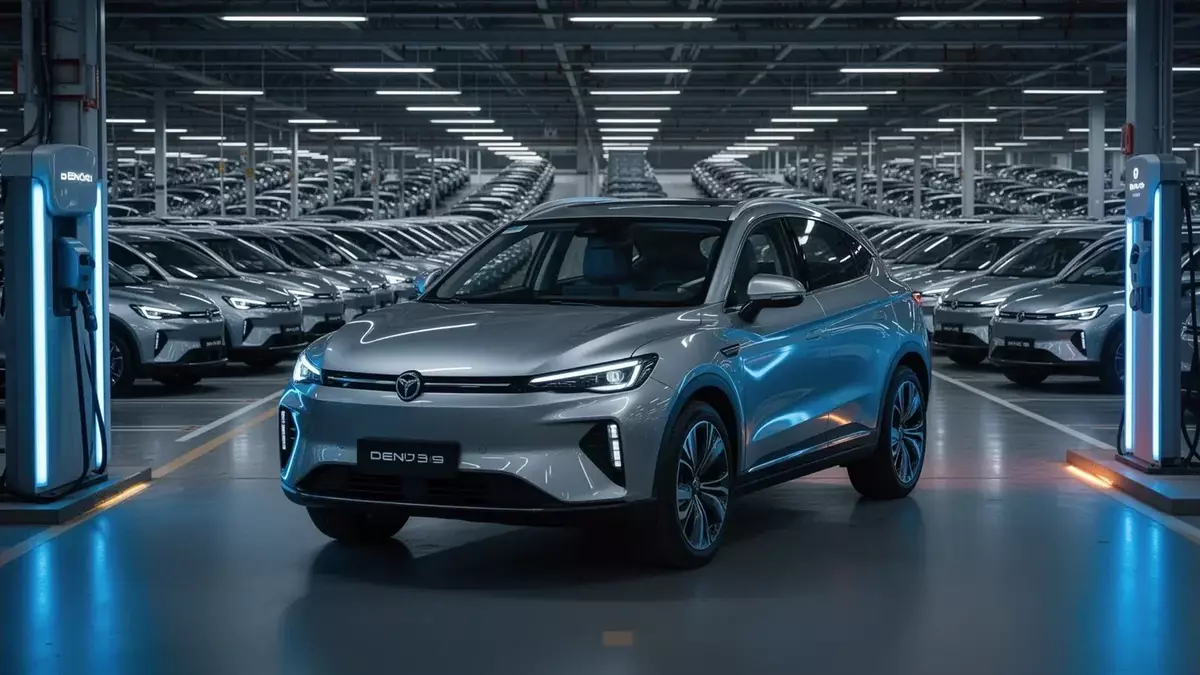
BYD Puts 4-Nanometer Chip at the Heart of Its Autonomy Gambit as Profit Falters
01.06.2026 - 10:11:29 | boerse-global.de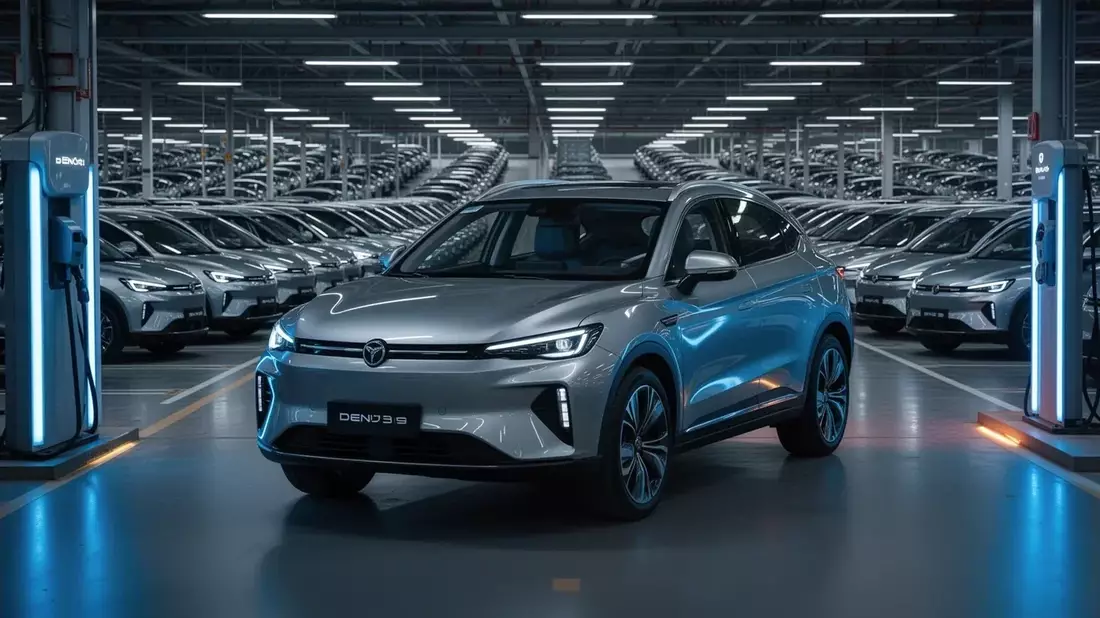
BYD has taken the wraps off a homegrown 4-nanometer chip for autonomous driving, the Xuanji A3, marking China’s first such processor for assisted driving. The move is more than a technical milestone – it signals a strategic recalibration away from price competition and toward computing power as the decisive battleground in the domestic electric-vehicle market.
Chairman Wang Chuanfu framed the chip as an enabler for Level 3 and Level 4 autonomy, calling it the “highest level” of intelligent driving chips in China. The performance figures are ambitious: 273 gigabytes of bandwidth per second, a 16-core CPU delivering 420,000 DMIPS, and a multi-chip configuration capable of more than 2,100 TOPS. BYD also claims the processor meets ASIL-D, the automotive industry’s strictest functional-safety standard.
Energy efficiency is another headline. The Xuanji A3 is designed to consume roughly 20 percent less power per computing unit than comparable products – a critical advantage in electric vehicles where every watt can nibble at range.
Beyond the chip itself, BYD is building a central computer platform roughly the size of a laptop that consolidates cockpit, driver-assistance, and electric-drive functions. The company calls it a “satellite architecture” that routes raw sensor signals directly to the main processor, boosting data bandwidth 60-fold, computing power 12-fold, and recognition range by 33 percent. Coverage area expands 177 percent under the new system. The chip is already in mass production.
Should investors sell immediately? Or is it worth buying BYD?
That hardware is paired with a software rollout. BYD is extending its God’s Eye driver-assistance system to all models sold in China, including entry-level vehicles like the Seagull, which starts at just 69,800 yuan. To encourage adoption, the company has introduced a one-year safety guarantee for users of the Sky Eye A and B systems: if an accident occurs during compliant urban navigation, BYD covers repair costs, third-party property damage, and personal injury. The approach has already worked for the intelligent parking feature, whose usage rate jumped from 21 percent to 93 percent since July 2025, with a near-flawless safety record.
More than 3.15 million vehicles are now equipped with BYD’s driver-assistance systems, generating over 200 million kilometers of driving data daily. Those numbers are the raw material for algorithm updates that roll out every three days, according to the company.
The timing of the chip push is awkward. In the first quarter, BYD’s net profit attributable to shareholders tumbled 55.4 percent, revenue slipped 11.82 percent to 150.22 billion yuan, and operating profit more than halved to 4.70 billion yuan from 11.02 billion yuan a year earlier. Sales have been declining for eight months.
But Wang is betting that technology, not discounts, will win the next phase of China’s EV war. “In the first half of electrification, it was about batteries; in the second half of intelligence, it is about chips,” he said. BYD claims 24 years of in-house semiconductor work, more than 7,000 employees dedicated to chip research, cumulative investment of over 100 billion yuan, and its own wafer fabs.
That vertical-integration logic extends beyond chips. In Brazil, BYD is converting the former Ford site in Camaçari, Bahia, into a full-production hub with an investment of roughly 5.5 billion reais. The plant, slated to start full operations in 2026, will handle stamping, welding, and painting, with initial capacity of 150,000 vehicles annually, expandable to 300,000. It will produce what BYD calls the world’s first plug-in hybrid with flex-fuel capability, running on either ethanol or gasoline, and aims for 20,000 jobs powered entirely by renewable energy.
BYD at a turning point? This analysis reveals what investors need to know now.
Morgan Stanley noted in June 2026 a broader shift among Chinese EV makers away from aggressive price wars and toward AI-driven autonomous driving. BYD’s own R&D spending in this area stands at 100 billion yuan, or roughly $13.8 billion. The company’s DiPilot system remains the strategic priority, even though it has partnered with Huawei on the Fangchengbao Bao 8 for its ADS 3.0 system – a collaboration the company describes as an exception.
BYD’s internal data shows that vehicles equipped with God’s Eye reduce severe accidents to one-sixth the rate of human drivers. The goal is a long-term “zero accident” standard, achieved through fully integrated electronics and powertrain architectures. The company is clear it will not become dependent on outside software suppliers.
The real test comes in the second half of 2026, when China’s sales data will show whether the chip offensive and the God’s Eye expansion can reverse a negative trend. If volumes turn upward, the Xuanji A3 will look like a prescient bet. If they stay weak, it may be remembered as an expensive piece of forward investment.
Ad
BYD Stock: New Analysis - 1 June
Fresh BYD information released. What's the impact for investors? Our latest independent report examines recent figures and market trends.