Central Bank Gold Buying Frenzy Overwhelms Fed’s Hawkish Turn as $160 Flash Crash Fades
Published on 06/18/2026 at 06:33 | Redaktion boerse-global.de
Federal Reserve Chair Kevin Warsh used his first FOMC meeting in June to deliver a blunt message: the easing cycle is over. The central bank held rates at 3.50%–3.75% for a fourth consecutive meeting on June 17, as expected. But the accompanying statement stripped out any language hinting at future rate cuts — a hawkish pivot that caught markets off guard. Nine of the 19 FOMC participants now project at least one rate hike by the end of 2026, and the median dot?plot projection jumped to 3.8% from 3.4% in March. Five members want a 50?basis?point increase, and one is calling for 75 basis points.
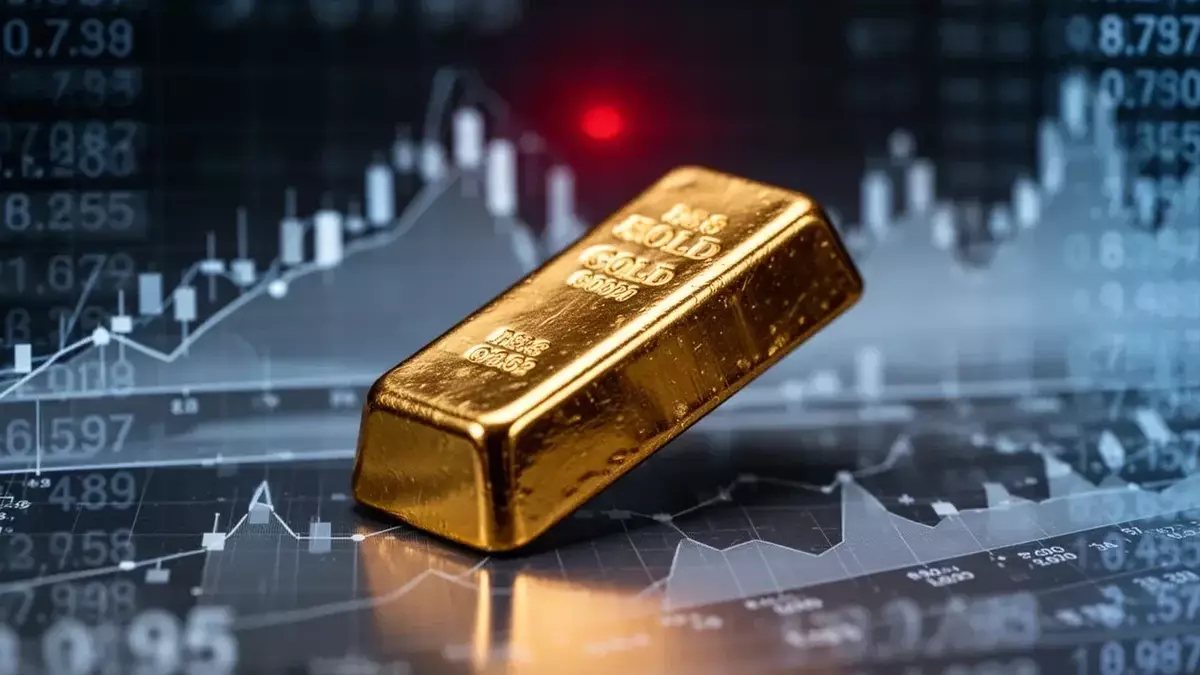
Gold reacted with a brutal intraday slide. The metal had touched a session high near $4,382 shortly before the decision, then sold off sharply to $4,218.99 — a range of more than $160. The losses wiped out gains from several prior trading sessions. Yet the sell?off proved short?lived. By Thursday’s Asian session, gold had recovered most of the ground, closing at $4,378.50. That still leaves the precious metal roughly 22% below its 52?week high of $5,626.80, but on a seven?day basis it is up about 3.5%.
Warsh’s statement itself was unusually telegraphic — roughly 130 words, compared with the typical 300?plus. The brevity underscored a deliberate shift in communication. The inflation backdrop gave him little room for dovish nuance: May’s consumer price index came in at 4.2%, marking a third consecutive month of accelerating core inflation. Energy prices jumped 23.5% year on year, fueled by the Iran conflict and disruptions around the Strait of Hormuz.
Should investors sell immediately? Or is it worth buying Gold?
Paradoxically, an unexpected diplomatic breakthrough is now providing fresh support for gold. The newly signed US?Iran peace agreement has reopened the Strait of Hormuz, putting downward pressure on the dollar. A weaker dollar tends to boost gold as a counterweight to the US currency. The geopolitical thaw, combined with persistent central bank buying, is helping to cushion the impact of higher?for?longer rates.
Central banks remain the structural backbone of the bull case. The World Gold Council’s latest survey shows that nearly half of the central banks polled plan to increase their gold holdings over the next twelve months — a record high. Geopolitical uncertainty has eclipsed inflation as the primary motive. In the first quarter of 2026, net purchases totaled 244 tonnes, up 3% from the same period a year earlier. April added another 17 tonnes. Poland led the way with 14 tonnes, bringing its total reserves to 595 tonnes. China bought eight tonnes, extending its buying streak to 18 consecutive months. Russia was a notable seller, offloading six tonnes. Over the past four years, annual central bank purchases have averaged roughly 1,000 tonnes — double the rate of the previous decade.
Major Wall Street banks are standing by their lofty gold targets despite the hawkish Fed pivot. Goldman Sachs removed all remaining rate?cut forecasts for 2026 but left its $5,400 gold price target unchanged. J.P. Morgan expects an average price of $6,000 in the fourth quarter of 2026 and $6,300 by the end of 2027. Fed?funds futures now imply a 77% probability of a rate hike by December, up from just 24% a month ago. That the big houses are maintaining their objectives underscores the dominant thesis: gold’s rally no longer depends on cheap money but on relentless sovereign demand and a world that remains unsettled.
Chart?wise, gold is trading about 4% below its 50?day moving average of $4,578.41, a level that now acts as a technical resistance. The recent whipsaw — a $160 drop followed by a swift rebound — suggests that while near?term sentiment is vulnerable to hawkish Fed surprises, the underlying bid from central banks and geopolitics remains powerful.
Ad
Gold Stock: New Analysis - 18 June
Fresh Gold information released. What's the impact for investors? Our latest independent report examines recent figures and market trends.
Disclaimer regarding our articles: No investment advice, no buy or sell recommendation. Information on prices, companies, and markets is provided without guarantee; changes are possible at any time. Stock market transactions can lead to substantial losses. Our articles are created and reviewed in whole or in part automatically with the support of AI.