Central Bank Hoarding Hits Record as Gold’s Short-Term Picture Sours
Published on 07/24/2026 at 14:43 | Redaktion boerse-global.de
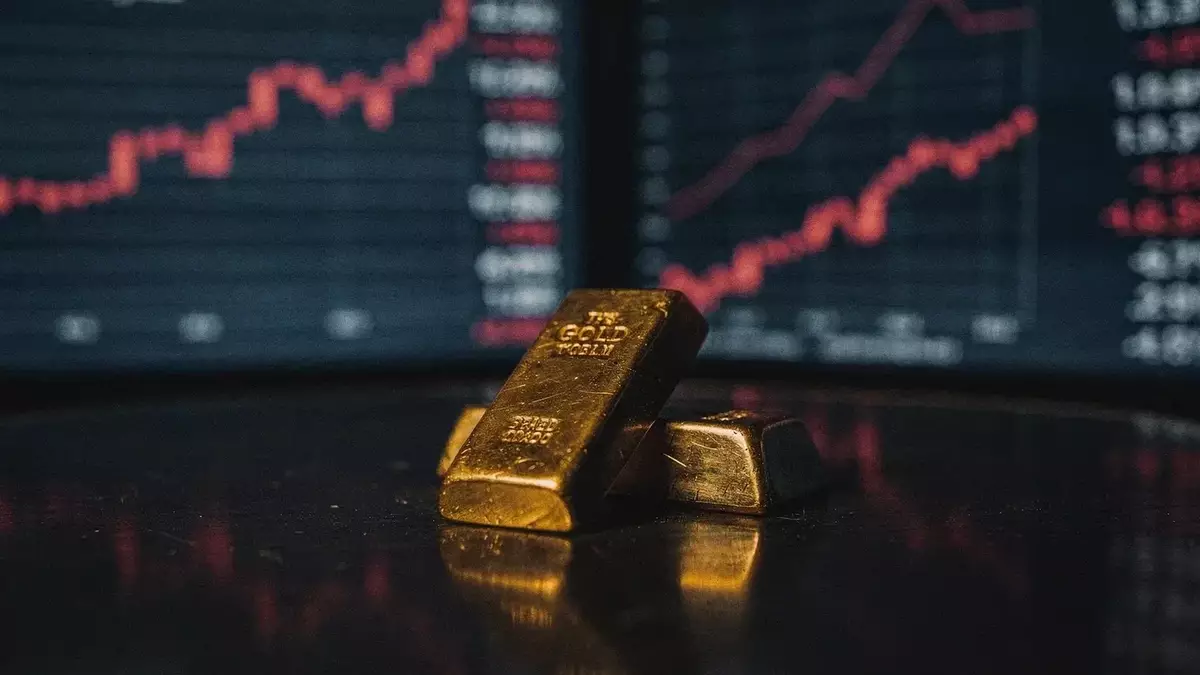
The world’s central banks now hold 36,664.5 tonnes of gold — an all-time high — yet the metal itself is trading below $4,100 and struggling to regain its footing. That disconnect tells the story of a market split between two competing forces: structural demand from monetary authorities and acute macro pressure from rising oil prices and hawkish Fed bets.
Bullion slipped 1.97% on Thursday to $4,053.40 an ounce, pulling back from a brief spike above $4,150 that had marked its highest level since July 7. The retreat leaves gold just 3.9% above its 52-week trough of $3,901.30 and 4.69% below its 50-day moving average of $4,252.94. The relative strength index sits at 44.5, suggesting the sell-off has yet to reach oversold territory and that further consolidation may be in store.
An Oil Shock That Hurts, Not Helps
The irony is hard to miss. A geopolitical crisis in the Middle East — precisely the kind of event that typically drives safe-haven buying — is instead weighing on gold. Houthi rebels in Yemen claimed attacks on two Saudi oil tankers as part of a naval blockade, while the U.S. conducted a twelfth consecutive night of strikes on Iran. President Trump escalated further by warning of potential attacks on Iranian infrastructure if shipping through the Strait of Hormuz is threatened.
Those developments have pushed oil prices higher, stoking inflation expectations and reinforcing the case for tighter monetary policy. A higher-for-longer rate environment is a direct headwind for gold, which offers no yield. The probability of a Federal Reserve rate hike at the September FOMC meeting has climbed above 78%, while the odds of a move at next week’s July 28-29 gathering stand at 34%. The decision itself, due at 2:00 p.m. ET on July 29, will not include updated economic projections.
Should investors sell immediately? Or is it worth buying Gold?
Central Banks Are Buying Like Never Before
Against that turbulent backdrop, the official sector is quietly building up reserves at a record pace. Central banks added a net 244 tonnes of gold in the first quarter of 2026, exceeding both the previous quarter and the five-year average. Over the past four years, purchases have averaged roughly 1,000 tonnes annually — double the rate of the prior decade.
Poland has been the most aggressive buyer, adding a net 31 tonnes in Q1 alone, worth about $4 billion. Its reserves have since swelled to 614 tonnes through May, marking four consecutive months of double-digit net purchases and putting the country within striking distance of its stated 700-tonne target.
The World Gold Council’s 2026 Central Bank Gold Reserves Survey reveals that gold has overtaken U.S. Treasuries as the world’s largest reserve asset. A record 45% of central banks surveyed plan to increase their holdings in the coming year, up from 43% last year. “Central banks remain very positive on gold — in fact, more positive than ever,” said Shaokai Fan, the council’s global head of central banks.
Gold at a turning point? This analysis reveals what investors need to know now.
A Market of Two Speeds
The sheer scale of official-sector demand has transformed the gold market’s structure. At current prices, central bank holdings are worth roughly $4.78 trillion, representing 16.7% of all the gold ever mined. The U.S. remains the largest single holder at 8,133 tonnes, valued at about $1.06 trillion.
Yet those long-term fundamentals are doing little to arrest the short-term slide. Analysts see the two dynamics as largely independent: central bank buying provides a floor and a stability mechanism, but it does not insulate gold from the daily tug-of-war between oil, the dollar, and interest rate expectations. Until the situation in the Strait of Hormuz and the Red Sea stabilizes, crude will remain the dominant driver of inflation fears — and by extension, the dominant force acting on gold prices. The FOMC’s July meeting will offer the next major test of whether the Fed validates that tightening narrative or delivers a surprise that shifts the calculus.
Ad
Gold Stock: New Analysis - 24 July
Fresh Gold information released. What's the impact for investors? Our latest independent report examines recent figures and market trends.
Disclaimer regarding our articles: No investment advice, no buy or sell recommendation. Information on prices, companies, and markets is provided without guarantee; changes are possible at any time. Stock market transactions can lead to substantial losses. Our articles are created and reviewed in whole or in part automatically with the support of AI.