Commodity Markets Splinter as Oil’s Geopolitical Surge Crushes Gold’s Safe-Haven Sheen
Published on 07/17/2026 at 20:12 | Redaktion boerse-global.de
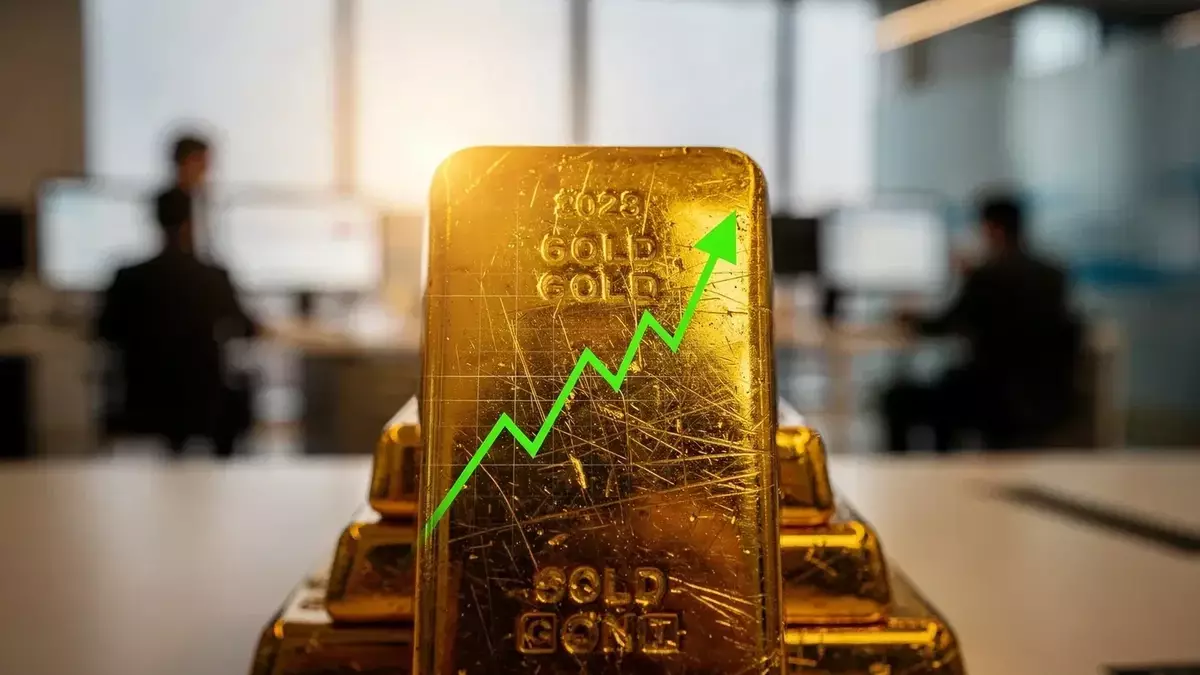
The six consecutive nights of US airstrikes on Iranian territory should have been a textbook catalyst for a broad-based commodity rally. Instead, this week delivered a stark reminder that geopolitical risk premiums are anything but uniform. While crude oil powered to a weekly gain of nearly 12% on fears that Iran might block the Strait of Hormuz, gold — the traditional refuge in times of conflict — slipped below the $4,000 threshold before staging a partial recovery, and silver plumbed an eight-month low.
The divergence traces its roots back to the very mechanism that makes oil rallies so potent: higher energy prices feed inflation expectations, which in turn force the Federal Reserve to keep interest rates elevated. That dynamic transforms gold’s zero-yield profile from a safe-haven advantage into a liability, and the effect has been magnified by a stronger dollar and climbing bond yields. Fed chairman Kevin Warsh reiterated the central bank’s commitment to restoring price stability, and traders now see roughly a 51% chance of a rate hike in September — up from a lower estimate just a day earlier.
Gold’s Two-Step Below $4,000
Gold opened the session at $3,980.40 an ounce on Thursday before recovering to $4,022.60 by Friday morning, a 1.06% daily advance. The bounce, however, does little to mask a difficult week: the precious metal is still nursing a 2.54% weekly loss and has shed 7.16% since the start of the year. Earlier in the period, it traded as low as $3,977, putting it on track for its steepest weekly drop in six weeks before bargain buyers stepped in.
Technical indicators underscore the extent of the retreat. Gold now sits 11.4% below its 200-day moving average of $4,540.10, while the 50-day average stands at $4,304.19. The relative strength index of 40.7 signals a consolidative phase rather than outright capitulation, suggesting the metal may be digesting its recent slide rather than entering freefall.
Should investors sell immediately? Or is it worth buying Gold?
Institutional Buyers Refuse to Blink
The short-term price weakness is occurring against a backdrop of unusually robust structural demand. A World Gold Council survey of 74 central banks found that 45% plan to increase their gold reserves within the next year — the highest reading since the survey began in 2018. Only one central bank indicated it intends to reduce holdings. Poland and China have been the most active buyers, continuing a trend that has provided a floor beneath the market through previous selloffs.
Those institutional purchases contrast sharply with the sentiment-driven flows at the futures and ETF level. The disconnect means that while speculative money is fleeing on rate-hike fears, long-term holders are treating the dip below $4,000 as an accumulation opportunity. Bank of America has nevertheless trimmed its 2026 average price forecast to $4,360 an ounce, though it maintains a bullish long-term view.
Silver Takes a Harder Hit, Other Commodities March to Their Own Drum
Silver, which lacks gold’s central-bank safety net, has borne the brunt of the rate-driven rotation. The white metal opened at $55.83 an ounce — an eight-month low — and slipped further to $55.58 in morning trade, extending its monthly decline past 20%. A persistent supply deficit of roughly 67 million ounces this year, the sixth straight annual shortfall, has been completely overwhelmed by the macro headwinds.
Gold at a turning point? This analysis reveals what investors need to know now.
Elsewhere in the complex, coffee proved almost entirely detached from the geopolitical noise. Arabica futures rose 2.36% to $321.35, driven by rain-delayed harvesting in Brazil and depleted ICE-certified stocks. The market is also wrestling with an unusual price convergence between Arabica and Robusta that has short-circuited the traditional blend mechanism roasters use to manage costs. Meanwhile, copper slipped 0.41% to $6.26 a pound as Chile’s production disruptions were offset by a revised International Copper Study Group forecast pointing to a surplus.
A Geography of Divergence
The coming week will test whether the rift between energy and precious metals widens or narrows. If Washington follows through on President Trump’s threat to strike Iranian infrastructure, oil could rally further, amplifying the inflation scare and tightening the Fed’s hand. That scenario would keep gold under pressure even as central banks continue to buy. Should diplomatic channels reopen and the Hormuz disruption subside, the rate debate might ease, allowing gold to reclaim its safe-haven premium. For now, the commodity complex is speaking in five different voices, and none of them is willing to follow the same script.
Ad
Gold Stock: New Analysis - 17 July
Fresh Gold information released. What's the impact for investors? Our latest independent report examines recent figures and market trends.
Disclaimer regarding our articles: No investment advice, no buy or sell recommendation. Information on prices, companies, and markets is provided without guarantee; changes are possible at any time. Stock market transactions can lead to substantial losses. Our articles are created and reviewed in whole or in part automatically with the support of AI.