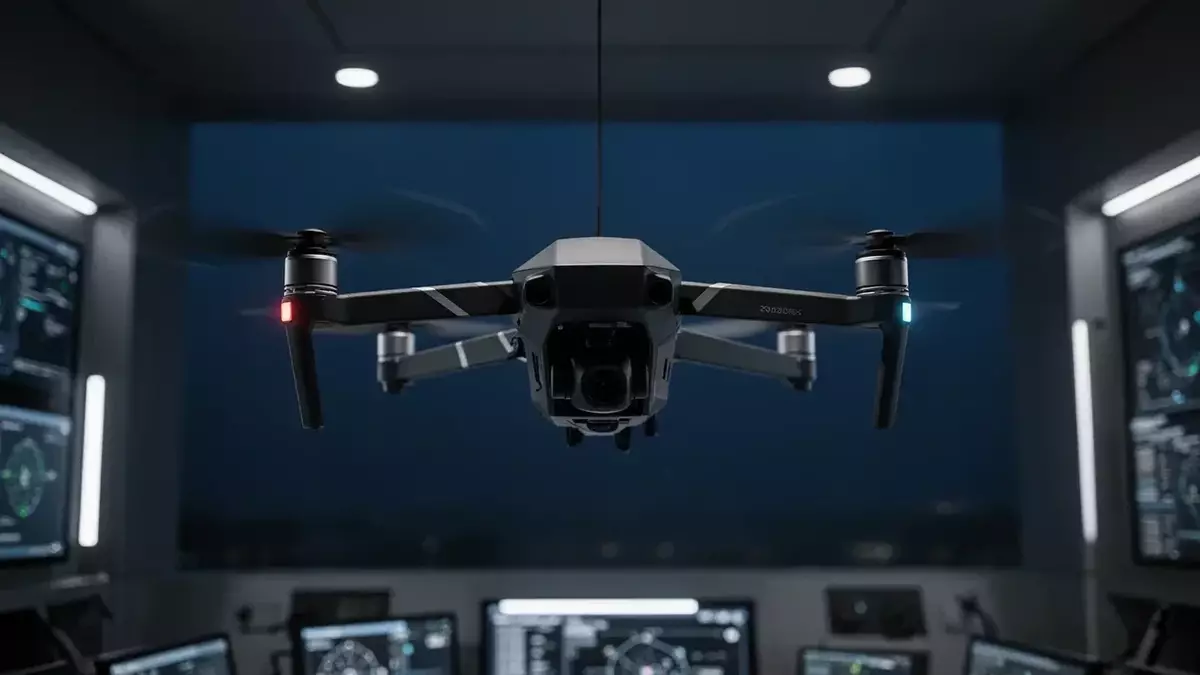
DroneShield Books the World Cup and a Pentagon Win, but ASIC Holds the Remote
Published on 06/12/2026 at 12:54 | Redaktion boerse-global.de
The numbers from DroneShield look like a straight-up bull case. First-quarter revenue surged 121%, and just last week the company locked in a $24.9 million contract from the US Department of Defense’s Joint Interagency Task Force 401. Add a starring role securing the 2026 FIFA World Cup in Kansas City and a recent integration demo with Parsons’ DroneArmor system, and the operational momentum is unmistakable. Yet the stock has lost more than half its value since the October 2025 peak of €3.65, trading at roughly €1.68. The reason lies not in the order book but in the boardroom.
That divergence stems from a formal investigation by the Australian Securities and Investments Commission (ASIC), which is scrutinising company disclosures and share trading activity from November 2025. The probe triggered a single-day drop of 16% when it was revealed in May, and the uncertainty has since carved what analysts call a “governance discount” into the valuation. Institutional investors have reacted sharply: Citigroup, BlackRock and JPMorgan have all reduced their holdings below the materiality threshold in recent weeks. At the latest annual general meeting, more than 50% of shareholders voted against the remuneration report — a “first strike” that sends a powerful trust signal in Australian corporate governance.
Amid the regulatory fog, DroneShield’s underlying business continues to fire. Its committed revenue base for 2026 stood at 155 million Australian dollars at the end of April, up from 140 million just one month earlier. A US federal programme is funnelling $500 million over two budget years into counter-drone systems for state and local governments, providing a structural tailwind. The company’s hardware deliveries, software subscriptions and service contracts with government and defence clients form a durable foundation. Management has also demonstrated the technology’s real-world relevance: DroneShield’s sensors were integrated into Parsons’ electronic warfare suite on June 10, and the World Cup contract offers a global showcase that could catalyse further deals.
Should investors sell immediately? Or is it worth buying DroneShield?
Technically, the sell-off may be exhausting its force. The 14-day relative strength index sits at 33.2, just above the classic oversold threshold of 30. The stock is still more than double its 52-week low of €0.82 set last November, so the fundamental floor from autumn 2025 remains intact. Over the past 12 months, despite the recent pain, DroneShield has still posted a 74% gain — a reminder that the growth story is far from broken. The 50-day moving average of €2.07 sits nearly 19% above the current price, suggesting a gap that could close if sentiment improves.
The outlook hinges on one variable above all others: the speed and outcome of the ASIC probe. Analysts are split — Ord Minnett initiated coverage with a cautious “Lighten” call and a target of A$2.28, citing fading order momentum in the second half, while other houses maintain price targets as high as A$5.00, betting on the long-term anti-drone spending trend. Until the regulatory cloud lifts, the company’s record order intake and its World Cup stage may not be enough to lure institutional money back. For now, DroneShield is a textbook case of operational brilliance undermined by a governance nightmare.
Ad
DroneShield Stock: New Analysis - 12 June
Fresh DroneShield information released. What's the impact for investors? Our latest independent report examines recent figures and market trends.
Disclaimer regarding our articles: No investment advice, no buy or sell recommendation. Information on prices, companies, and markets is provided without guarantee; changes are possible at any time. Stock market transactions can lead to substantial losses. Our articles are created and reviewed in whole or in part automatically with the support of AI.