DroneShield’s Customer Payments Surge 360% in Q1 and Board Adds Rear Admiral, Yet Shares Sink 61% on ASIC Probe
Published on 06/25/2026 at 19:02 | Redaktion boerse-global.de
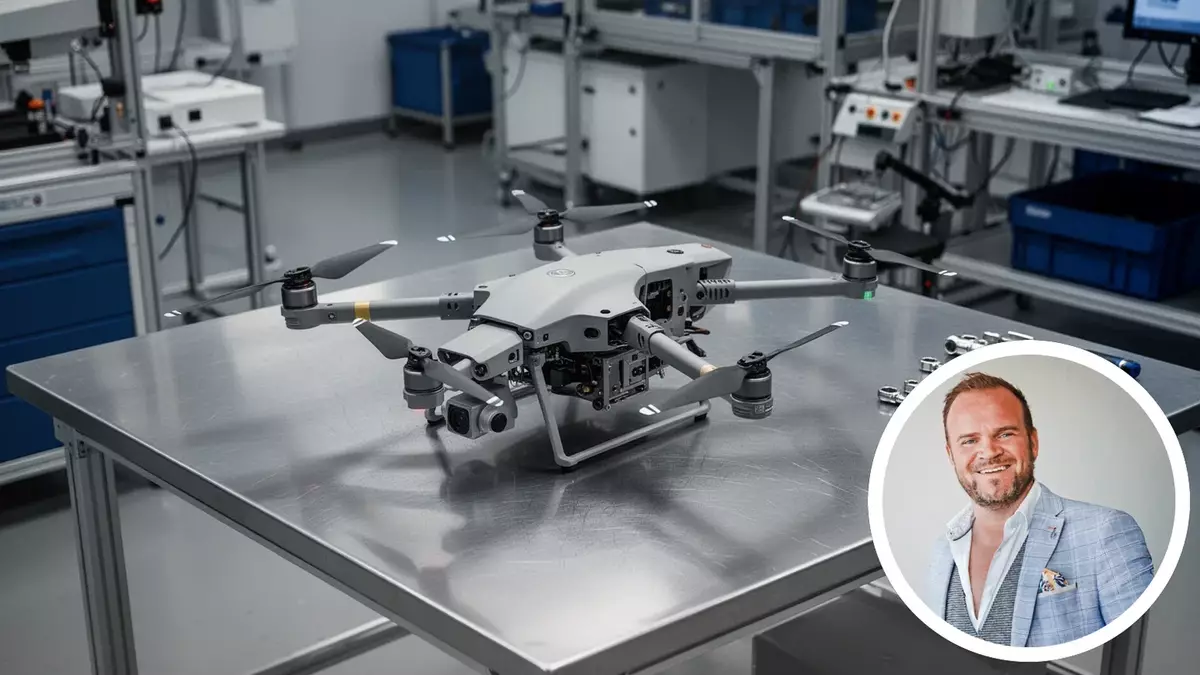
DroneShield has delivered a string of operational wins in recent weeks — record customer cash inflows, a new defence veteran on the board, and the first unit rolling off a European production line. Yet the share price continues to bleed. The Australian counter-drone specialist has lost more than a quarter of its value in the past 30 days alone and now trades at A$1.41, some 61% below the October 2025 peak of A$3.65. The disconnect between operational momentum and market sentiment is stark.
On 1 July 2026, Rear Admiral Lee Goddard CSC joins the board as an independent non-executive director. Goddard brings more than three decades of experience in defence, national security and government, having served as the founding CEO of the Australian Missile Corporation, a joint venture with the federal government to build a domestic missile and munitions industry. He currently sits on the boards of Austal Limited, Southern Launch and the Commonwealth Superannuation Corporation. Chairman Hamish McLennan described the appointment as part of a board renewal process and a move to bolster DroneShield’s credibility in defence procurement and export programmes — exactly the kind of leverage needed when large contracts are on the line.
Europe has become a major growth vector. At the Eurosatory defence fair in Paris, DroneShield unveiled the first European-manufactured counter-drone unit and signed a memorandum of understanding with Dutch tactical vehicle specialist Defenture. The pair plan joint customer meetings, interoperability tests and integration of DroneShield’s systems on Defenture’s Mammoth and GRF platforms. A new European headquarters in Amsterdam is already operational. The company aims to ramp annual production capacity from around $500 million to $2.4 billion by the end of 2026, driven by NATO demand and the European “Readiness 2030” framework. In a further sign of financial maturity, the Australian Securities Exchange has exempted DroneShield from quarterly cash flow reporting — a status reserved for firms with stable revenues and solid liquidity.
Should investors sell immediately? Or is it worth buying DroneShield?
The numbers justify the confidence. In the first quarter of 2026, revenue rose 121% to A$74 million, while customer payments surged 360% year-over-year — the highest quarterly figure in the company’s history. The project pipeline hit a record A$2.2 billion, and cash on hand stood at A$220 million. A fresh US government contract worth up to $24.9 million was also secured. But none of this has lifted the stock.
The main drag is an investigation by the Australian Securities and Investments Commission, launched in May 2026, into market disclosures and share trading activity from late 2025. The probe remains open, and the uncertainty is enough to keep many investors on the sidelines. With 30-day annualised volatility of around 53%, a regulatory overhang can quickly cap any rally. Technically, the stock is deeply oversold: the 14-day relative strength index has fallen to 24.4 — some measures even indicate 23.8 — well below the 30 threshold that often signals a bounce. Yet the share price sits more than 26% below its 50-day moving average and roughly 31% below the 200-day average.
All eyes are now on the half-year results due 26 August. That report will show whether the expanded European supply chain, the new board appointments and recent contract wins are translating into measurable revenue growth. More importantly, it will test whether the market is ready to look past the ASIC cloud and reassess DroneShield’s valuation on its operational merits. Until then, the stock remains caught between record fundamentals and regulatory gravity.
Ad
DroneShield Stock: New Analysis - 25 June
Fresh DroneShield information released. What's the impact for investors? Our latest independent report examines recent figures and market trends.
Disclaimer regarding our articles: No investment advice, no buy or sell recommendation. Information on prices, companies, and markets is provided without guarantee; changes are possible at any time. Stock market transactions can lead to substantial losses. Our articles are created and reviewed in whole or in part automatically with the support of AI.