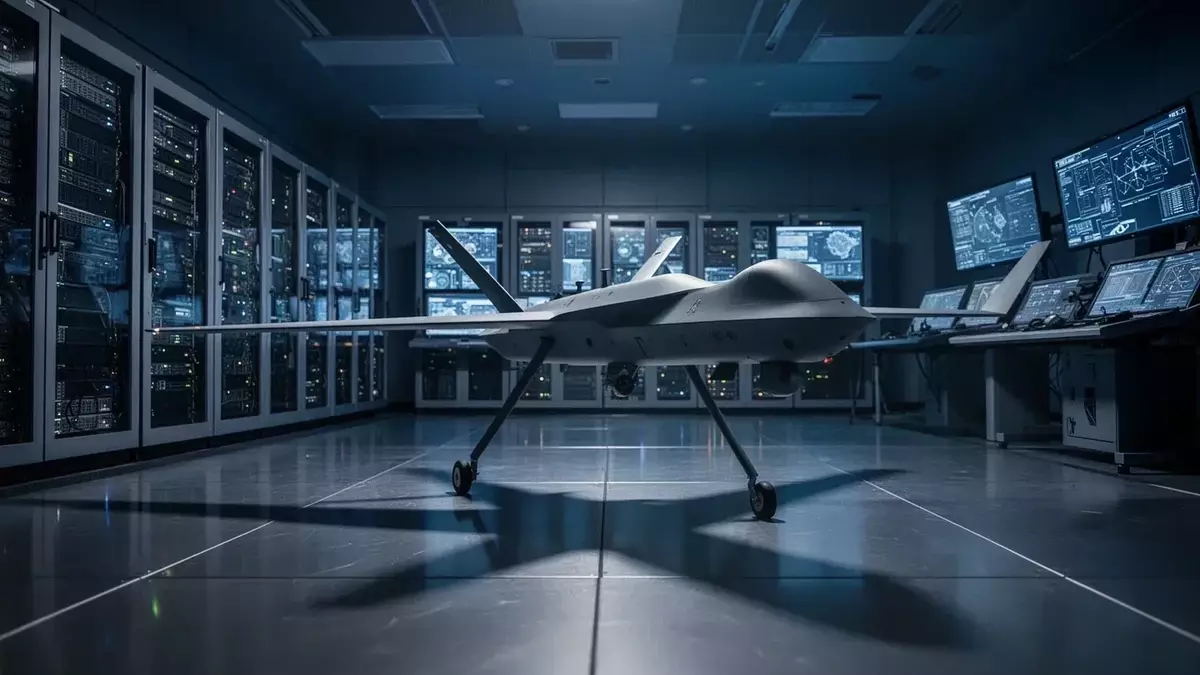
DroneShield’s Double Trouble: A Shareholder Revolt and a Regulatory Probe Slow the Momentum
01.06.2026 - 20:31:59 | boerse-global.de
The Australian equities market told a starkly different story for two groups of stocks on Monday. While the S&P/ASX 200 barely budged, down 0.03 percent, and the technology sector surged 5.61 percent, DroneShield plunged more than 12 percent to close at A$2.98. The counter-cyclical collapse sent a clear message: governance matters more than growth – even in a sector that is exploding.
The trigger was a shareholder uprising at the annual general meeting. More than half of the votes cast rejected the company’s remuneration report, constituting a so-called “first strike” under Australian corporate law. That formal warning puts the board on notice: if a second strike follows next year, shareholders could force a spill of the entire boardroom.
Investor anger is focused on two specific grievances. The first involves allegations of double-counted metrics in the executive compensation scheme. The second concerns a board that critics deem “over-boarded” – directors sitting on too many mandates to give DroneShield proper attention. A broker downgrade on the same day added to the selling pressure. Trading volumes on the session were well above average, indicating concentrated, deliberate selling.
The timing of the revolt could hardly be worse. The global counter-drone market is estimated at $2.5 billion for 2026 and is expected to swell to more than $8 billion by 2031, a compound annual growth rate of nearly 28 percent. Motorola Solutions underscored that momentum by announcing a binding agreement to acquire D-Fend Solutions for $1.5 billion. D-Fend, which develops non-kinetic radio-frequency takeover systems, is targeting $185 million in revenue for 2026 and has been growing at triple-digit rates.
Should investors sell immediately? Or is it worth buying DroneShield?
While DroneShield’s competitors are cashing in, the company finds itself under a separate cloud. The Australian Securities and Investments Commission (ASIC) is probing company announcements to the ASX between November 1 and 20, 2025, as well as insider trading activity in DroneShield shares from November 6 to 12. At the centre of the inquiry is a November 10 announcement about roughly A$7.6 million in US government contracts, later withdrawn due to a miscount. Trading by directors – including former CEO Oleg Vornik, who stepped down in April 2026 after more than a decade – is also being examined.
On the surface, DroneShield’s operational story remains compelling. Revenue for the last financial year reached A$216.5 million, a 276 percent jump, and the company has already locked in A$104 million in committed revenue for the current year. Yet that financial strength has been unable to shield the stock from the trust deficit. In Frankfurt, the shares changed hands at €1.91 on Monday, down 6.21 percent on the day and roughly 48 percent below the 52-week high of €3.65. The stock is also trading well below its 50-day moving average of €2.16.
The contrast with peers is painful. On Monday, WiseTech Global rallied 9.1 percent and Pro Medicus added 8.9 percent. DroneShield, by contrast, was the worst performer in a sector that was otherwise flying high. RBC Capital recently initiated coverage of rival HawkEye 360 with an “outperform” rating and a $40 price target, citing 74 percent revenue growth over the past twelve months. Hensoldt raised its free cash flow conversion guidance to around 50 percent of adjusted EBITDA, supported by higher customer prepayments and faster procurement cycles. Even the advisory board of 1414 Degrees – a company in a different field – now features James Walker, DroneShield’s own former CEO.
DroneShield at a turning point? This analysis reveals what investors need to know now.
The “first strike” forces management to act. New CEO Angus Bean, who took over in April, must now deliver a substantive response to the governance criticism. If he fails, the next AGM could trigger a “second strike” and a full board election. That prospect, combined with the ongoing ASIC probe, means that while the anti-drone market booms, DroneShield’s recovery will depend less on order books and more on whether the boardroom can restore its credibility.
Ad
DroneShield Stock: New Analysis - 1 June
Fresh DroneShield information released. What's the impact for investors? Our latest independent report examines recent figures and market trends.