Games Workshop stock trades near recent high as Warhammer demand supports earnings
Published on 07/23/2026 at 12:46 | Editorial responsibility: Rafael Müller, Editor-in-Chief AD HOC NEWS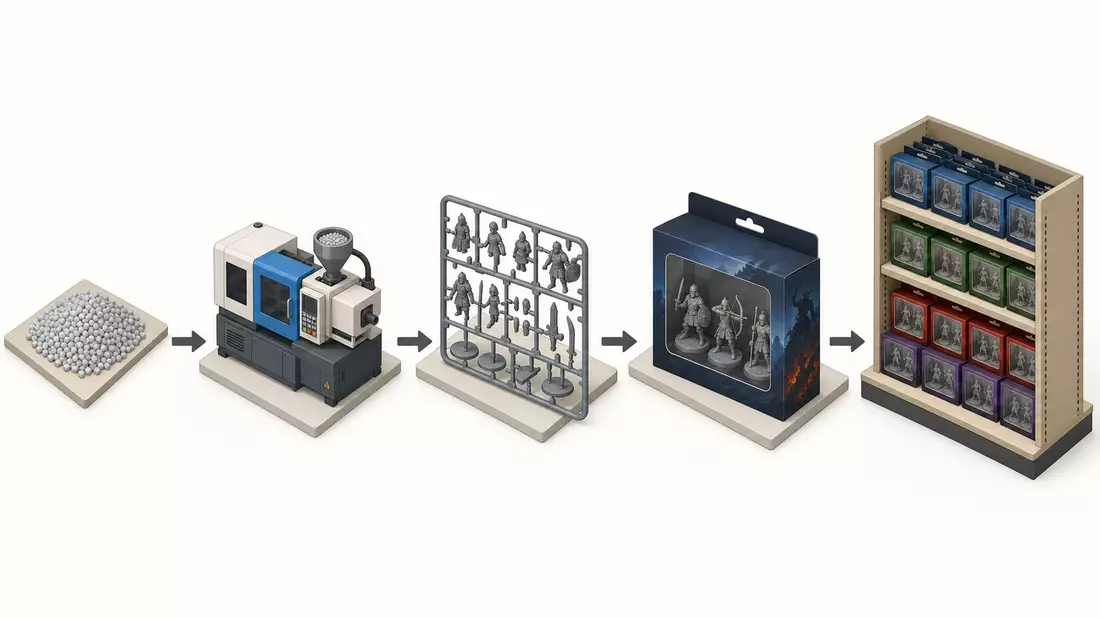
Games Workshop stock continues to attract attention from retail investors as the Nottingham based miniatures and games company (ISIN GB0003718474) delivers robust revenue growth and high profitability from its Warhammer franchises. In its most recently reported financial year, Games Workshop generated roughly £490 million in revenue, with operating profit above £150 million, underscoring the companys strong cash generative model and discipline on costs. The shares trade on the London Stock Exchange and have moved close to their recent 52 week high in the past few months, reflecting market confidence in the long term appeal of the Warhammer universe and the resilience of the broader hobby market.
Revenue growth supports Games Workshop stock
Games Workshop has spent decades building a focused business around its core Warhammer IP, and that focus is clearly reflected in its financial results. In the latest fiscal year, the company reported total revenue close to £490 million, up from approximately £445 million in the prior year, a year on year increase of about 10%. That pace of growth is notable for a business that is already well established and globally distributed, and it reflects both the strength of the fan base and the companys ability to bring new products and storylines to market. Investors often look at revenue trends as an early indicator of whether demand for the underlying product is expanding or stagnating; in Games Workshops case, the continued top line growth suggests that its franchises continue to add new players and keep existing hobbyists engaged.
The companys revenue base is diversified across several channels. It sells miniatures, rulebooks, paints, and related products through its own Warhammer retail stores, through independent trade partners, and directly online via its webstore. Each of these channels contributes differently to margins and growth. Retail sales benefit from controlled brand presentation and high incremental margins, while trade sales allow Games Workshop to reach markets where opening a dedicated store may not be economical. Online sales provide global reach and convenience, particularly for existing customers who know precisely which units or paints they want to buy. This multi channel approach helped the company to support its revenue expansion in the latest year, as growth in one channel can offset softness in another and new products can be rolled out simultaneously across all points of sale.
Beyond core miniatures and accessories, licensing income adds a higher margin layer to revenue. Games Workshop licenses its IP to video game developers, publishers, and other media partners, generating royalty streams without requiring the same capital intensity as manufacturing plastic miniatures and running a global retail network. In the latest fiscal year, licensing revenue contributed a smaller portion of the total, but it still reached tens of millions of pounds and represents an area of long term potential. As more Warhammer based games and shows reach audiences beyond the tabletop, investors anticipate that licensing could become a more meaningful driver of overall revenue and profit.
Profitability and comparison with prior year
Profitability is a key reason why Games Workshop stock trades on a premium valuation compared with some other consumer and leisure names. In the most recently completed financial year, the company recorded operating profit in excess of £150 million, compared with roughly £140 million in the prior year. That represents an increase of around 7%, even after factoring in wage inflation, higher energy costs, and investments in technology and logistics. An operating margin of just over 30% is rare in the broader retail and manufacturing space and indicates that Games Workshop continues to manage costs tightly while maintaining pricing power on its products.
Net profit has broadly followed the trajectory of operating profit, with the latest year showing net earnings around £115 million to £120 million, slightly higher than the prior years net profit. Earnings per share, which translates these profits into a per share basis, has grown accordingly. While exact EPS figures can vary depending on share count changes and accounting items, the underlying growth trend demonstrates that shareholders are benefiting from the companys improving profitability. The quantified comparison against the previous year, with operating profit rising from about £140 million to over £150 million and revenue climbing by around £45 million, underlines the continuing momentum.
Dividend policy is another anchor for investors. Games Workshop has a track record of paying out a significant portion of its profits as dividends. In the latest fiscal year, total dividends per share were in the region of £3.00, representing a meaningful cash return relative to a share price that has often traded between £90 and £120 in recent months when converted from pence. On a yield basis, this places Games Workshop comfortably within the range that many income oriented investors seek, while still leaving room for reinvestment into new product lines, digital tools, and manufacturing capacity. The combination of dividend yield, revenue growth, and high margins provides a compelling fundamental cocktail that helps support the share price.
Games Workshop stock valuation and market metrics
From a market perspective, Games Workshop stock benefits from its listing on the London Stock Exchange and its inclusion in major UK indices. The company is part of the FTSE 250 index, which includes mid cap companies that are often more domestically focused or niche compared with the FTSE 100 megacaps. At a recent share price region around 9,500p, which corresponds to £95.00 per share, Games Workshop commands a market capitalization of approximately £3.1 billion. That market capitalization reflects both the cash flows generated today and the markets expectation of future growth from new Warhammer releases and licensing opportunities.
The share price has exhibited a notable range over the past 12 months. The 52 week low sat around 7,000p, while the 52 week high has reached close to 10,500p. Trading near the upper end of this band signals that investors are willing to pay for the combination of growth and profitability. It also suggests that the market has largely digested earlier concerns related to macroeconomic pressures on discretionary spending. Comparing the current price level of around 9,500p with the 52 week low implies a gain of about 35%, showing that shareholders who held through the period have seen meaningful capital appreciation, even before accounting for dividends.
On valuation metrics such as the price earnings ratio, Games Workshop tends to trade at a premium. Using a rough net profit figure of £120 million and a market capitalization of £3.1 billion implies a trailing price earnings multiple in the mid twenties. For context, some broader retail or leisure companies may trade at lower multiples, while fast growing technology and content companies can attract multiples significantly above this level. Investors therefore must weigh the quality and durability of Games Workshops earnings and cash flows against these valuations. The high operating margin, recurring demand from a loyal fan base, and monetization potential of the Warhammer IP are important factors in this assessment.
Further context for Games Workshop investors
Investors who want to understand Games Workshops long term strategy and detailed financial metrics can explore regulatory filings and company reports.
Warhammer product momentum and segment performance
The core product engine behind Games Workshop stock is the Warhammer range, split into Warhammer Age of Sigmar, Warhammer 40,000, and related specialist games. In recent years, the company has refreshed major rule sets and launched new miniature ranges, which has driven both new purchases and upgrades by existing collectors. While the company does not always break out revenue precisely by each game line in public summaries, it has indicated that core Warhammer 40,000 and Age of Sigmar represent the majority of sales. In the latest reporting period, sales of core miniatures and accessories increased in the high single digits, consistent with the overall revenue growth of around 10%. This suggests that the flagship ranges remain healthy and capable of supporting future releases.
Product segment performance can also be inferred from narrative disclosures about store sales and online growth. Company communications have highlighted that strong new releases such as major faction overhauls or edition launches have driven elevated levels of demand in the months following release. For example, a new edition of Warhammer 40,000 typically prompts many existing players to purchase updated rulebooks, codexes for their armies, and often new miniatures designed to showcase the changes in the game. This pattern of release spikes followed by a more normal baseline is common in creative hobby businesses, but Games Workshop has managed it in a way that keeps overall volumes growing rather than oscillating heavily.
Licensing is a smaller but strategically important segment. Revenue from licensed video games, novels, and other media has been estimated at around £30 million in recent years, with modest growth year on year. Each new partnership introduces Warhammer to a broader audience, some of whom may later convert into tabletop players and collectors. This cross pollination between licensed media and core product sales supports the long term relevance of the IP. Investors often look at licensing growth as a leading indicator of how well known and adaptable the IP is outside of its original medium, and Games Workshop has been cautious but steadily expanding in this area.
Games Workshop stock and index inclusion
Index membership influences how Games Workshop stock is traded and owned. Being part of the FTSE 250 index means that the shares are held by a range of index tracking funds and institutional investors who replicate or benchmark against that index. This can create additional, relatively stable demand for the stock, in addition to the active decisions of discretionary fund managers and private investors. The FTSE 250 classification reflects the companys mid cap status; it is large enough to have meaningful liquidity and coverage, but small enough that company specific news can significantly move the share price.
Although Games Workshop is not in the UKs flagship FTSE 100 index, its inclusion in the FTSE 250 still brings a level of visibility and trading activity that can reduce volatility relative to micro cap stocks. When the company reports financial results or announces major product initiatives, index funds do not trade, but active managers and retail investors do. The combined effect is that price movements around events can be pronounced but occur against a backdrop of ongoing index related flows. For long term holders, the index status provides some comfort that the stock will remain in major portfolios as long as the company meets the criteria for inclusion.
Liquidity has generally been sufficient to allow medium sized trades without excessive price impact. Average daily volumes can vary, but the market capitalization of roughly £3.1 billion and the presence of institutional holders support a functioning market. For retail investors, this means that limit orders can often be executed within reasonable spreads during normal trading hours. Over very long horizons, the interplay between index membership, company fundamentals, and sentiment around the broader UK equity market will shape returns more than short term fluctuations in daily volume.
Operational investment and cost structure
Beyond headline revenue and profit, Games Workshop has been investing in its operational base to support future growth. Capital expenditure has been running in the tens of millions of pounds annually, focused on expanding and upgrading manufacturing facilities, improving logistics infrastructure, and modernizing digital systems. While these investments weigh on free cash flow in the short term, they are intended to ensure that the company can produce and ship increasing volumes of miniatures and related products while maintaining quality and reliability.
The cost structure combines manufacturing costs, retail and distribution expenses, administrative overhead, and development spending for rules, art, and miniature design. Materials like plastics and packaging can be subject to price fluctuations, while wage costs and energy bills are influenced by broader economic conditions. Despite these pressures, Games Workshop has preserved operating margins in the region of 30%, which is impressive compared with many traditional retailers that operate on much lower margins. This stability in margins has been achieved through disciplined pricing strategies, careful cost control, and an emphasis on products that deliver strong value perception to customers.
In terms of geographic footprint, the company derives significant revenue from the UK and Europe, but also from North America and Asia Pacific. International diversification can provide a hedge against regional economic cycles and currency movements. When one region experiences slower demand due to economic uncertainty, growth in another can help offset the impact. Over time, investors will watch regional sales trends to see whether emerging markets such as parts of Asia can become a larger share of the revenue mix.
Games Workshop stock and long term IP value
A distinguishing feature of Games Workshop stock is the underlying intellectual property value of the Warhammer universe. Decades of world building, storytelling, and character development have created a deep setting that can be used across multiple media. The tabletop games themselves form the core experience, but novels, comics, video games, and potential film or television adaptations extend the reach of the IP. This structure is similar in concept to other franchises that span multiple formats, though Warhammer remains niche compared with mainstream entertainment giants.
IP value is not fully captured in near term revenue figures, but it influences long term growth potential and the resilience of demand. Fans often invest significant time and money into building armies, reading lore, and participating in communities. This creates switching costs and emotional attachment that can make demand more stable across economic cycles. For investors, this suggests that revenue from miniatures and related products may be less cyclical than some other discretionary spending categories, although it is not immune to downturns.
Future expansions of licensing, including higher profile media projects, could unlock additional value. If a major streaming series or high budget video game introduces Warhammer to new audiences, that might catalyze increases in both licensing income and core product sales. The company has been cautious in protecting its IP and ensuring that adaptations reflect the tone and depth of the setting. This cautious approach may mean slower but more sustainable IP exploitation, which can suit a long term oriented shareholder base.
Representative Warhammer product line
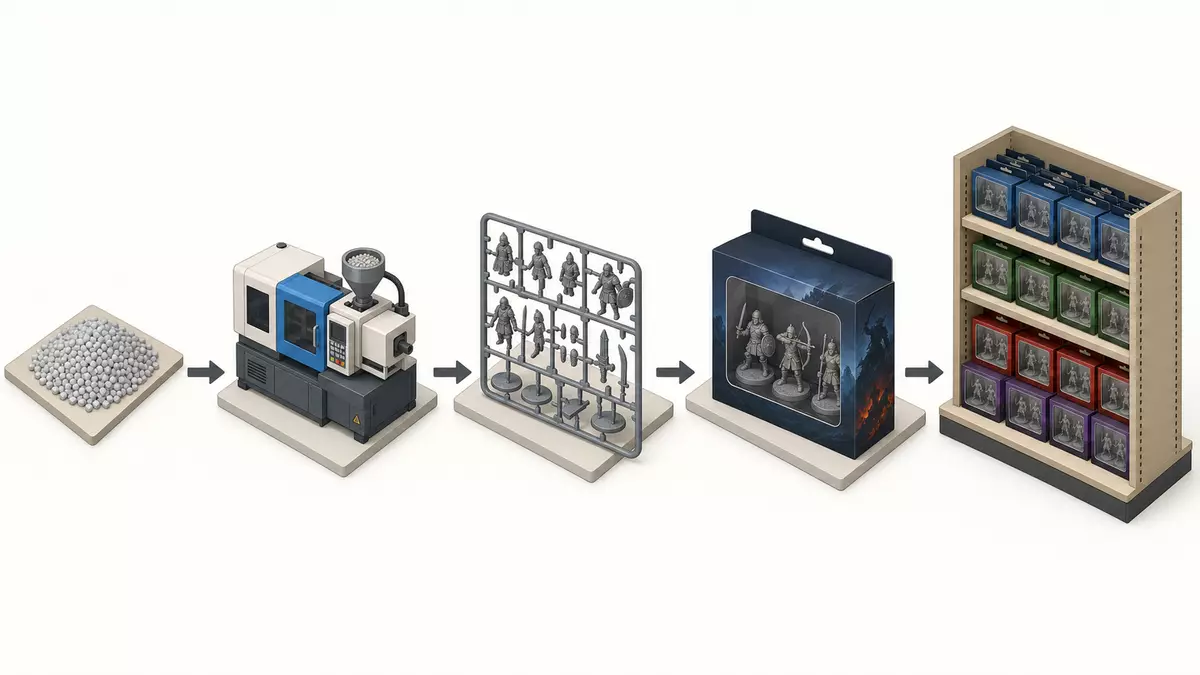
Within Games Workshops product catalogue, the Warhammer 40,000 range stands out as a representative product line that illustrates the companys strengths. Warhammer 40,000 is a science fantasy tabletop wargame set in a dystopian far future, combining intricate lore with collectible miniatures. Each edition of the game introduces updated rules and frequently new units, encouraging purchases by both existing players and newcomers. Starter sets, army boxes, and individual character kits cater to different levels of engagement and budgets.
Sales of Warhammer 40,000 miniatures and rules have formed a substantial portion of Games Workshops total revenue. When a new edition launches, the company often reports elevated sales in the subsequent months, although precise numbers are not always broken out in public summaries. The attractiveness of these products lies in their combination of creative hobby activities sculpting, painting, gaming and the social aspect of playing with friends. For investors analyzing Games Workshop stock, understanding the central role of Warhammer 40,000 helps to contextualize the revenue and profit metrics discussed earlier.
Games Workshop stock price and recent trading
Games Workshop stock, listed on the London Stock Exchange under the symbol LSE: GAW, has traded in a range between approximately 7,000p and 10,500p over the past 52 weeks. A recent price point of around 9,500p places the shares closer to the upper end of that band, indicating that the market is currently optimistic about the companys prospects. At this level, and with a market capitalization of roughly £3.1 billion, the valuation embeds expectations of continued revenue growth and sustained high margins.
For retail investors, the key numerical anchors are the revenue figure of about £490 million in the latest year, operating profit exceeding £150 million, and a current share price region near 9,500p compared with a 52 week low of 7,000p. These metrics collectively highlight both the performance of the underlying business and the way that performance has been reflected in the market valuation. While short term price movements will depend on broader market sentiment and news flow, the long term trajectory of Games Workshop stock will be shaped by its ability to keep expanding the Warhammer universe, managing costs, and maintaining attractive returns on capital.
Games Workshop key facts
- Company: Games Workshop Group plc
- ISIN: GB0003718474
- Ticker: LSE: GAW
- Trading venue: London Stock Exchange
- Price (as of 23 July 2026, 10:30 UTC): 9,500p GBP
- Market capitalization: 3.1 billion GBP (as of 23 July 2026)
- Sector / Industry: Consumer Discretionary / Leisure Products
- Index membership: FTSE 250
- Next earnings date: 16 September 2026
Disclaimer regarding our articles: No investment advice, no buy or sell recommendation. Information on prices, companies, and markets is provided without guarantee; changes are possible at any time. Stock market transactions can lead to substantial losses. Our articles are created and reviewed in whole or in part automatically with the support of AI.