Global Push to Strengthen Workplace Safety and Health Monitoring
Published on 07/20/2026 at 09:17 | Redaktion boerse-global.de
Governments and private organisations across the world are ramping up occupational health monitoring and safety protocols, rolling out large-scale screening campaigns, digital auditing systems, and tougher enforcement measures. From mass public health drives in Southeast Asia to artificial intelligence adoption in South Korea, the focus on worker wellbeing is expanding to address both traditional industrial hazards and emerging environmental risks.
Vietnam and India Scale Up Worker Protection
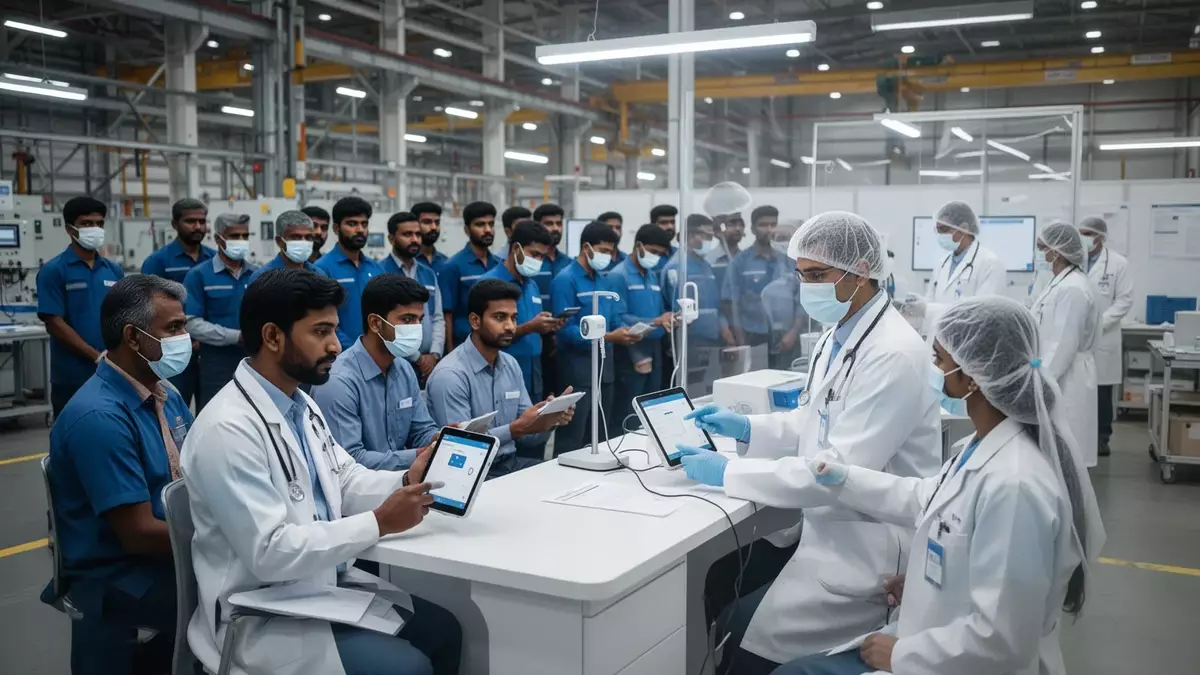
In Ho Chi Minh City, authorities launched an intensive 150-day health screening campaign on 16 July 2026. The programme aims to provide medical check-ups for 14 million residents by the end of the year, drawing on more than 480 medical facilities and a workforce of 10,000 personnel. According to data reported on 15 July, over 1 million individuals had already been examined, with the city's daily capacity now exceeding 25,000 screenings.
Financial support for the initiative comes from a combination of the state budget, employer contributions, and health insurance. All results are being integrated into electronic health records, creating a comprehensive digital health database for the city's population.
India is advancing its NAMASTE Scheme to improve conditions for sanitation workers. As of 19 July 2026, officials have validated 89,915 sewer workers and 281,117 waste pickers across the country. The programme has distributed health cards to over 181,000 individuals and focuses on replacing hazardous manual cleaning with mechanised processes. The Union Minister emphasised the government's commitment to ensuring dignity and safety for these essential workers through the provision of personal protective equipment and dedicated health resources.
Technology and Climate Adaptation Reshape Safety
Technology is playing an increasingly central role in modern workplace safety oversight. On 20 July 2026, the Korea Occupational Safety and Health Agency signed a memorandum of understanding with the Korea Water Resources Corporation to implement AI and big data in auditing processes. The partnership involves the joint development of digital auditing methods and the use of specialist personnel to enhance safety standards across infrastructure projects.
The potential for advanced analytics to prevent illness was further highlighted in a perspective article published in Artificial Intelligence & Environment on 20 July 2026. Researchers from Guangdong University of Technology proposed using AI-driven functional chemical exposomics to predict which environmental exposures might disrupt human biological systems. This approach aims to combine mass spectrometry and toxicology databases to identify risks from complex chemical mixtures that are often difficult to monitor in industrial settings.
In Europe, extreme weather is forcing shifts in occupational health strategies. Barcelona recently distributed 1,400 heat-monitoring wristbands to outdoor workers, while Madrid has implemented earlier start times — beginning at 7 a.m. and ending by 1 p.m. — to avoid peak afternoon temperatures. These measures follow a significant increase in regulatory enforcement in Spain: labour ministry fines for heat-related infractions rose from approximately €706,000 in 2022 to €1.6 million in 2025.
Private Sector Investment and Compensation Outreach
The private sector is also expanding specialised health infrastructure to meet rising demand. Concentra recently opened a new medical centre near Kansas City International Airport, focusing on occupational medicine and telemedicine services. Following this expansion, the company updated its 2026 financial guidance, projecting revenue between $2,275 million and $2,375 million and net income between $191 million and $206 million.
In South Africa, the Department of Employment and Labour is expanding outreach efforts to address outstanding social security and compensation claims for former mine workers. The initiative targets an estimated R10 billion in unpaid benefits. In the Eastern Cape alone, the sector has seen approximately 370,000 former workers since the mid-1960s, and officials are working to ensure that these individuals or their beneficiaries receive the social security and compensation to which they are entitled.
Disclaimer regarding our articles: No investment advice, no buy or sell recommendation. Information on prices, companies, and markets is provided without guarantee; changes are possible at any time. Stock market transactions can lead to substantial losses. Our articles are created and reviewed in whole or in part automatically with the support of AI.