Gold Rallies Past $4,190 as US Jobs Shock Revives Rate-Cut Bets, But Central Banks Stay the Course After Brutal Quarter
Published on 07/03/2026 at 14:54 | Redaktion boerse-global.de
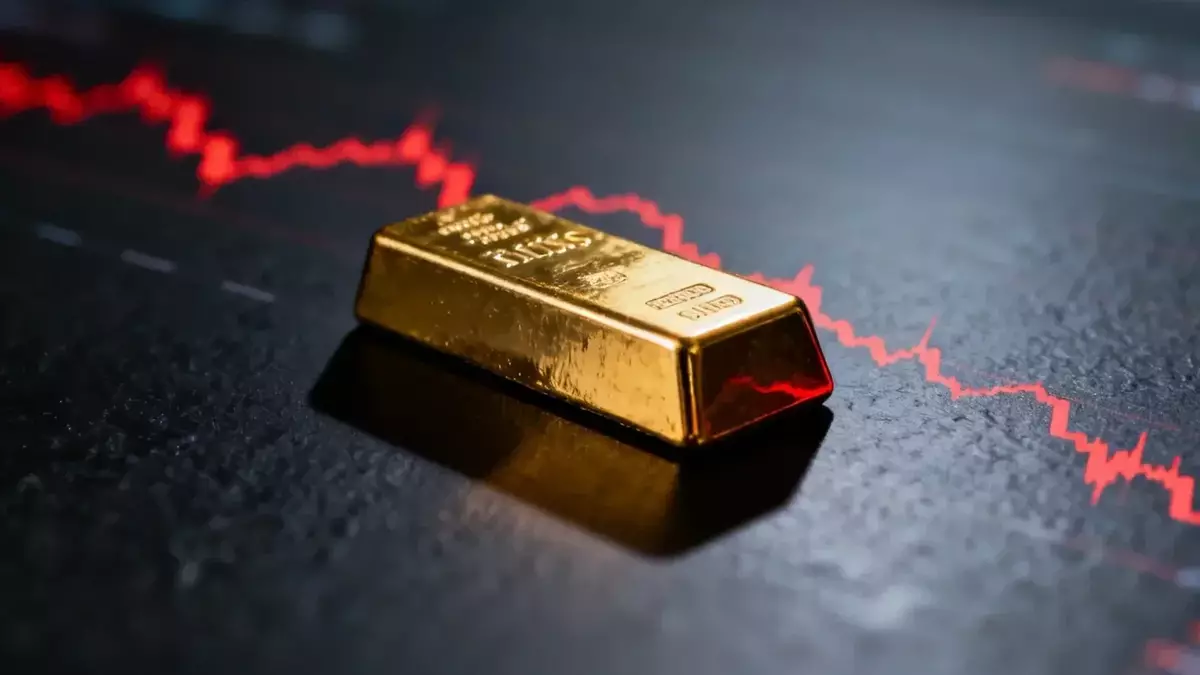
Gold roared back above $4,100 on Thursday, as a dismal US jobs report and dovish signals from the Federal Reserve chairman sparked a powerful rebound. The precious metal climbed nearly 1.5% to $4,196.90 an ounce, snapping a four-month losing streak that had dragged it to its worst quarterly performance in over a decade.
The catalyst was a far-weaker-than-expected June nonfarm payrolls print. Only 57,000 new positions were created last month, barely half the 110,000 economists had penciled in. The government also revised May’s figures sharply lower. The labor market chill immediately stoked expectations that the Fed will be forced to ease off its tightening bias, a narrative reinforced by Chairman Kevin Warsh’s comments at the European Central Bank forum in Sintra on July 1. Warsh said inflation risks had “noticeably diminished,” and a key Fed inflation gauge fell to 2.4% in May.
Lower rate expectations make the non-yielding bullion more attractive, and the dollar slid in response. Yields on ten-year US Treasuries dipped to 4.47%, further burnishing gold’s appeal. Geopolitical jitters added an extra bid: Iran’s military threatened a “forceful response” to unauthorized oil tankers in the Strait of Hormuz, a vital chokepoint for global crude shipments.
Should investors sell immediately? Or is it worth buying Gold?
Yet Thursday’s rally stands in sharp contrast to the brutal beating gold took in the second quarter. The yellow metal crashed 11.7% in June alone, following a 1.8% decline in May. That left the quarterly loss at roughly 16% — the worst since the second quarter of 2013. At the end of June, gold touched $3,942, its lowest since early November 2025. Even after this week’s bounce, the metal is still down 7.42% over the past 30 days and 4.85% for the year to date. It trades 6.65% below its 50-day moving average of $4,425.61, and the relative strength index sits at a neutral 42.6.
Central banks, however, have been unfazed by the carnage. In May, while prices were already falling for the fourth consecutive month, official institutions added a net 41 tonnes of gold to their reserves. The buying was led by Poland (18 tonnes) — its fourth straight month of double-digit purchases — and China. First-quarter net purchases worldwide totaled about 244 tonnes, above both the prior quarter and the five-year average.
Goldman Sachs acknowledged the shift in monetary policy expectations by slashing its year-end 2026 price target from $5,400 to $4,900 an ounce. The bank cited the likelihood that the Fed will keep rates on hold for the remainder of this year. Even so, Goldman remains structurally positive on the metal, pointing to persistent central bank demand. The buying pace has moderated from a peak of 67 tonnes per month in 2024 but is still roughly three times the 17-tonne monthly rate seen before Russia’s assets were frozen in 2022.
From a technical perspective, the move above $4,100 triggered a clear buy signal, reinforced by a bullish double-bottom pattern. The next major resistance lies at $4,301. Whether gold can sustain its momentum depends on whether central banks maintained their buying pace through June’s rout — a question that will be answered when the World Gold Council releases its next monthly report.
Ad
Gold Stock: New Analysis - 3 July
Fresh Gold information released. What's the impact for investors? Our latest independent report examines recent figures and market trends.
Disclaimer regarding our articles: No investment advice, no buy or sell recommendation. Information on prices, companies, and markets is provided without guarantee; changes are possible at any time. Stock market transactions can lead to substantial losses. Our articles are created and reviewed in whole or in part automatically with the support of AI.