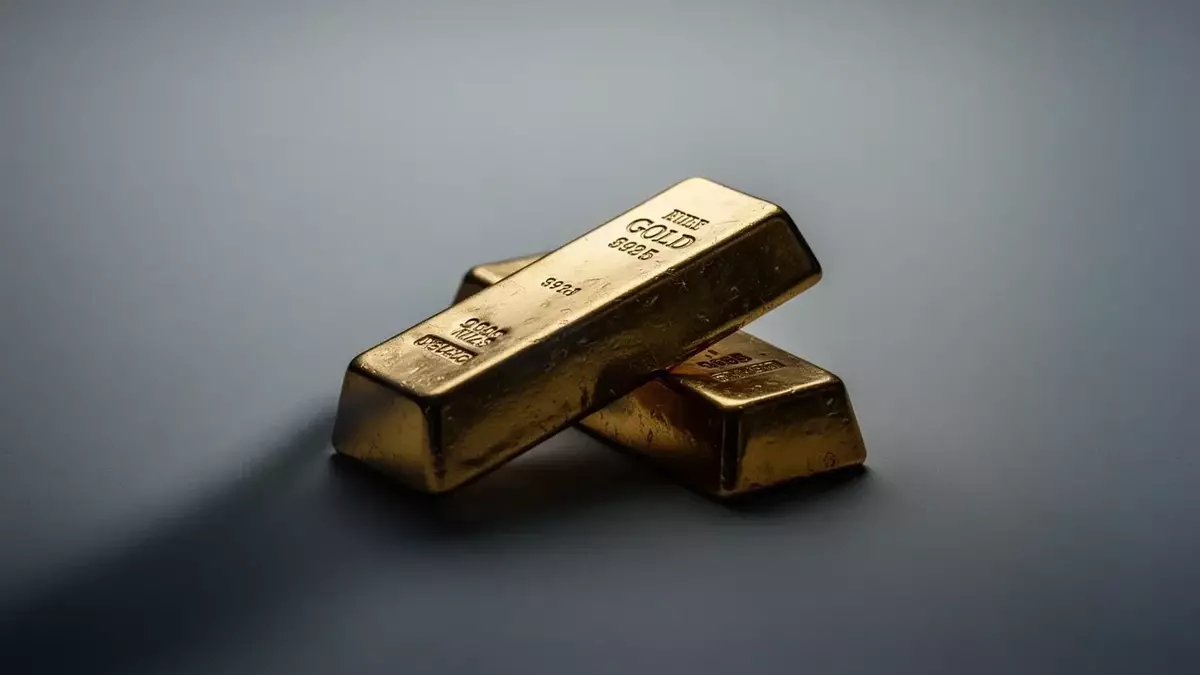
Gold Rises to $4,187.30 as Dollar Slumps and Jobs Miss Revives Rate-Cut Bets, But Western ETF Outflows Underscore a Divided Market
Published on 07/04/2026 at 12:46 | Redaktion boerse-global.de
A disappointing US jobs report for June has thrown a lifeline to gold, pushing the precious metal to $4,187.30 per ounce on Friday — a 1.23% daily gain that lifted its weekly advance to just over 2%. The data, which showed only 57,000 new jobs added against forecasts of 110,000, dramatically shifted expectations for Federal Reserve policy. Markets now assign just a 46% probability of a rate hike by year-end, down sharply from previous weeks, and that recalibration has provided the primary catalyst for the rally.
The dollar’s response was equally decisive. The greenback suffered its biggest weekly slide since April, making dollar-denominated gold cheaper for buyers in other currencies and adding a second tailwind to the metal’s climb. Lower bond yields, reacting to the diminished rate-hike outlook, further burnished gold’s appeal as a non-yielding asset.
Yet beneath the surface, the rally masks a deep divergence in investor behavior. Western institutional investors have been pulling money out of gold at a steady clip. The SPDR Gold Shares, the world’s largest physically backed gold ETF, held roughly 1,013 tonnes of the metal in mid-June, but its holdings have shrunk by more than 57 tonnes since the start of the year. According to Suki Cooper of Standard Chartered, some 298 tonnes of gold held in ETFs are currently underwater, with many positions clustered around the $4,000 level — the metal’s 52-week low of $3,901.30 hit last October.
Should investors sell immediately? Or is it worth buying Gold?
That selling pressure from the West is being absorbed by a very different set of buyers: central banks. The World Gold Council reported that official reserves grew by a net 41 tonnes in May, continuing a long-standing accumulation trend. A survey of 76 reserve managers found that 45% plan to increase their gold holdings over the next twelve months, with 89% expecting global central bank reserves to rise. This structural demand provides a formidable floor under prices, even as ETF outflows persist.
“The weak jobs data have reduced the risk of a continued restrictive monetary policy,” analysts at OCBC Bank noted, describing their outlook as “cautiously positive.” They cautioned, however, that the unemployment rate remains stable and inflation risks have not vanished. Fed Chair Kevin Warsh has also flagged softening inflation expectations, while lower oil prices — aided by progress in US-Iran talks — are taking additional pressure off the central bank to tighten.
For the near term, the direction of travel hinges on upcoming data. FOMC minutes and the next US consumer price index release will be closely watched. A further run of soft economic numbers could cement lower rate expectations and provide fresh lift to gold. The metal’s RSI currently sits at 46.6 — neutral territory — suggesting room for further upside if the macroeconomic backdrop continues to favor a dovish pivot. The duel between western ETF sellers and central bank buyers, meanwhile, ensures that any rally will be anything but straightforward.
Ad
Gold Stock: New Analysis - 4 July
Fresh Gold information released. What's the impact for investors? Our latest independent report examines recent figures and market trends.
Disclaimer regarding our articles: No investment advice, no buy or sell recommendation. Information on prices, companies, and markets is provided without guarantee; changes are possible at any time. Stock market transactions can lead to substantial losses. Our articles are created and reviewed in whole or in part automatically with the support of AI.