Gold’s $1,400 Target Divide Exposes a Market Torn Between Physical Hoarding and Monetary Tightening
Published on 06/29/2026 at 14:03 | Redaktion boerse-global.de
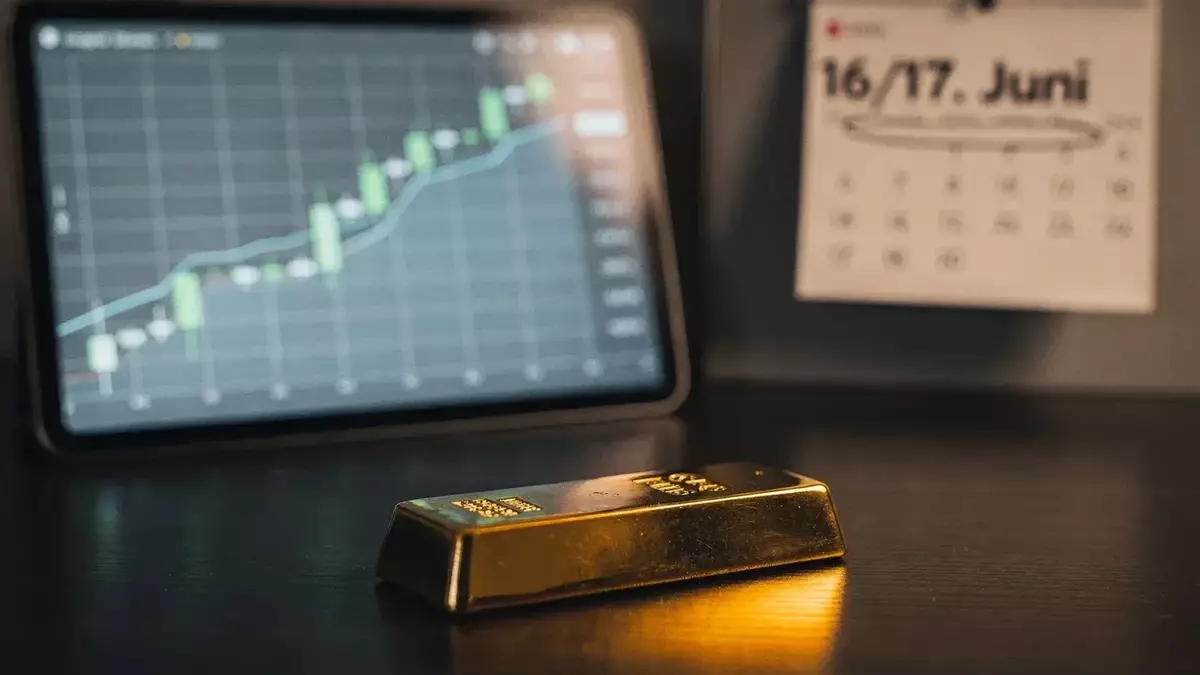
A strange dissonance has taken hold of the gold market. Central banks bought a staggering 244 tonnes of bullion in the first quarter alone — up 17% from the previous quarter — yet the spot price has just endured its worst four-week stretch in months, shedding more than 11% to trade near $4,051 an ounce. The disconnect between the voracious appetite of sovereign buyers and the punishing selloff on screen has never been more pronounced.
The immediate source of pain is the Federal Reserve. Under new chair Kevin Warsh, the June FOMC meeting stripped forward guidance from the official statement entirely, and nine of the 18 rate-setters now see at least one hike this year. The core PCE inflation gauge accelerated to 4.1% in May, leaving the central bank with little room to pivot. Goldman Sachs responded by scrapping all of its projected rate cuts for 2026, pushing the first easing to June 2027 at the earliest. For a non-yielding asset like gold, a tightening cycle is a direct headwind — particularly when the Fed is reacting aggressively to inflation rather than tolerating it. The logic that gold thrives when real rates turn negative has reversed; now higher nominal rates and a strengthening dollar are squeezing the metal from both sides.
Yet the real story lies beneath the surface. The 244-tonne first-quarter haul was led by Poland and Uzbekistan, but the buying spree reflects a broader shift in sovereign attitudes toward the dollar. A survey conducted by the World Gold Council found that 61% of central banks now view US government debt as a threat to the greenback’s status as the world’s reserve currency — up from just 20% last year. The speed of that deterioration in confidence is unprecedented. Goldman Sachs expects monthly purchases to average 60 tonnes for the remainder of 2026, and retail demand is reinforcing the trend: global coin and bar buying hit 474 tonnes in the first quarter, the second-highest on record.
Should investors sell immediately? Or is it worth buying Gold?
This physical hoarding is clashing directly with the macro headwinds, and the result is a rare split among the biggest Wall Street houses. Citi slashed its three-month target to $4,000 in early June, citing stabilizing real yields, a stronger dollar, and fading central bank buying as well as weaker ETF inflows. Goldman followed on June 19 by cutting its year-end forecast from $5,400 to $4,900. J.P. Morgan held firm at $6,000. The $1,400 chasm between the lowest and highest institutional target is not about data uncertainty; it reflects fundamentally divergent views on what gold actually is in this environment — an inflation hedge, a geopolitical insurance policy, or both.
Geopolitics added a short-lived bid in recent weeks. After Iran attacked ships and US military bases in Kuwait and Bahrain, and the oil price breached $110, both sides agreed to suspend further strikes. The Strait of Hormuz reopened, and talks were tentatively scheduled for Doha. But the relief quickly soured when Iran’s deputy foreign minister, Kazem Gharibabadi, told state television that no working-group meetings were planned this week. The acute crisis premium has been priced out of gold, but full de-escalation remains an open question.
The physical market is sending its own mixed signals. At the COMEX contract expiration, 38,614 notices for physical delivery were filed — roughly 120 tonnes, the highest since February. That suggests strong end-user demand on one side. On the other, the premium on Chinese gold over the international spot price briefly turned into a discount, and anecdotal evidence points to easing central bank purchases more recently. The net effect is a market that looks technically stretched: the relative strength index is at 35, close to oversold territory.
The next concrete catalysts are the US jobs report and the ISM manufacturing index. If both come in strong, the case for a September rate hike — currently priced with 62% probability — will harden, and gold’s short-term pain will likely continue. But beneath that, the largest accumulation of physical gold by official institutions in years is building a floor that no single Fed meeting can easily dismantle.
Ad
Gold Stock: New Analysis - 29 June
Fresh Gold information released. What's the impact for investors? Our latest independent report examines recent figures and market trends.
Disclaimer regarding our articles: No investment advice, no buy or sell recommendation. Information on prices, companies, and markets is provided without guarantee; changes are possible at any time. Stock market transactions can lead to substantial losses. Our articles are created and reviewed in whole or in part automatically with the support of AI.