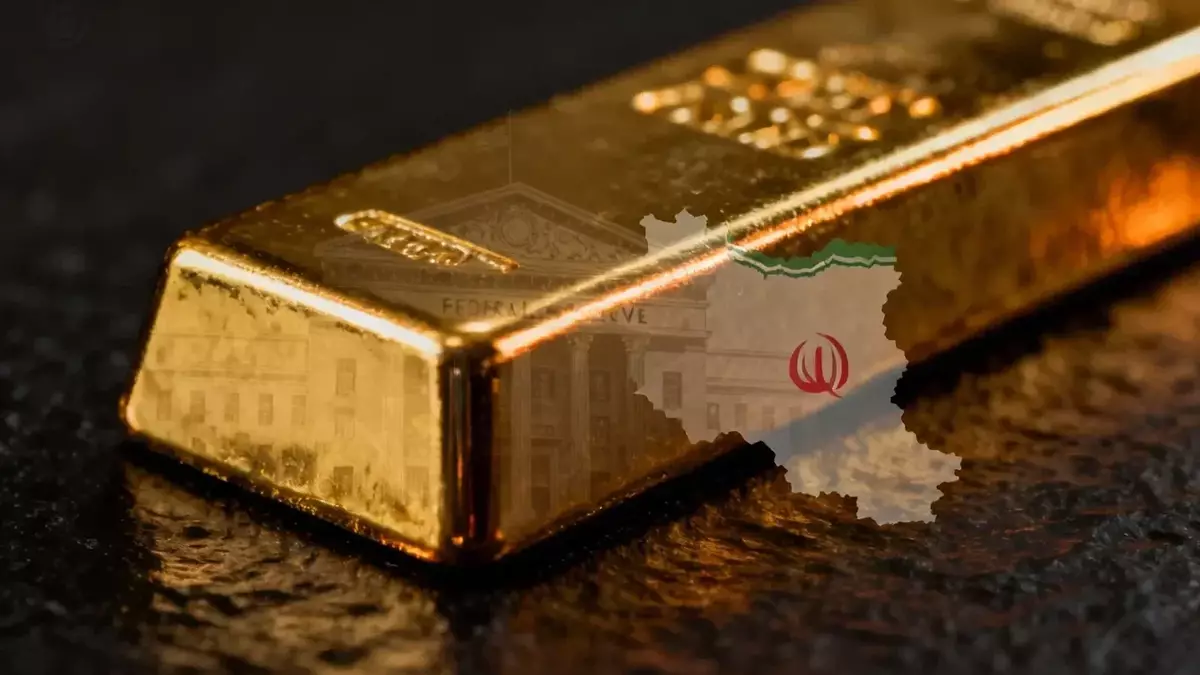
Gold's $4,000 Flashpoint: A Strait of Hormuz Attack Sparks a Brief Surge, but the Fed's Iron Grip Holds the Ceiling
Published on 06/26/2026 at 11:22 | Redaktion boerse-global.de
Gold briefly punched through the $4,000 threshold on Friday after a vessel flying a Singaporean flag was struck by an unknown projectile off the coast of Oman, reigniting fears over the safety of shipping lanes through the Strait of Hormuz. The spike proved short-lived. By the close of the week, the yellow metal was trading at $4,049.70 per ounce, nursing a roughly 3% decline over the preceding seven days.
The incident interrupted what had been a period of cautious optimism following a preliminary US-Iran agreement on June 18. But the market's reaction underscores how deeply the metal remains trapped between two opposing forces: safe-haven buying triggered by geopolitical flashpoints and the relentless gravitational pull of a hawkish Federal Reserve.
Divergent Demands, Converging Pressure
A temporary dip below the psychologically critical $4,000 level earlier in the week highlighted the dominant headwind: the US dollar surged to its highest in over a year, making dollar-denominated commodities more expensive for international buyers. Fed Chair Kevin Warsh, in office since mid-June, has reinforced his commitment to price stability, with markets now pricing in a potential rate hike as soon as September — the probability jumped from 29% to roughly 68% in just one week.
The interest rate remains locked in a 3.50–3.75% band, keeping the opportunity cost of holding non-yielding gold elevated. Friday's PCE inflation data, at around 4.2%, offered little comfort; it is more than double the Fed's 2% target, leaving no room for near-term easing.
Should investors sell immediately? Or is it worth buying Gold?
Yet beneath the surface, the physical market tells a starkly different story. China's central bank has added to its gold reserves for 18 consecutive months. Poland is also buying strategically. In the first quarter of 2026, central banks globally net purchased 244 tonnes — a 3% increase year-on-year. Total gold demand, including over-the-counter transactions, hit a record 1,231 tonnes for an opening quarter.
That buying spree is being offset by a wholesale retreat from paper gold. Western ETF holders have posted net outflows, and some investors liquidated bullion to cover margin calls triggered by the sharp sell-off in US technology stocks. The result is a market fractured along a physical-versus-paper fault line.
Technicals Signal Oversold, But Recovery Needs a Catalyst
The Relative Strength Index has fallen to 33 points, a technically oversold reading that typically attracts short-term buyers. Gold is currently testing support around $4,010. A sustained break below that level would open the door to the next floor at $3,900.
For any genuine trend reversal, the metal would need to reclaim its 50-day moving average near $4,496. That looks a long way off as long as Warsh keeps interest rates elevated and the dollar remains muscular. The metal now sits roughly 28% below the all-time high of $5,589 reached in January — a pullback that puts the earlier rally in perspective but does little to calm jittery hands.
Gold at a turning point? This analysis reveals what investors need to know now.
The Broader Context: A Commodity Sector Fractured
Gold is not alone in feeling the squeeze. The same macro forces — a strong dollar, hawkish Fed rhetoric, and easing geopolitical tensions in the Persian Gulf — have hammered silver, which has lost more than half its value from its January peak. But gold's unique dual role as a safe haven and a monetary asset leaves it exposed from both sides. Any escalation in the Hormuz situation would drive it higher; any further tightening by the Fed would push it lower.
For now, the market is watching the Strait of Hormuz, US inflation data, and the next Fed meeting with equal intensity. Both can change quickly — and gold will move with them.
Ad
Gold Stock: New Analysis - 26 June
Fresh Gold information released. What's the impact for investors? Our latest independent report examines recent figures and market trends.
Disclaimer regarding our articles: No investment advice, no buy or sell recommendation. Information on prices, companies, and markets is provided without guarantee; changes are possible at any time. Stock market transactions can lead to substantial losses. Our articles are created and reviewed in whole or in part automatically with the support of AI.