Gold’s $4,000 Threshold Under Siege as Central Bank Buying Collides with Oil-Inflation Fears
Published on 07/13/2026 at 20:13 | Redaktion boerse-global.de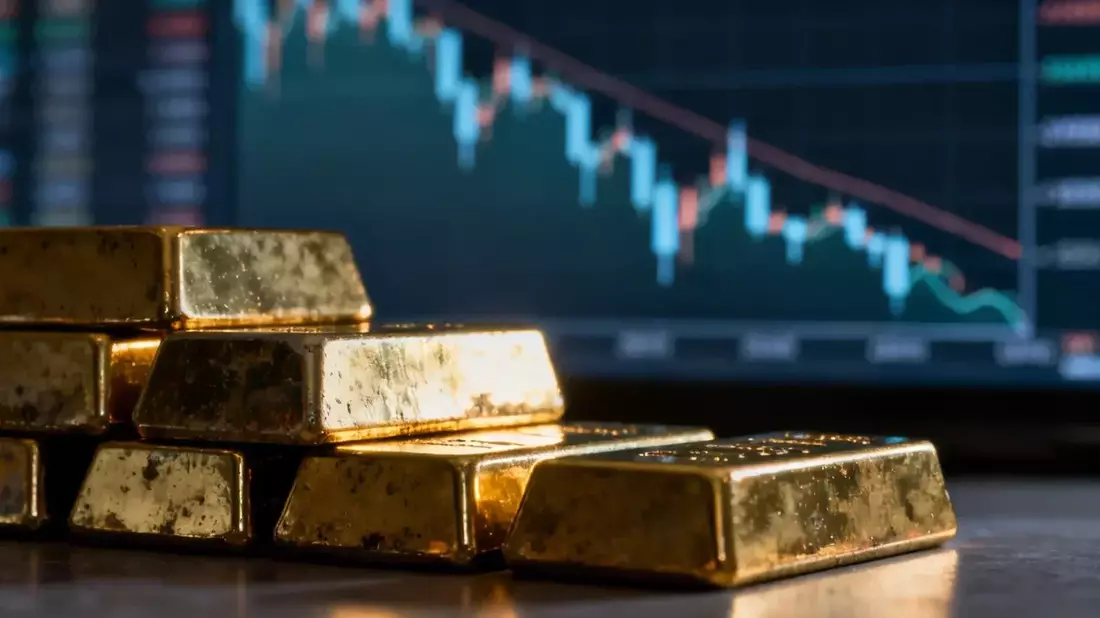
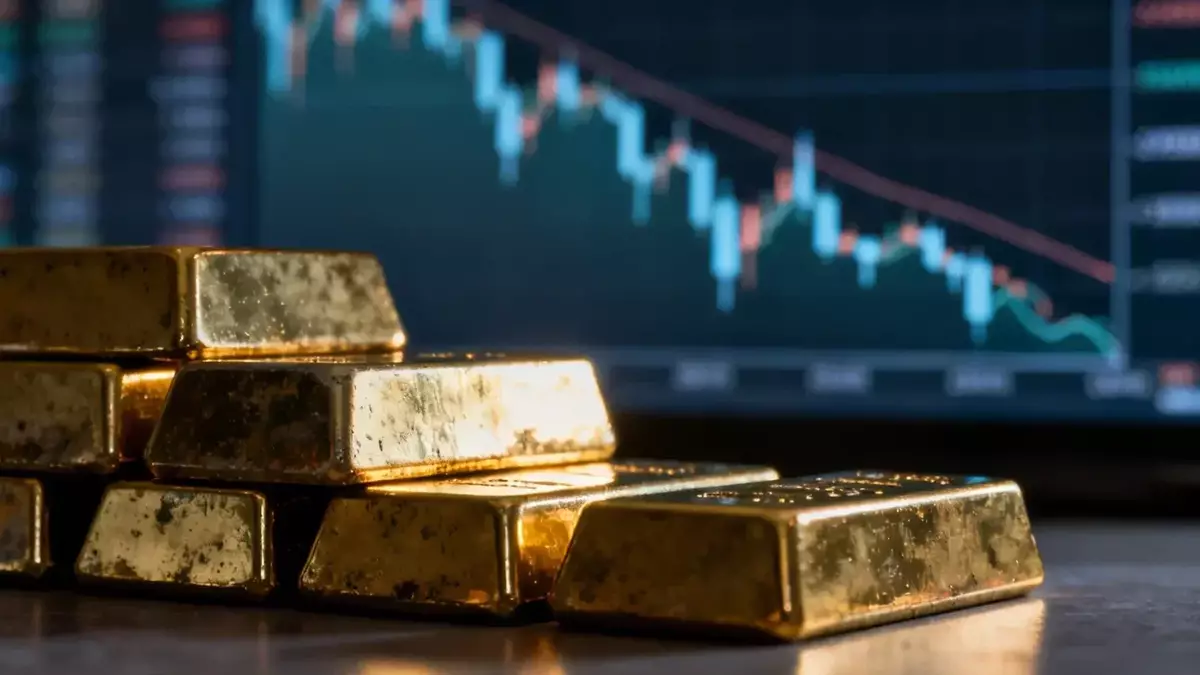
Gold investors got a stark reminder on Monday that geopolitical tension does not always translate into safe-haven demand. Despite an escalation in the Persian Gulf that sent crude prices surging, bullion tumbled 2.62 percent to $4,019.50 an ounce — its lowest level in months and a stark contrast to the rally in energy markets. The divergence highlights a growing anxiety: that oil-driven inflation will keep the Federal Reserve’s monetary policy tight for longer, raising the opportunity cost of holding a non-yielding asset.
The sell-off extended a correction that began after gold hit an all-time high of $5,626.80 in January 2026. Over the past week the metal has shed 3.76 percent, while the monthly decline stands at 5.19 percent. Year-to-date losses now exceed 7 percent. The technical picture is equally sobering: the 50-day moving average of $4,355.23 sits 7.70 percent above the current price, and the gap to the 200-day average has widened to 11.44 percent. The relative strength index at 37.6 signals heavy selling momentum, though the market has not yet entered oversold territory. The 52-week low of $3,901.30 from October 2025 is now just 3.03 percent away, making it the critical support level in the coming sessions.
What makes Monday’s price action particularly striking is that it unfolded against a backdrop of robust, long-term demand from the official sector. The EU’s foreign ministers imposed a comprehensive gold embargo on Sudan, banning the import, purchase, and transport of Sudanese gold into the bloc, alongside restrictions on the export of chemicals used in mining and processing. The move aims to cut off a key funding source for the country’s warring factions, but it also removes a marginal supply stream from the global market.
Should investors sell immediately? Or is it worth buying Gold?
More significantly, central banks continue to buy at a pace that has reshaped the demand side of the equation. The People’s Bank of China added 15 tonnes to its reserves in June, marking the twentieth consecutive month of purchases. Poland has been even more aggressive: its central bank acquired 82 tonnes in the first half of 2026, lifting total reserves to 632.4 tonnes. Governor Adam Glapi?ski said the bank had used the recent price weakness to build strategic holdings, with a medium-term target of 700 tonnes. Nearly half of the central banks surveyed by the World Gold Council now plan to increase their gold reserves in the coming year — a record share driven mainly by emerging-market nations seeking to reduce dollar dependence.
This structural support, however, is being overwhelmed by shifting interest-rate expectations. Monday’s oil spike — Brent crude surged 5 percent above $79 a barrel — reignited fears of a new inflationary wave. Higher energy prices feed directly into the inflation outlook, strengthening the case for the Fed to maintain or even tighten its restrictive stance. A stronger dollar, boosted by the rate-hike narrative, adds further drag on gold by making it more expensive for overseas buyers.
Wall Street banks have adjusted their forecasts accordingly. Bank of America slashed its average gold price estimate for 2026 by 14 percent to $4,360 an ounce, citing expectations of tighter Fed policy. J.P. Morgan lowered its full-year average to $5,243 from $5,708, while both firms maintain a longer-term target of around $6,000 — a level they expect to materialize only once the central bank’s tightening cycle ends.
Tuesday’s US consumer price index release will be the next major test for gold. If inflation comes in stronger than anticipated, pressure on the metal is likely to persist, potentially pushing it below the psychologically important $4,000 mark. A softer print, by contrast, could provide temporary relief and allow the structural support from central bank purchases to reassert itself. For now, the precious metal finds itself caught between two powerful forces — official-sector buying on one side and macro-driven rate fears on the other — with the outcome likely to depend on which narrative prevails in the data ahead.
Ad
Gold Stock: New Analysis - 13 July
Fresh Gold information released. What's the impact for investors? Our latest independent report examines recent figures and market trends.
Disclaimer regarding our articles: No investment advice, no buy or sell recommendation. Information on prices, companies, and markets is provided without guarantee; changes are possible at any time. Stock market transactions can lead to substantial losses. Our articles are created and reviewed in whole or in part automatically with the support of AI.