Gold’s $4,055 Balancing Act: Why an Oil Shock Is Eclipsing Geopolitical Tailwinds
Published on 07/25/2026 at 19:31 | Redaktion boerse-global.de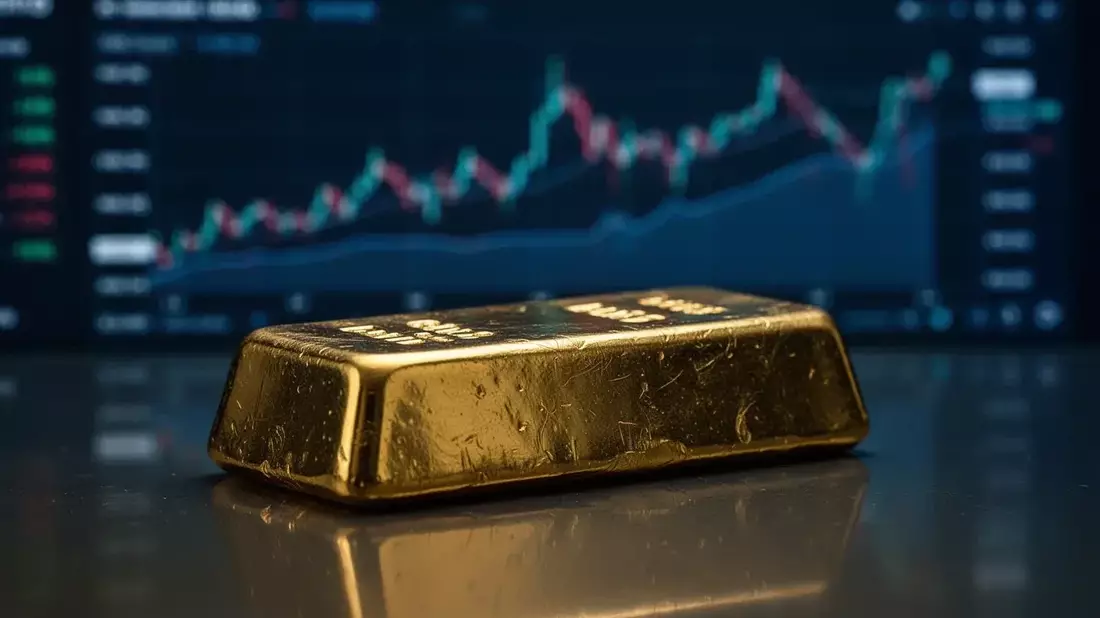
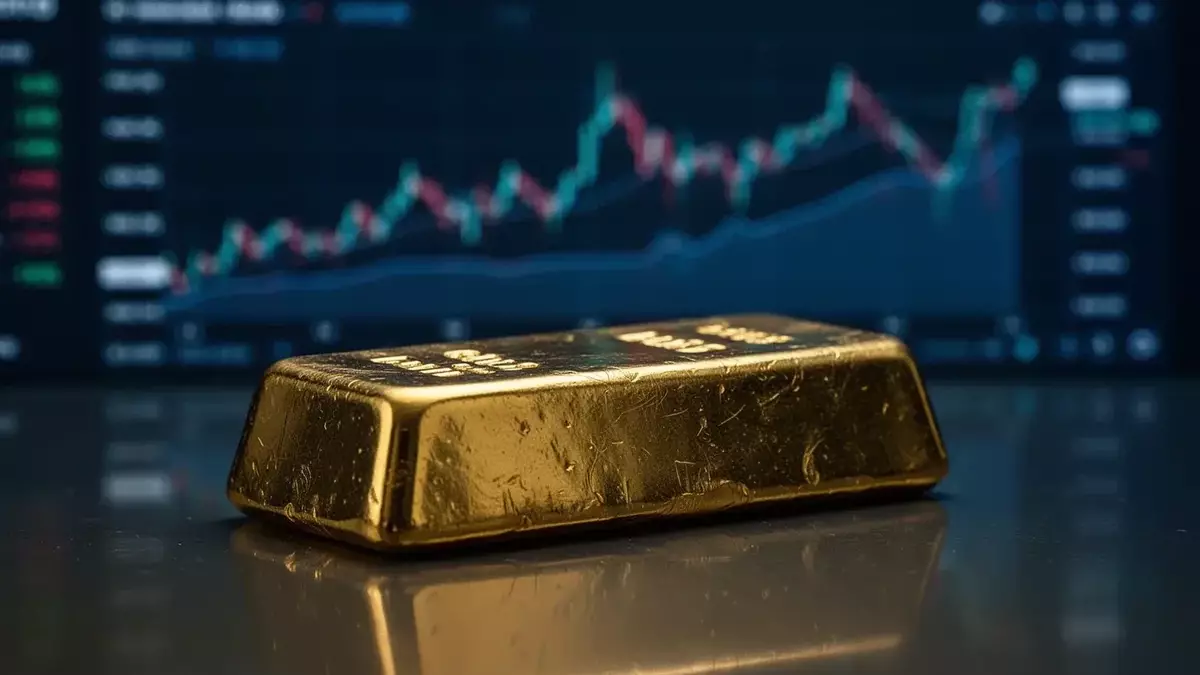
Gold closed the week at $4,055.70 per troy ounce on Friday, eking out a 0.08 percent daily gain and a 0.86 percent weekly advance. Yet the precious metal’s ability to hold above the psychologically significant $4,000 threshold masks a growing tension: the very geopolitical turmoil that typically fuels a flight to safety is now working against bullion through an unexpected channel.
The culprit is crude. Brent oil breached $100 a barrel for the first time since May after President Trump warned of expanded military action against Iran, vowing to hold Tehran accountable for any future Houthi attacks on Red Sea shipping. That energy shock is reshaping the calculus for gold investors. Rising oil prices fan inflation fears, which in turn reinforce expectations that the Federal Reserve will keep monetary policy tight for longer. For a non-yielding asset like gold, a hawkish Fed outlook is a direct headwind.
The market is already pricing in those expectations. Traders see roughly an 80 percent probability of a rate hike in September, though the consensus for next week’s Fed meeting points to no change. The European Central Bank kept its own rates steady on Thursday, leaving the door ajar for a September move. A busy data calendar lies ahead — the ADP employment report on July 28, the Fed decision on July 29, second-quarter GDP and weekly jobless claims on July 30, followed by the Chicago PMI and University of Michigan inflation expectations on July 31.
Compounding the pressure, new US tariffs of 10 to 12.5 percent on imports from key trading partners are injecting additional uncertainty into commodity markets. The trade friction is amplifying investor caution, even as gold has so far avoided a sharp breakdown.
Should investors sell immediately? Or is it worth buying Gold?
Physical demand tells a story of two Asias. In India, discounts widened to a seven-week high as elevated prices deterred buyers. In China, the opposite dynamic is playing out: purchasing interest is improving despite the $4,000-plus price tag. The divergence underscores how consumers in the world’s two largest gold markets are reacting in starkly different ways to the current price environment.
Central banks remain a steadying force beneath the surface noise. They purchased 863.3 tonnes of gold in 2025, accounting for roughly 17.3 percent of global demand. That structural bid should continue to provide a floor, even as short-term headlines buffet the market.
Technically, gold is trading about 4.4 percent below its 50-day moving average of $4,242.92, with a relative strength index of 44.7 — neutral territory. The $3,900 to $4,100 zone remains the critical support band to defend. Analysts note that a de-escalation in the Middle East could trigger a reaction at the upper boundary of that range, while a break below would test the constructive longer-term narrative.
Gold at a turning point? This analysis reveals what investors need to know now.
The medium-term outlook, however, has grown more cautious. Goldman Sachs, HSBC, J.P. Morgan, and StoneX have all trimmed their gold price forecasts for end-2026, now projecting a range of $4,000 to $4,900. The revision reflects the view that the Fed will deliver few, if any, rate cuts in 2026.
For the week ahead, the interplay between the Fed’s messaging, economic data, and developments in the Middle East will determine whether gold can hold $4,000 and keep its broader uptrend intact. The oil shock has temporarily stolen gold’s geopolitical thunder — but the metal’s resilience so far suggests the rally is merely paused, not broken.
Ad
Gold Stock: New Analysis - 25 July
Fresh Gold information released. What's the impact for investors? Our latest independent report examines recent figures and market trends.
Disclaimer regarding our articles: No investment advice, no buy or sell recommendation. Information on prices, companies, and markets is provided without guarantee; changes are possible at any time. Stock market transactions can lead to substantial losses. Our articles are created and reviewed in whole or in part automatically with the support of AI.