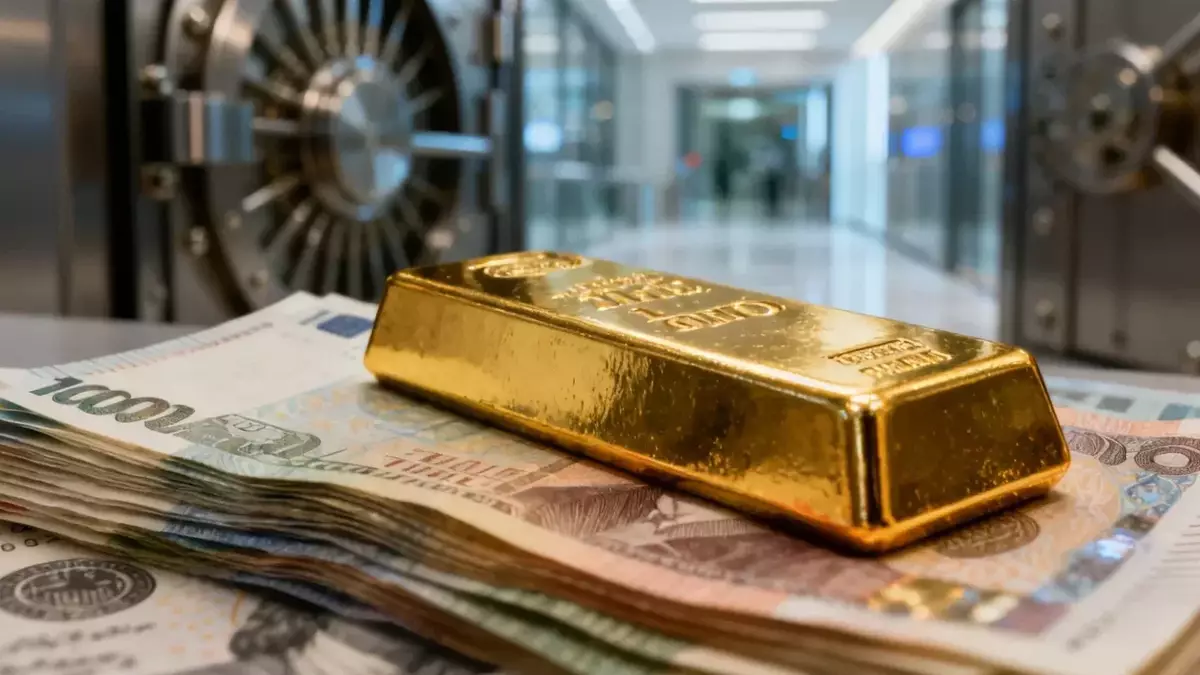
Gold’s $4,055 Crossroads: Central Banks Hoard 36,664 Tonnes as a Hawkish Fed Looms
Published on 07/26/2026 at 13:11 | Redaktion boerse-global.de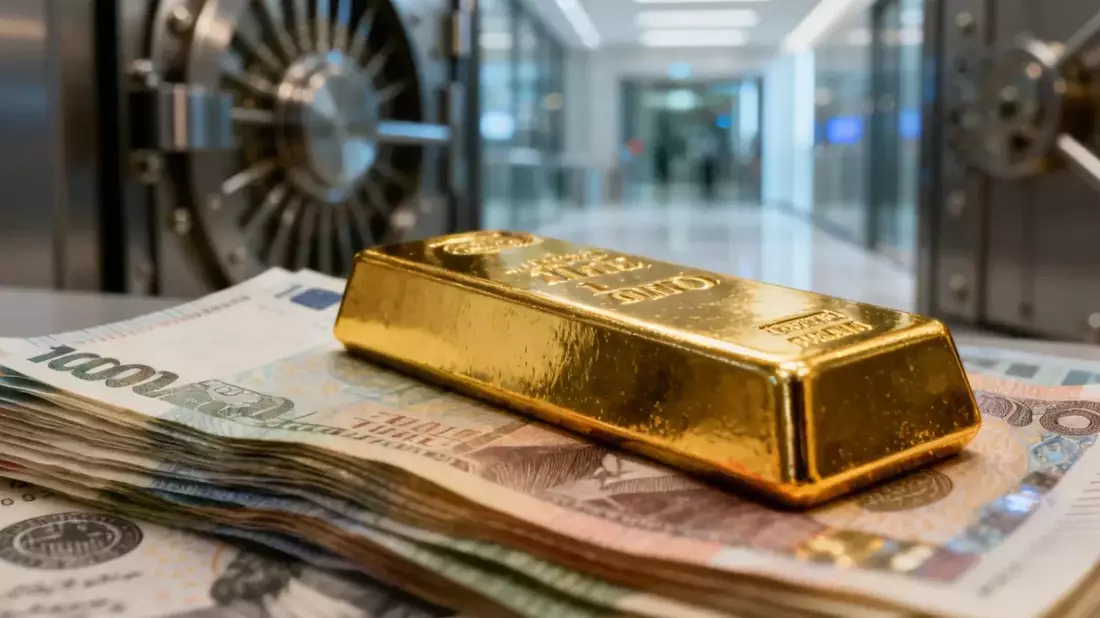
Gold closed Friday at $4,055.70 per troy ounce, virtually flat on the day but nursing a 6.40% loss since the start of 2026. The precious metal briefly dipped below the psychologically significant $4,000 mark last week, and remains roughly 28% adrift from its 52-week high set at the end of January. All eyes now turn to the Federal Reserve, which convenes on July 28-29 for what is shaping up to be its most consequential policy meeting in months.
The Fed Wildcard
The Federal Open Market Committee is widely expected to hold rates steady for a fifth consecutive meeting, keeping the target range at 3.5% to 3.75%. Yet the backdrop has grown markedly more complicated. Inflation sits at 3.5% — well above the 2% target — while the Iran conflict has pushed oil above $100 a barrel. Fed Governor Waller recently signaled he is “ready to tighten,” and new Chair Warsh has dialed back forward guidance considerably. According to data from Wallstreetcn, the probability of a rate hike priced into the futures market has surged from 13% to 38% in just one week — a dramatic shift that underscores mounting market jitters. KPMG’s Swonk sees the possibility of two rate increases later in 2026, even though a broader poll of economists by Anadolu Agency still expects no change.
This toxic cocktail of sticky inflation, geopolitical turmoil and less predictable central bank communication explains why gold — despite its traditional safe-haven status — has lost momentum. The 200-day moving average now sits roughly 10.71% above the current price, signaling that the medium-term uptrend has stalled.
Central Banks Dig In
While short-term traders fret over rates, the world’s central banks are sending a very different signal. Official gold reserves have crossed a historic threshold, hitting 36,664.5 tonnes — equivalent to 16.7% of all the gold ever mined. At the LBMA fixing on July 21, those holdings were worth approximately $4.78 trillion, or roughly $576 for every person on the planet.
Should investors sell immediately? Or is it worth buying Gold?
The buying has continued unabated even as gold prices have retreated from their January peak of $5,626.80. In the first half of 2026, central banks purchased 224.2 tonnes and sold 221.4 tonnes, leaving a net addition of roughly three tonnes. Poland has been the most aggressive buyer, adding 102 tonnes in 2025 and another 63.6 tonnes in the early months of 2026 — worth about $21.6 billion at current prices. Other NATO eastern-flank states are also building strategic reserves.
“In an increasingly digital and interconnected financial system, central banks are turning back to one of the oldest forms of human wealth — a metal that has survived wars, currency crises and shifts in economic order,” said Alan Goldberg, lead data analyst at BestBrokers. The purchases, he argues, signal a quest for safety rather than a bet on price direction.
Not every nation is on the same page. Turkey has sold some gold to support its currency, while Russia is trimming holdings due to fiscal pressures. But the dominant trend remains accumulation.
A Tale of Two Demand Drivers
The structural case for gold is reinforced by private-sector demand. China’s gold imports hit their highest level since March 2024 in June, as domestic investors took advantage of lower prices. Middle-aged Chinese women bought 432 tonnes of gold bars and coins in 2025, a 28% increase year-on-year, according to The Straits Times. In India, households hold gold worth more than the combined reserves of the ten largest central banks and the International Monetary Fund.
Gold’s share of global official reserves has now climbed above 27%, overtaking US Treasuries (roughly 22%) and the euro (about 15%) for the first time since 1996 — a seismic shift in the architecture of global reserve assets.
Gold at a turning point? This analysis reveals what investors need to know now.
Analyst Targets: From Euphoria to Caution
The price outlook is deeply divided. JPMorgan strategist Nikolaos Panigirtzoglou sees gold reaching $8,000 to $8,500 in the coming years, driven by a gradual rotation by retail investors out of fixed income and into gold as a hedge against US equity risk. He notes that the gold allocation in retail portfolios has risen from 1% to 3% over the past decade and could climb to 4.6%. Goldman Sachs has lifted its year-end target to $5,400.
Yet other houses urge caution, pointing to a bearish chart pattern, a strong dollar and persistently high interest rates. Momentum traders are considered extremely overbought, making short-term pullbacks more likely. For now, the tug-of-war between structural demand and near-term monetary uncertainty leaves gold at a delicate inflection point — with the Fed’s July decision likely to determine whether the next leg is a rebound or a deeper correction.
Ad
Gold Stock: New Analysis - 26 July
Fresh Gold information released. What's the impact for investors? Our latest independent report examines recent figures and market trends.
Disclaimer regarding our articles: No investment advice, no buy or sell recommendation. Information on prices, companies, and markets is provided without guarantee; changes are possible at any time. Stock market transactions can lead to substantial losses. Our articles are created and reviewed in whole or in part automatically with the support of AI.