Gold’s Delicate Balancing Act: A Ceasefire, a Fed Debut, and China’s Record Bullion Splurge
Published on 07/28/2026 at 03:41 | Redaktion boerse-global.de
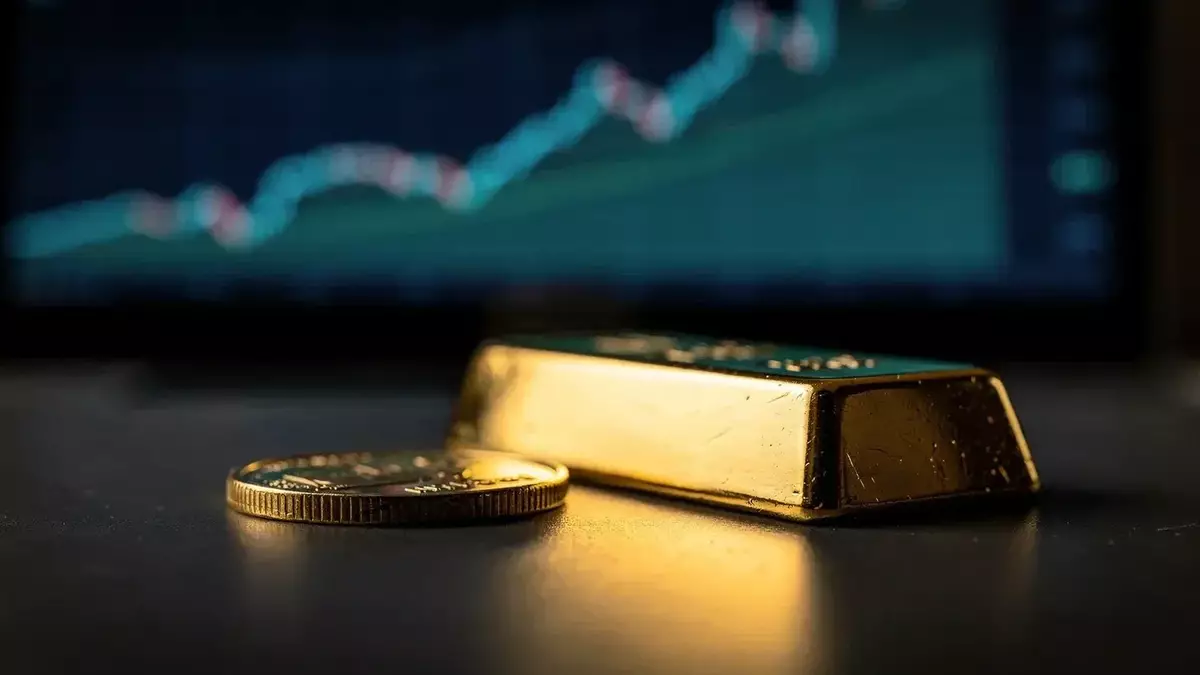
Gold traders are navigating a rare alignment of forces this week. The metal settled Monday at $4,081.10, gaining 0.63 percent, as a surprise ceasefire between the US and Iran reshaped the geopolitical landscape just days before the Federal Reserve’s first policy meeting under new Chair Kevin Warsh. The combination has injected fresh uncertainty into a market already wrestling with inflation and shifting rate expectations.
The truce, which took effect late Friday, saw Washington halt its nearly two-week bombing campaign against Iran without formal announcement. Tehran responded by suspending retaliatory strikes and opening talks with Oman over the Strait of Hormuz. For gold, the immediate consequence has been a sharp retreat in oil prices, which had been inflated by fears of supply disruptions from the Persian Gulf to the Red Sea. That, in turn, has eased some of the inflation anxiety that had been weighing on bullion.
On a weekly basis, gold is up 1.73 percent — a clear sign of how dramatically the ceasefire has shifted sentiment. Yet the metal remains roughly 27 percent below its 52-week high of $5,626.80, hit in late January 2026, underscoring how far the rally has faded.
All eyes now turn to the Federal Open Market Committee, which convenes on July 28-29 for its first rate decision under Warsh. The consensus among analysts is that the Fed will hold the federal funds rate at 3.50 to 3.75 percent. But Warsh’s hawkish reputation has markets on edge. Traders currently assign about a 30 percent probability of a rate hike this week, while the odds for a move in September stand at roughly 80 percent.
Should investors sell immediately? Or is it worth buying Gold?
The inflation picture remains the central worry. On Thursday, the Fed will release the PCE price index, its preferred inflation gauge. Economists expect core PCE to come in around 3.4 percent — well above the central bank’s target. A hotter-than-expected reading could fuel a further rise in bond yields, adding headwinds for gold.
Adding to the complexity, the US Dollar Index is hovering near a 14-month high, making gold more expensive for buyers outside the dollar zone and capping any recovery.
Beneath the short-term noise, a structural force continues to underpin the market: central bank buying. The People’s Bank of China purchased 14.93 tonnes of gold in June 2026, its largest single-month acquisition since 2023. That extends the PBOC’s buying streak to 20 consecutive months — the longest documented run since at least 2015.
The timing is striking. China loaded up precisely when gold touched a low near $4,002 an ounce in June, its weakest level since November 2025. These purchases follow a different logic than speculative trading. Beijing’s gold reserves remain modest compared with those of Western central banks, leaving ample room for further accumulation regardless of price levels or Fed policy cycles. The PBOC’s buying spree has already weathered every FOMC communication cycle since November 2024.
The broader trend is unmistakable. In the World Gold Council’s largest-ever survey of 76 central banks, 89 percent expect global gold reserves to rise over the next 12 months, while a record 45 percent plan to boost their own holdings.
Gold at a turning point? This analysis reveals what investors need to know now.
On the charts, the immediate technical picture is mixed. The $4,068 zone — where the 20-day moving average sits — remains the key resistance. A daily close above that level would open the path toward $4,150. The relative strength index stands at 46.8, signaling no clear directional bias. To the downside, the $4,000 mark is the critical support. A break below that could trigger selling toward the October 2025 low of $3,901.30.
Physical buying from Asia is currently providing a floor just above $4,000. In China, demand has picked up noticeably, though in India, premiums have widened to a seven-week high as elevated prices curb appetite.
The Fed delivers its decision on Wednesday, followed by the PCE data on Thursday. If the ceasefire holds, the downward pressure on oil prices could continue to ease inflation fears — and with them, the urgency for the Fed to act. For gold, that would remove one of the biggest obstacles to a sustained recovery.
Ad
Gold Stock: New Analysis - 28 July
Fresh Gold information released. What's the impact for investors? Our latest independent report examines recent figures and market trends.
Disclaimer regarding our articles: No investment advice, no buy or sell recommendation. Information on prices, companies, and markets is provided without guarantee; changes are possible at any time. Stock market transactions can lead to substantial losses. Our articles are created and reviewed in whole or in part automatically with the support of AI.