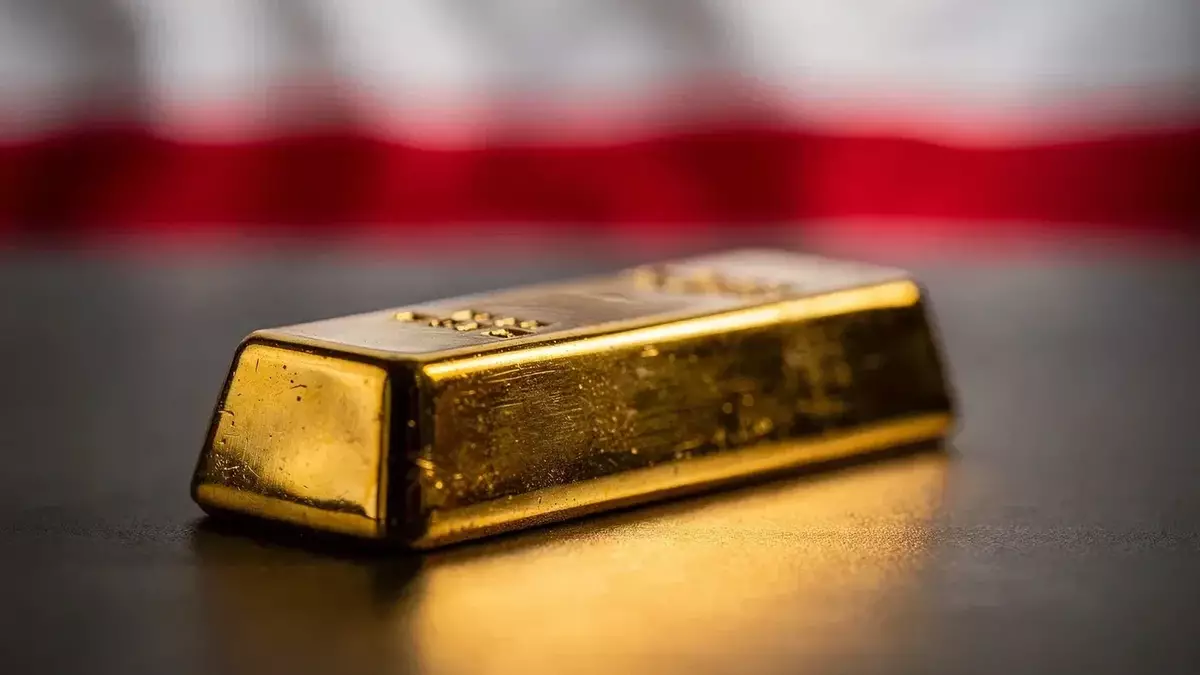
Gold’s Fragile Ceasefire Rally Faces Its First Real Test at the Fed
Published on 07/28/2026 at 06:50 | Redaktion boerse-global.de
The yellow metal is treading water just above $4,080 an ounce, caught between a sudden de-escalation in the Middle East and one of the most unpredictable Federal Reserve meetings in recent memory. The two-day policy gathering chaired by new Fed chief Kevin Warsh concludes Wednesday at 2:00 p.m. ET, and for once, the consensus on Wall Street is anything but.
A Market Split Down the Middle
The probability of a rate hike has lurched from roughly 10 percent to somewhere between 35 and 40 percent in a matter of days, according to the CME FedWatch tool. Citadel Securities is betting on the hawkish surprise, forecasting a 25-basis-point increase. Frank Flight of Citadel argues that such a move would not only break with the Fed’s forward guidance era but also cement Warsh’s reputation for independence. UBS, by contrast, sees a pause as the base case, though its analysts acknowledge deep divisions within the FOMC — with Warsh’s own stance potentially tipping the scales.
President Trump, never one to stay silent, waded into the fray ahead of the meeting, calling Warsh “fantastic” while demanding the lowest interest rates in the world and accusing other central bankers of “bad intentions.”
For gold investors, the stakes are straightforward. A surprise rate hike would strengthen the dollar and make yield-bearing assets more attractive, weighing on bullion. A pause, on the other hand, would remove a near-term headwind — particularly given that Warsh has deliberately avoided clear signaling in his communications so far, injecting an extra layer of volatility into the equation.
Should investors sell immediately? Or is it worth buying Gold?
Oil’s War Premium Evaporates
Complicating the Fed’s calculus is a dramatic shift in the energy market. Following a ceasefire between the US and Iran, Brent crude tumbled 6 to 9 percent on Monday, while WTI lost as much as 12 percent from its peak just four days earlier. The conflict had previously driven oil prices up by roughly a fifth in July alone, feeding inflation fears that had the Fed on edge.
The HSBC called it the highest level of uncertainty in two years. But with the oil shock now receding as an inflation driver, the argument for an immediate rate hike loses much of its force — muddying the market’s already confused expectations.
China’s Central Bank Goes on a Buying Spree
While traders obsess over the Fed’s next move, structural demand from the official sector continues to provide a floor under prices. The People’s Bank of China purchased 14.93 tonnes of gold in June 2026 — its largest monthly haul since 2023 and the 20th consecutive month of buying. That makes it the longest documented accumulation streak since at least 2015.
Notably, China stepped up its purchases just as gold touched a low of around $4,002 an ounce in June, the weakest level since November 2025. The timing underscores a key difference between central banks and speculative investors: the PBoC is motivated by a long-term strategic gap in its reserves relative to Western peers, not by short-term price action or interest rate cycles. This buying spree has already outlasted every Fed communication cycle since November 2024.
The World Gold Council’s largest-ever survey of 76 central banks reinforces the trend. 89 percent expect global gold reserves to rise over the next twelve months, and a record 45 percent plan to add to their own holdings.
The Numbers Tell a Cautious Story
Gold closed Monday at $4,081.10, up 0.63 percent on the day. On a weekly basis, the gain is a more substantial 1.73 percent — a clear reflection of how powerfully the ceasefire has moved the market. Yet the metal remains 3.59 percent below its 50-day moving average of $4,233.12, suggesting the recovery from its recent pullback is still fragile. The Relative Strength Index sits at 46.8, squarely in neutral territory, signaling a market in wait-and-see mode.
Gold at a turning point? This analysis reveals what investors need to know now.
The distance from the highs is even starker: gold is trading roughly 27 percent below its 52-week peak of $5,626.80, reached in late January 2026.
Diverging Demand Across Asia
Regional demand patterns paint a mixed picture. In India, discounts widened to a seven-week high as elevated prices dampened buying interest. In China, by contrast, purchasing appetite has improved noticeably, supported in part by the central bank’s ongoing accumulation.
For now, all eyes are on Wednesday’s Fed decision. If Warsh delivers the widely expected pause, gold could find support from fading rate-hike anxiety. A surprise increase, as Citadel Securities warns is possible, would likely put the metal under short-term pressure. Either way, the ceasefire in the Middle East has already reshaped the inflation outlook — and with it, the odds the Fed will feel compelled to act at all.
Ad
Gold Stock: New Analysis - 28 July
Fresh Gold information released. What's the impact for investors? Our latest independent report examines recent figures and market trends.
Disclaimer regarding our articles: No investment advice, no buy or sell recommendation. Information on prices, companies, and markets is provided without guarantee; changes are possible at any time. Stock market transactions can lead to substantial losses. Our articles are created and reviewed in whole or in part automatically with the support of AI.