Gold’s Fragile Recovery: Central Bank Buying Meets Fed Rate Jitters as Silver Surges Ahead
Published on 07/22/2026 at 14:22 | Redaktion boerse-global.de
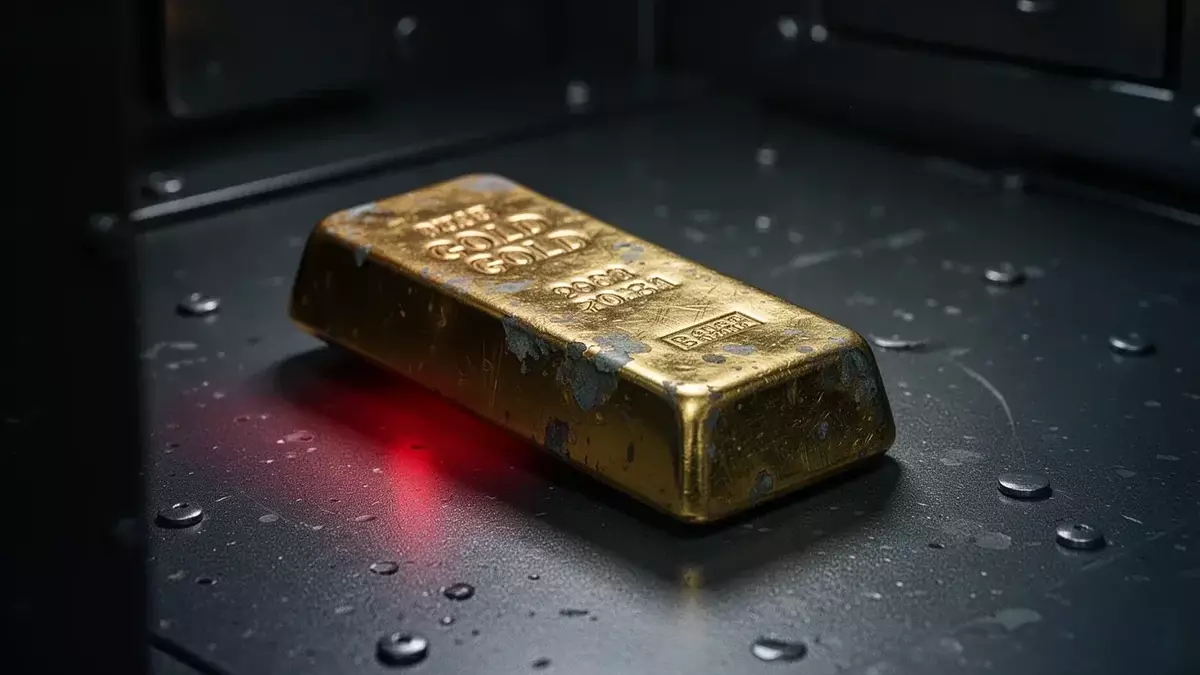
Gold edged higher on Wednesday, clawing back some ground after a prolonged retreat from its January peak, though the metal’s modest gains were overshadowed by a much sharper rally in silver and lingering uncertainty over US interest rate policy.
Bullion traded near $4,122.70 an ounce in the spot market, up roughly 1 percent on the day after closing at $4,082.00 on Tuesday. The US gold futures contract for August delivery climbed 1.5 percent to $4,076.40. Yet the recovery remains tentative: the current price sits nearly 27 percent below the 52-week high of $5,626.80 reached in late January, and the Relative Strength Index hovers in neutral territory at 49.1 (spot) and 45.9 (futures), signaling neither overheating nor panic buying.
Silver steals the spotlight
While gold inched higher, its sister metals posted far more dramatic moves. Silver surged 4.1 percent to $58.72 an ounce, platinum advanced 1.9 percent to $1,623.63, and palladium gained 2.4 percent to $1,282.25. The relative gain in silver was more than six times that of gold, a divergence that market observers attribute to stronger industrial and speculative demand in the smaller precious metals markets. Gold, by contrast, remains constrained by the gravitational pull of interest rate expectations.
Geopolitical crosscurrents
The precious metals complex is navigating a complex geopolitical landscape. On one hand, hopes for a de-escalation between the US and Iran emerged after a senior Iranian official said on July 20 that mediators had presented a proposal for a ten-day ceasefire, a development that initially eased oil prices and took some pressure off inflation fears. On the other, the situation remains deeply fragile. The US military launched its eleventh consecutive wave of airstrikes on Iranian targets overnight, including command centers and naval and air force installations, triggering air defense systems in Tehran for the first time in weeks. President Trump has reportedly threatened to strike a facility called “Pickaxe Mountain,” while Pentagon chief Hegseth put the war’s cost to date at $37.5 billion and requested an additional $67 billion in supplemental funding.
Should investors sell immediately? Or is it worth buying Gold?
Compounding the uncertainty, Houthi militia threats against Saudi oil tankers have disrupted shipping in the Red Sea, with several crude carriers altering course. Oil prices jumped to a six-week high, reigniting inflation concerns that cut both ways for gold: while the metal benefits as an inflation hedge, higher oil prices also strengthen the case for the Federal Reserve to keep interest rates elevated, raising the opportunity cost of holding non-yielding bullion.
The Fed overhang
The Federal Reserve’s July 28-29 meeting looms large. A Reuters poll of economists expects the central bank to hold rates steady through the end of 2026, but the CME FedWatch tool tells a different story: markets are pricing in 64 to 68 percent probability of a rate hike in September, reflecting deep uncertainty among investors. US Treasury yields reflect this hawkish tilt, with the 10-year note yielding above 4.6 percent and the 2-year above 4.22 percent, both levels that increase the drag on gold.
IG analyst Tony Sycamore sees a sustained break above $4,120 as confirmation of the recovery, while ActivTrades’ Ricardo Evangelista identifies the round $4,000 level as strong support. The neutral RSI readings suggest the metal is caught between geopolitical risk premiums and monetary policy headwinds, lacking a clear directional catalyst until the Fed’s decision.
Central banks: the structural tailwind
Beneath the short-term noise, central bank demand continues to provide a powerful floor. China added 15 tonnes to its gold reserves in June — the largest monthly purchase since October 2023 and the 20th consecutive month of accumulation — bringing its total holdings to 2,346 tonnes. A recent survey found that 89 percent of central banks worldwide expect to increase their gold reserves in the coming year, with a record 45 percent planning to expand their holdings. Gold has now overtaken US Treasuries in share of global reserves, underscoring the accelerating trend away from dollar diversification.
Gold at a turning point? This analysis reveals what investors need to know now.
Analyst views diverge sharply
The major banks are deeply split on where gold heads next. Goldman Sachs maintains a year-end target of $4,900, citing sustained central bank buying averaging 1,000 tonnes annually. JPMorgan has slashed its short-term forecast by roughly 25 percent, citing Fed expectations and elevated volatility, though it sees long-term structural supports intact. UBS strategists Dominic Schnider and Giovanni Staunovo would view a pullback to $3,850 as a buying opportunity but warn of near-term headwinds from Middle East tensions, high oil prices, and a hawkish Fed. Wells Fargo projects a long-term target of $5,300 to $5,500 by end-2026. Schroders, meanwhile, expects a bottom to form within three to six months, arguing that the Fed’s room to raise rates is limited by the high US debt burden.
For now, gold remains a market in suspense — pulled between the haven bid from escalating conflict and the gravitational force of higher-for-longer interest rates, while silver and the other precious metals race ahead on their own momentum.
Ad
Gold Stock: New Analysis - 22 July
Fresh Gold information released. What's the impact for investors? Our latest independent report examines recent figures and market trends.
Disclaimer regarding our articles: No investment advice, no buy or sell recommendation. Information on prices, companies, and markets is provided without guarantee; changes are possible at any time. Stock market transactions can lead to substantial losses. Our articles are created and reviewed in whole or in part automatically with the support of AI.