
Gold's Great Divide: Institutional Investors Flee as Central Banks Hoard at a Record Clip
Published on 07/07/2026 at 03:54 | Editorial boerse-global.de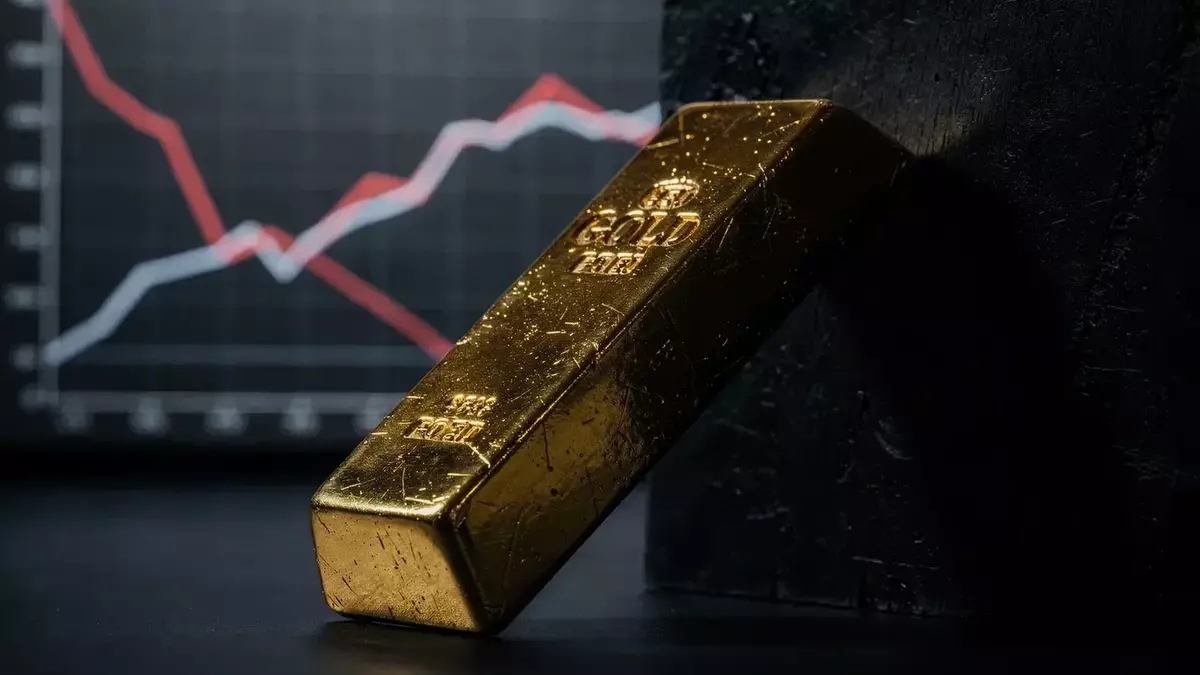
The gold market is telling two entirely different stories right now, and the tension between them is playing out in the price. On one side, institutional investors have yanked roughly $1 billion from the world’s largest bullion ETF in just five sessions, sending SPDR Gold Shares holdings down to 1,005 tonnes — the lowest since late September. On the other, central banks added a net 41 tonnes of gold to their reserves in May alone, with the World Gold Council projecting around 850 tonnes of sovereign buying for the full year, nearly double the pre-2022 annual average.
That clash of flows has left the metal drifting. At Monday’s close, gold settled at $4,155.70 per ounce — down 0.75% on the day and 4.53% on the month, though still 3.09% higher than the prior week. Year-to-date, the decline is roughly 4%. The all-time high of $5,626.80, set back in January, now feels distant.
A Patchwork of Economic Signals
The macro backdrop offers no clear compass. A soft patch in the US services sector — the purchasing managers’ index edged lower — would normally support gold as a haven, but that logic has been short-circuited by hawkish rhetoric from the Federal Reserve. The president of the Cleveland Fed said she sees little evidence of cooling and flagged the possibility of further rate hikes to bring inflation back to the 2% target. That has kept the dollar elevated, pricing bullion out of reach for non-dollar buyers.
Yet a separate data point cuts the other way. The US economy added only 57,000 jobs in June — roughly half the number analysts had expected. According to the CME FedWatch Tool, the implied probability of a September rate increase slumped from 66% to 50%. Since gold pays no interest, a less aggressive tightening path is traditionally a tailwind. The market remains torn between these competing forces.
Should investors sell immediately? Or is it worth buying Gold?
Sovereign Appetite Overwhelms Institutional Caution
While ETF investors are voting with their feet, central banks are doubling down. The People’s Bank of China added another 320,000 ounces in May, extending its buying streak to 19 consecutive months. A WGC survey found that nearly 90% of the world’s central banks expect global gold reserves to keep rising over the next year, viewing the metal as a hedge against financial crises, inflation, and geopolitical turmoil. Notably, the European Central Bank’s latest reserve report concluded that gold has now overtaken US Treasuries in terms of global reserve allocation.
The institutional exodus, however, has left a clear technical scar. The daily chart has formed a death cross — a bearish signal that suggests further selling pressure. Gold is now trading nearly 6% below its 50-day moving average of $4,404.18 and well under the 100-day average of $4,640.04. The relative strength index stands at 44.7, neutral territory.
Waiting for a Catalyst
The immediate technical picture points to resistance around $4,200. A break above that level could change the mood, but failure risks a retest of the psychologically important $4,100 support. The WGC’s baseline scenario for the second half of the year is a sideways grind, with prices trading within a band of roughly plus or minus 5% around $4,100. Meaningful moves, the council argues, will require a clear shift in the macro environment — an unexpected rate decision, a fresh geopolitical eruption, or a drastic change in economic momentum.
Gold at a turning point? This analysis reveals what investors need to know now.
Traders now have their eyes on the minutes from the latest Fed meeting, followed by weekly jobs data and the inflation release on 14 July. Until those numbers provide a clearer direction, gold will continue to drift between two powerful but opposing currents: the flight of ETF money and the steady accumulation of sovereign buyers.
Ad
Gold Stock: New Analysis - 7 July
Fresh Gold information released. What's the impact for investors? Our latest independent report examines recent figures and market trends.


