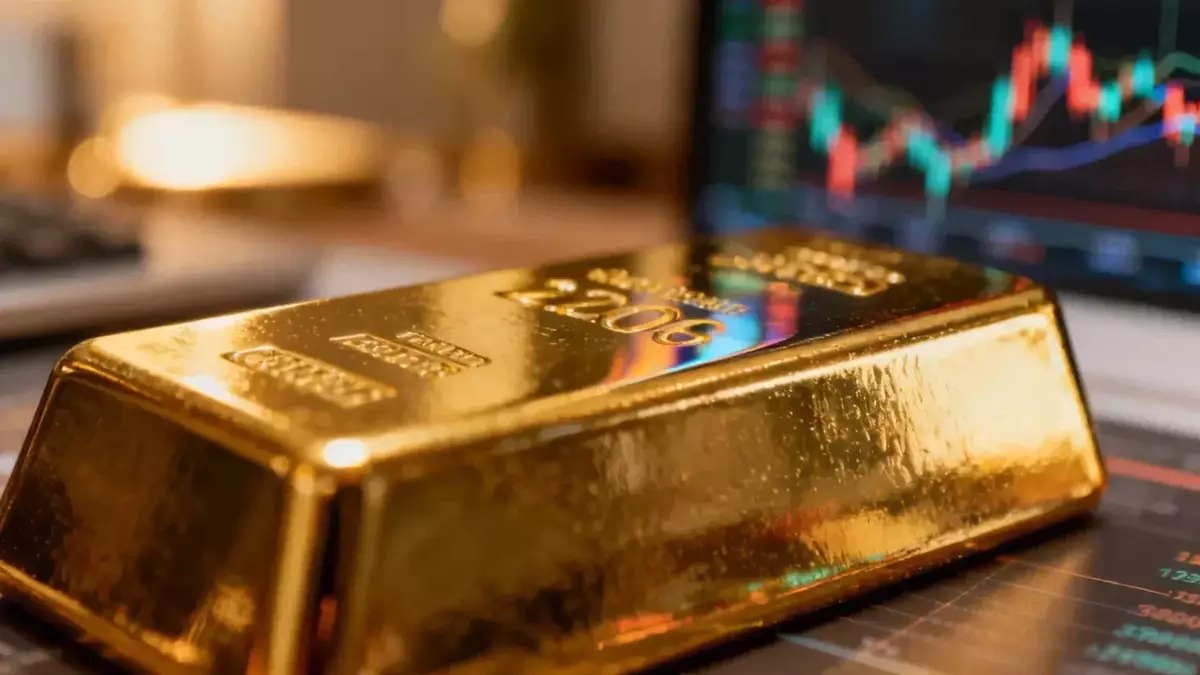
Gold’s Polarized Market: Record Central Bank Hoarding Meets Steepest Quarterly Loss in 13 Years
Published on 07/01/2026 at 03:54 | Redaktion boerse-global.de
Gold has just endured its worst three-month stretch since 2013, shedding nearly 14% of its value as a torrent of headwinds from higher interest rates, peace talks and sliding oil prices overwhelmed the market. The spot price closed Tuesday at $4,041 an ounce, barely 4% above its 52-week low of $3,901 and a staggering 28% below the all-time high of $5,627 struck in January.
Yet even as short-term traders flee, a very different narrative is unfolding among the world’s monetary authorities. Central banks are buying gold at a pace that has doubled from the previous decade, according to the World Gold Council, with official sector purchases averaging 1,000 tonnes annually. The strategic pivot away from the US dollar is accelerating: in one OMFIF survey of 74 institutions, 30% said they plan to increase their gold reserves, with 51% citing geopolitical risk and reserve diversification as the primary motivation. A separate OMFIF poll of 90 central banks found that 82% already hold physical gold, up from 71% a year earlier, and 61% expect the metal to trade above $5,000 by June 2027.
The immediate drag on prices is clear. Fed Chair Kevin Warsh remains firmly hawkish, and the market now assigns a 67% probability to another rate hike in September. Rising real yields and a stronger dollar are punishing the non-yielding asset. At the same time, negotiations between the US and Iran have reduced geopolitical tensions, stripping gold of part of its safe-haven bid. Adding to the pressure, China imposed restrictions on precious metals futures trading by its banks, while gold ETFs have seen sustained outflows. The collapse in crude oil from $120 to roughly $73 a barrel has also removed a key source of inflationary support.
Should investors sell immediately? Or is it worth buying Gold?
Technically, the metal is deeply oversold — the RSI sits at 34.9 — but a clear reversal has yet to materialize. The 50-day moving average at $4,451 remains well overhead. On the downside, support is pegged at $3,857, while resistance forms at $4,221. For now, the short-term direction hinges on upcoming US employment data and any further signals from the Fed.
Despite the rout, Goldman Sachs maintains a constructive long-term view. The bank trimmed its end-2026 price target from $5,400 to $4,900, but that still implies a recovery of roughly 25% from current levels. The structural bid from central banks, the analysts argue, should eventually absorb the excess supply created by speculative sellers.
The next major inflection point comes in September, when the Fed will either confirm or relieve the rate-hike pressure. Until then, gold remains caught between the pull of sovereign accumulation and the push of monetary tightening — a schism that has rarely been this wide.
Ad
Gold Stock: New Analysis - 1 July
Fresh Gold information released. What's the impact for investors? Our latest independent report examines recent figures and market trends.
Disclaimer regarding our articles: No investment advice, no buy or sell recommendation. Information on prices, companies, and markets is provided without guarantee; changes are possible at any time. Stock market transactions can lead to substantial losses. Our articles are created and reviewed in whole or in part automatically with the support of AI.