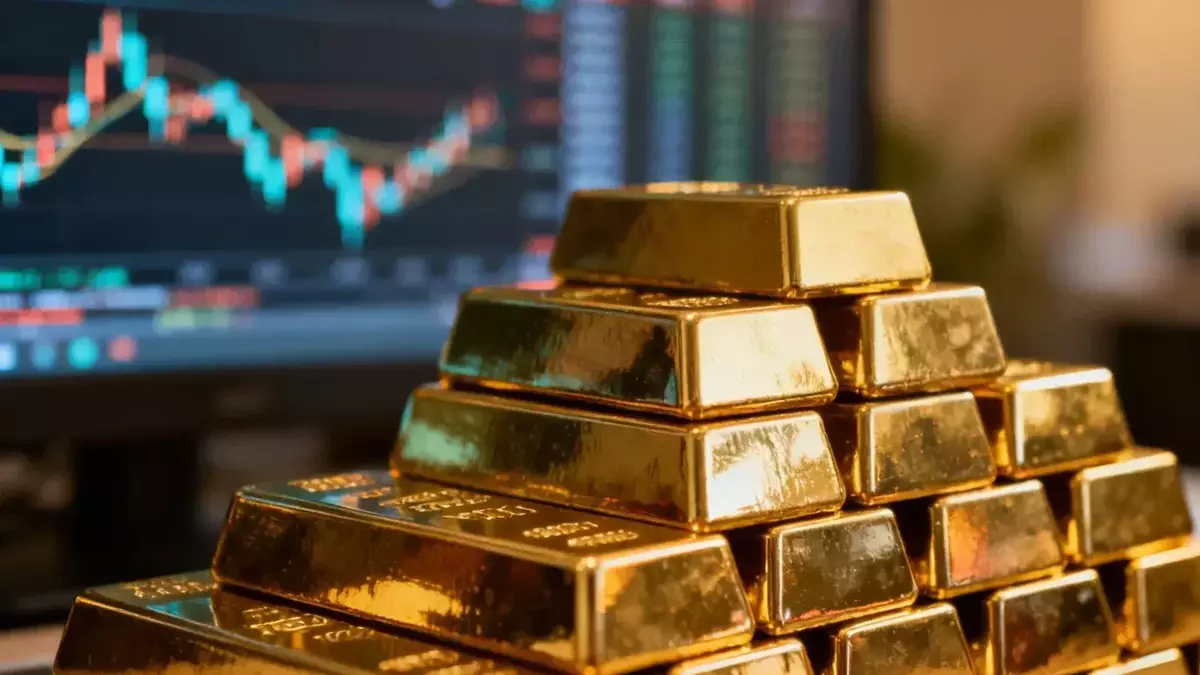
Gold’s Quiet Torment: Rate Hopes and Oil Shocks Cancel Each Other Out as CPI Nears
Published on 07/11/2026 at 09:25 | Redaktion boerse-global.de
Gold enters the new trading week in an uneasy consolidation, with the yellow metal failing to capitalize on one of the most volatile geopolitical backdrops in months. Instead of a safe-haven surge, bullion is trapped between two opposing forces: a softening US labour market that bolsters the case for lower interest rates, and a spike in crude prices that threatens to keep inflation uncomfortably sticky.
The next big test arrives on July 14, when the US consumer price index for June is released. A softer-than-expected print could relieve pressure on bond yields and give gold the impetus to retest resistance. A hot reading, however, would reinforce the Federal Reserve’s cautious stance and keep the metal pinned near current levels.
Jobs Data Fuel Rate-Cut Bets, but Oil Pushes Back
The US economy added just 57,000 non-farm payrolls in June, barely half the consensus estimate. Making matters worse, the prior two months were revised down by a combined 74,000 positions. Such weakness would normally ignite a rally in gold as traders price in easier monetary policy. Yet the metal has barely budged, because the same report came against a backdrop of surging energy costs.
On July 8, the fragile ceasefire between the US and Iran collapsed. The United States said it struck roughly 90 military targets and Iran retaliated by attacking US infrastructure in Bahrain, Kuwait, Qatar and Jordan. The June framework agreement brokered in Islamabad is now considered defunct, though technical peace talks mediated by Qatar, Pakistan, Turkey, Egypt and Saudi Arabia are expected to continue until mid-August.
Should investors sell immediately? Or is it worth buying Gold?
The conflict sent oil prices surging more than 7 percent. Brent crude now hovers around $77 a barrel, with West Texas Intermediate near $73. Rising energy costs feed directly into headline inflation, giving the Fed cover to keep rates elevated for longer. Gold, which offers no yield, suffers when real rates rise. That tension has turned the usual geopolitical bid into a neutralising drag.
Price Action Tells a Story of Stalled Momentum
Gold posted a mixed finish on Friday. One widely cited close put the spot price at $4,127.60 per ounce, down 0.12 percent on the day, while another report showed a close of $4,118.80, a decline of 0.33 percent. The weekly decline sits between 1.43 and 1.64 percent depending on the source, and the year-to-date loss is roughly 5 percent. The metal remains far from its 52-week high of $5,626.80 reached on January 29, 2026 — a gap of more than 26 percent.
Technically, the picture is uninspiring. Gold trades 5.45 percent below its 50-day moving average of $4,365.48, 9.07 percent below the 200-day line of $4,539.11, and comfortably under the 100-day average of $4,599.34. The relative strength index stands at 44.0, indicating neither oversold nor overbought conditions, but rather a market without directional conviction. The annualised 30-day volatility of 27.01 percent underscores the nervousness beneath the surface.
Chart analysts point to a head-and-shoulders pattern forming on the weekly chart, with a neckline around $4,200. A decisive weekly close below that level could open the door to much lower targets in the $2,575–$2,750 range. For now, though, gold is holding above its 50-day exponential moving average, a short-term bullish signal that keeps a corrective bounce alive. Immediate resistance lies between $4,162 and $4,214.
Central Banks Keep Stockpiling, Even as Prices Slide
While speculative and macro-driven flows have stalled, structural demand from sovereign buyers remains remarkably robust. Global central banks purchased a net 244 tonnes of gold in the first quarter of 2026 — a 3 percent increase year-on-year and the 17th consecutive quarter of net buying. The buying spree is especially pronounced in Southeast Asia. Malaysia added three to five tonnes in its first purchases since 2018, raising reserves to around 42 tonnes. Indonesia bought roughly two tonnes in January, bringing its total to about 80 tonnes, while Cambodia also added two tonnes to hold more than 56 tonnes. Singapore leads the region with 193.56 tonnes. Thailand, meanwhile, has capped daily online gold transactions at 50 million baht, a sign that authorities worry about overheating retail demand.
Gold at a turning point? This analysis reveals what investors need to know now.
In May alone, central banks added a net 41 tonnes, and analysts project full-year sovereign purchases of around 850 tonnes — nearly double the pre-2022 average. The People’s Bank of China is also believed to have been active in June, adding to its already sizable hoard. This steady buying provides a floor under prices, even as short-term sentiment sours.
A Market Caught Between Two Worlds
The gold market’s current predicament is summed up by the conflicting signals emanating from the macro environment. The jobs report argued for looser policy; the oil shock argued for tighter. Both forces are real, and neither is yielding. Until the July 14 CPI print provides a clearer steer, gold appears destined to trade in a range — too well-supported by central bank accumulation and geopolitical jitters to break down, yet too burdened by inflation fears and a strong dollar to break out.
The dollar index remains elevated, and the yield on ten-year US Treasuries stands at roughly 4.53 percent, keeping the opportunity cost of holding gold uncomfortably high. For a metal that started the year on a tear above $5,500, the current level near $4,120 feels like a cruel comedown. But with the world’s central banks still buying at a record pace and the Middle East conflict far from resolved, writing off gold entirely would be premature. The next few days are likely to determine which force wins out.
Ad
Gold Stock: New Analysis - 11 July
Fresh Gold information released. What's the impact for investors? Our latest independent report examines recent figures and market trends.
Disclaimer regarding our articles: No investment advice, no buy or sell recommendation. Information on prices, companies, and markets is provided without guarantee; changes are possible at any time. Stock market transactions can lead to substantial losses. Our articles are created and reviewed in whole or in part automatically with the support of AI.