Gold’s Tug-of-War: Weak Jobs and Dovish Fed Cues Offset by Brutal Quarterly Slump and Institutional Accumulation
Published on 07/03/2026 at 05:46 | Redaktion boerse-global.de
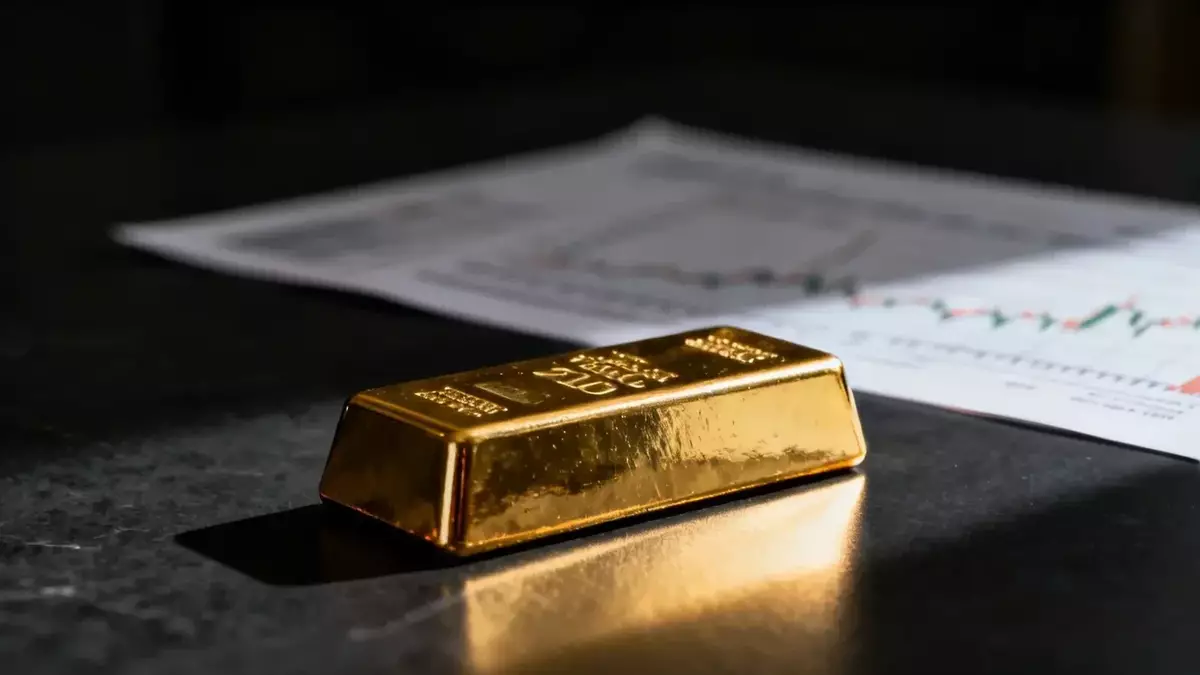
Gold has clawed back above $4,100 an ounce following a bruising quarter, but the rally is battling headwinds from a steep sell-off and a cautious shift in Wall Street forecasts. The yellow metal closed Thursday at $4,131.20, adding 0.67% over the past week, after hitting an eight-month low in late October. That recovery masks a sobering picture: monthly losses of 7.42%, a year-to-date decline of 4.85%, and a price still more than 6% below its 50-day moving average of $4,425.61.
The catalyst for the bounce came from an unexpected corner of Fed communications. Kevin Warsh, the central bank’s chair, this week said inflation expectations were “moderating” and reiterated the Fed’s commitment to price stability. Markets interpreted that as a dovish signal, easing fears of further tightening. The shift was amplified by a soft June jobs report: the U.S. economy added just 57,000 positions, well shy of the 110,000 forecast and the lowest in four months. The leisure and hospitality sector shed 61,000 jobs despite a World Cup-related tourism boost. The unemployment rate ticked down to 4.2%, but only because workers left the labor force. Wage growth crept up to 3.5% year-on-year.
Those numbers prompted a sharp repricing in rate expectations. According to the CME FedWatch Tool, the probability of a rate hike in September fell from 66% to just over 51% within a few days. The dollar weakened 0.7% against a basket of currencies, making gold cheaper for non-dollar buyers and boosting demand.
Yet the broader quarterly damage is deep. Gold dropped 11.7% in June and 1.8% in May, culminating in a 16% slide for the three months to June 30 — the worst quarter since the second quarter of 2013. The metal touched $3,942 on June 30, its lowest since early November 2025. Even with the week’s gains, it sits just 5.89% above the 52-week low of $3,901.30 reached on October 28.
Should investors sell immediately? Or is it worth buying Gold?
One factor that remains conspicuously steady: central bank buying. Despite the price rout, monetary authorities added 41 tonnes of gold on a net basis in May. Poland led the charge with 18 tonnes, its fourth consecutive month of double-digit purchases. China also was a notable buyer. For the first quarter of 2026, global net purchases totalled roughly 244 tonnes, above the previous quarter and the five-year average. The buying pace has moderated from the 67 tonnes per month peak in 2024, but it remains about three times the pre-2022 level of 17 tonnes, before the freezing of Russian assets.
The May data, however, were collected before June’s sharp downturn. The next World Gold Council report will reveal whether official sector buying held up during the quarter’s worst stretches.
Goldman Sachs has already recalibrated its outlook. The bank cut its end-2026 price target from $5,400 to $4,900, citing a Fed that is unlikely to cut rates this year. Nevertheless, the long-term view stays constructive, with central bank demand as the bedrock. The analysts note that while purchases have cooled from their 2024 highs, they remain historically elevated.
Gold at a turning point? This analysis reveals what investors need to know now.
Geopolitical risks continue to cast a shadow. Progress in U.S.-Iran talks has eased tensions in the Strait of Hormuz, allowing commercial shipping to recover somewhat. That helps tamp down energy prices and inflation expectations, paradoxically supporting gold by reducing rate-hike fears. But the situation is far from resolved: contradictory signals from both sides keep markets on edge, and the region is seen as moving from a crisis of acute blockage to one of chronic, lower-level danger.
Technical indicators offer no clear direction. The relative strength index sits at 42.6, neither overbought nor oversold. Annualized volatility of 27.2% suggests large swings are likely in both directions. Gold still needs to reclaim its 50-day moving average — a 6.65% climb from current levels — to end the short-term bear spell. Until then, the next U.S. jobs report remains the single most important catalyst for rate expectations and, by extension, the metal’s trajectory.
Ad
Gold Stock: New Analysis - 3 July
Fresh Gold information released. What's the impact for investors? Our latest independent report examines recent figures and market trends.
Disclaimer regarding our articles: No investment advice, no buy or sell recommendation. Information on prices, companies, and markets is provided without guarantee; changes are possible at any time. Stock market transactions can lead to substantial losses. Our articles are created and reviewed in whole or in part automatically with the support of AI.