Intuitive Surgical stock trades near record levels as robotic surgery growth supports valuation
Published on 07/18/2026 at 08:59 | Editorial responsibility: Rafael Müller, Editor-in-Chief AD HOC NEWS
Intuitive Surgical stock has been supported by sustained growth in robotic-assisted surgery, as the US-based medical technology group Intuitive Surgical Inc. (ISIN US46120E6023) benefits from rising procedure volumes and an expanding installed base of Da Vinci systems around the world. The company’s Nasdaq listing gives it exposure to a wide investor base, and its shares have tended to trade at a premium valuation that is closely tied to procedure growth, recurring instrument and accessory revenue, and service contracts for its robotic platforms. For investors, the linkage between clinical adoption of minimally invasive surgery and Intuitive Surgical’s financial performance remains central to understanding the stock’s behavior over time.
Procedure growth drives revenue
One of the core drivers for Intuitive Surgical stock is the steady increase in procedures performed with the Da Vinci Surgical System. Over recent years, the company has reported double-digit growth in annual procedure volumes across a range of specialties, including urology, gynecology, general surgery, and thoracic surgery. Higher procedure volumes tend to translate directly into increased revenue from instruments and accessories, since each surgery consumes single-use or limited-use components that must be replenished. In addition, more procedures typically require more system uptime and support, reinforcing Intuitive Surgical’s service revenue streams. This recurring revenue profile contrasts with the more cyclical nature often seen in capital equipment sales, helping the company to smooth earnings over time.
Intuitive Surgical’s reported growth rates have at various points exceeded broader surgical procedure growth in key healthcare markets such as the United States and parts of Europe, underscoring its role as a leader in robotic-assisted surgery. Historically, the company has highlighted that overall procedure growth for Da Vinci systems can be influenced by factors including hospital capital spending cycles, surgeon training capacity, reimbursement dynamics, and the introduction of new clinical indications that expand the addressable market. When new procedures become validated and widely adopted, Intuitive Surgical can see an acceleration in instrument and accessory revenue relative to the installed base, strengthening the fundamental support for the stock’s valuation.
Installed base expansion and capital cycles
Another pillar of Intuitive Surgical’s business model is the installed base of Da Vinci systems placed with hospitals and surgical centers. Over time, the company has grown its global installed base into the thousands of systems, with placements in the United States, Europe, Asia, and other regions. Each new system placement represents a capital sale, but it also creates a multi-year annuity stream as that system is used for procedures requiring proprietary instruments and accessories. This combination of capital and recurring revenue has been a key part of how investors analyze Intuitive Surgical stock and its long-term revenue growth potential.
Capital equipment cycles can be sensitive to macroeconomic conditions, hospital budgets, and regulatory frameworks, but Intuitive Surgical has often emphasized that its systems are designed to support high-utilization environments where surgeons can perform many procedures per system per year. Higher utilization improves the return on investment for hospitals and can make it more likely that they will invest in additional systems or upgrades. For Intuitive Surgical, this dynamic can lead to periods where system placements and upgrades add to the growth in recurring revenue, reinforcing the case for continued expansion of its installed base.
Recurring revenue mix and margins
Intuitive Surgical’s revenue mix has steadily shifted toward recurring revenue components such as instruments, accessories, and services, which typically carry attractive margins relative to initial system placements. As the installed base has grown and procedure volumes have risen, recurring revenue has formed a larger share of total revenue. This evolution in the business model matters for Intuitive Surgical stock because it can support more predictable cash flows and more resilient earnings through economic cycles.
Higher recurring revenue tends to be associated with more stable gross margins, as the company benefits from scale in manufacturing instruments and accessories and from its service network. In addition, recurring revenue can help offset periods when capital equipment demand is weaker, providing a buffer for overall revenue and operating income. Investors often watch the proportion of total revenue derived from recurring sources as an indicator of how much Intuitive Surgical has matured from a capital equipment company into a hybrid model with strong consumables and services components.
Clinical adoption and surgeon training
Clinical adoption of robotic-assisted surgery is central to Intuitive Surgical’s growth story. Surgeons and hospitals need to be convinced of the safety, efficacy, and economic rationale for using the Da Vinci system rather than traditional open or laparoscopic surgery. Intuitive Surgical invests in surgeon training, education, and proctoring programs to help clinicians become proficient with the system and to expand the range of procedures conducted robotically. In many surgical disciplines, there has been a trend toward minimally invasive approaches that can reduce hospital stays, lower infection risks, and improve patient recovery times, and Intuitive Surgical has positioned its technology to align with these goals.
The pace of clinical adoption can vary by region and by healthcare system, depending on factors such as reimbursement policies, staffing levels, and the presence of academic centers that champion innovation. In markets where reimbursement supports robotic procedures and where there are strong early adopters, Intuitive Surgical has tended to see relatively faster uptake and higher procedure growth. By contrast, in environments with tighter budgets or slower technology adoption, growth can be more measured. For Intuitive Surgical stock, signals about clinical adoption—such as new indications being approved, guideline changes, or studies showing favorable patient outcomes—are often closely watched as they can influence both near-term sentiment and long-term valuation assumptions.
Global expansion and emerging markets
Intuitive Surgical’s growth is not limited to mature markets; the company has also pursued expansion into emerging markets where healthcare infrastructure is developing and demand for advanced surgical technology is increasing. In such regions, hospital budgets and reimbursement systems can be more constrained, but there is often strong interest in improving surgical outcomes and in adopting technologies that can differentiate hospitals in competitive environments. Intuitive Surgical has sought to balance pricing, training, and support in these markets to make Da Vinci systems viable options for selected hospitals.
Global expansion adds another layer of complexity to Intuitive Surgical’s revenue model and to how investors view Intuitive Surgical stock. Currency fluctuations, regulatory approvals, and geopolitical conditions can all affect capital sales and procedure growth. Nevertheless, diversified geographic exposure can also provide resilience, as slower growth in one region may be offset by stronger performance elsewhere. Over time, as more emerging market hospitals adopt robotic surgery, Intuitive Surgical could see an increasing share of revenue from outside the United States, altering its risk profile and potentially expanding its long-term addressable market.
Technology evolution and innovation
Intuitive Surgical continues to invest in the evolution of its technology platforms, including improvements to the Da Vinci system and development of new instruments, accessories, and imaging capabilities. Innovation is necessary both to maintain clinical leadership and to address competition from other companies developing surgical robots and advanced minimally invasive tools. Historically, Intuitive Surgical has released new generations of the Da Vinci system that improve ergonomics, visualization, and instrument dexterity, as well as software upgrades that support operating room integration and data capture.
For Intuitive Surgical stock, the pace and direction of innovation can significantly influence investor expectations. New product introductions can catalyze replacement cycles for existing systems and encourage hospitals to invest in upgrades, thereby boosting capital sales and subsequent recurring revenue. At the same time, innovation efforts require significant research and development spending, which investors monitor in relation to revenue growth and margins. A strong product pipeline can support a long-term growth narrative, while delays or setbacks could weigh on sentiment.
Competitive landscape in robotic surgery
The competitive landscape for robotic-assisted surgery has become more crowded, with several companies working on alternative robotic platforms or specialized systems targeting specific types of procedures. Intuitive Surgical, as an early pioneer, has a substantial installed base and a long track record of clinical evidence supporting the use of the Da Vinci system. Competitors, however, may seek to differentiate through pricing, niche applications, or integration with broader hospital technology ecosystems.
Investors evaluating Intuitive Surgical stock pay close attention to these competitive dynamics, including how Intuitive Surgical responds to new entrants and to any pressure on pricing or system configuration. The company’s ability to maintain strong customer relationships, to continue innovating, and to demonstrate superior clinical outcomes will be crucial for defending its market position. In addition, strategic decisions about whether to pursue new surgical specialties or complementary technologies such as advanced imaging or AI-driven decision support can shape Intuitive Surgical’s trajectory in a more competitive environment.
Regulatory environment and reimbursement
Intuitive Surgical operates within a highly regulated healthcare environment. Its systems and instruments must comply with medical device regulations in multiple jurisdictions, and the procedures performed using its technology are subject to reimbursement policies defined by insurers and government health programs. Changes in regulatory requirements or reimbursement rules can affect the economics of robotic-assisted surgery and thus influence demand for Intuitive Surgical’s systems.
When reimbursement frameworks support minimally invasive and robotic approaches, hospitals may have more financial incentive to invest in Da Vinci systems and to expand procedure offerings. Conversely, when reimbursement is constrained or uncertain, hospitals may be more cautious about capital spending. For Intuitive Surgical stock, regulatory and reimbursement developments are important factors in assessing long-term growth prospects. Investors are likely to monitor policy changes, clinical guideline updates, and any major shifts in the healthcare financing landscape that could either accelerate or slow robotic surgery adoption.
Long-term demand drivers in healthcare
Beyond immediate competitive and regulatory considerations, Intuitive Surgical benefits from long-term demand drivers in healthcare that support minimally invasive surgery. Aging populations in many countries are associated with higher rates of conditions requiring surgical intervention, such as cancer, cardiovascular disease, and degenerative disorders. At the same time, patients, surgeons, and healthcare systems increasingly favor approaches that reduce hospital stays and improve quality of life, which can align well with robotic technology.
Intuitive Surgical’s focus on surgical specialties where minimally invasive techniques can be particularly beneficial may allow it to capture a significant share of future procedure growth. As more surgeons become trained in robotic techniques and more hospitals incorporate robotic systems into their standard offerings, the normalization of robotic-assisted surgery could make Intuitive Surgical’s products a standard part of modern operating rooms. Intuitive Surgical stock thus reflects not only current financial performance but also expectations about how surgery itself will evolve in the coming decades.
Da Vinci system as flagship product
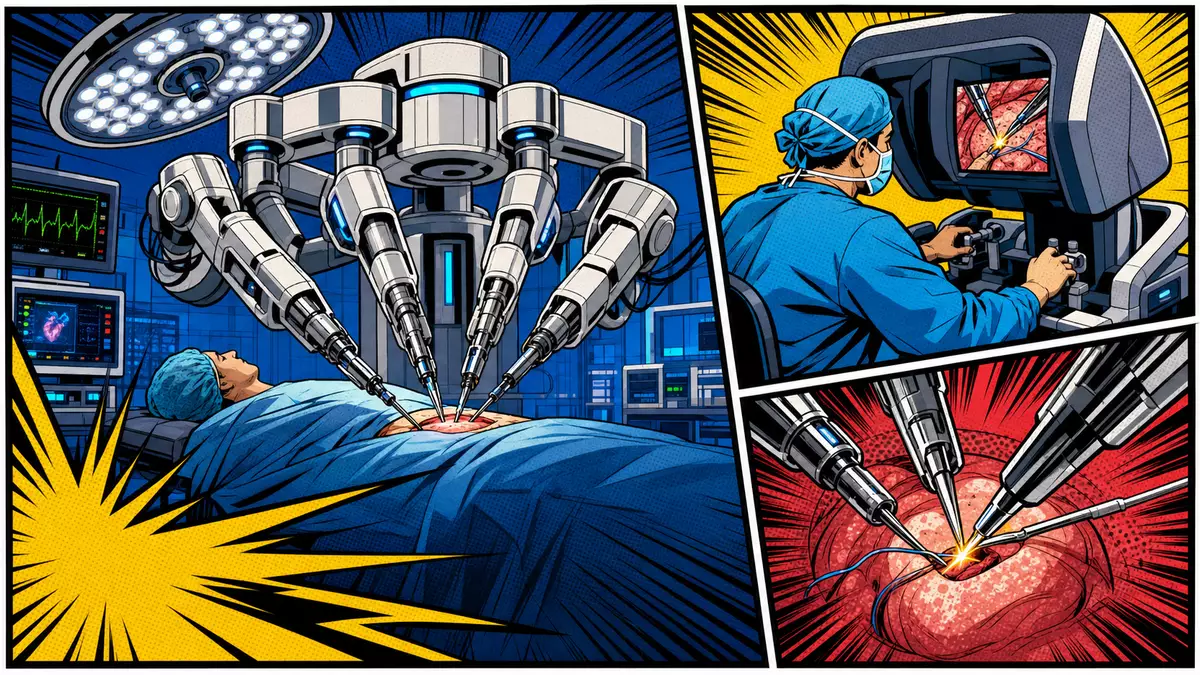
Intuitive Surgical’s flagship product is the Da Vinci Surgical System, a robotic platform designed to enable minimally invasive surgery with high precision, enhanced visualization, and improved ergonomics for surgeons. The system comprises a surgeon console, a patient-side cart with robotic arms, and a high-definition vision system. Surgeons operate the robotic instruments via controls at the console, translating hand movements into precise actions inside the patient through small incisions.
The Da Vinci system is used across multiple surgical specialties, including urology, gynecology, general surgery, thoracic surgery, and others. Common procedures include prostatectomy, hysterectomy, partial nephrectomy, and various complex abdominal surgeries. The system’s widespread use has contributed to Intuitive Surgical’s robust revenue from instruments, accessories, and services. As hospitals invest in Da Vinci systems, they often commit to training staff and reconfiguring operating room workflows to accommodate robotic procedures, reinforcing the system’s role in their long-term surgical strategy.
Stock perspective and investor focus
From a stock-market perspective, Intuitive Surgical stock is frequently viewed as a growth-oriented healthcare technology investment. The company’s combination of innovative hardware, recurring consumables and services, and exposure to secular trends in healthcare positions it differently from traditional pharmaceutical or medical device companies. Investors often analyze metrics such as procedure growth rates, installed base expansion, recurring revenue share, and margins to gauge the sustainability of Intuitive Surgical’s growth trajectory.
Valuation discussions around Intuitive Surgical stock typically consider both its current earnings and cash flows and the long-term potential for robotic surgery adoption. Because Intuitive Surgical has been a relatively early entrant with a strong brand and extensive clinical data, some investors are willing to assign a premium valuation. However, this premium can be sensitive to news about competition, regulatory changes, macroeconomic conditions, and the performance of key healthcare markets. As such, Intuitive Surgical’s share price can experience periods of volatility even when underlying clinical trends remain broadly favorable.
Product ecosystem and services
Intuitive Surgical has built an ecosystem around the Da Vinci system that includes instruments and accessories, training and education, maintenance and support services, and digital tools. Instruments and accessories encompass a wide range of surgical tools that attach to the robotic arms, such as graspers, scissors, needle drivers, and energy devices. These components are typically designed for limited use and must be replaced regularly, generating recurring revenue linked to procedure volumes.
Services include preventive maintenance, repairs, and technical support to ensure that Da Vinci systems maintain high uptime and reliability. Intuitive Surgical provides training programs for surgeons, nurses, and technicians, helping hospitals derive maximal clinical benefit from their investment. Digital tools may include solutions for recording and analyzing procedures, integrating with hospital IT systems, and supporting data-driven improvements in surgical practice. Together, these elements form a comprehensive offering that can strengthen customer loyalty and encourage hospitals to standardize on Intuitive Surgical’s platform.
Risk considerations for investors
Investors considering Intuitive Surgical stock need to weigh several risks alongside the company’s growth opportunities. Key risks include potential regulatory changes affecting medical devices, shifts in reimbursement policy that could alter the economics of robotic-assisted surgery, and competitive pressure from other companies developing surgical robots or alternative technologies. Macroeconomic conditions that constrain hospital capital budgets could also influence the pace of system placements and upgrades.
Additionally, Intuitive Surgical must manage risks associated with product quality, safety, and post-market surveillance. As with any medical device company, adverse events or product recalls could negatively affect reputation, regulatory relationships, and financial performance. The company’s investments in quality systems, clinical research, and training are designed to mitigate such risks, but they cannot eliminate them entirely. For Intuitive Surgical stock, the balance between innovation-driven growth and risk management is an important part of the overall investment thesis.
Strategic outlook for robotic surgery
Looking ahead, Intuitive Surgical’s strategic outlook is closely tied to the broader evolution of robotic surgery. The company has opportunities to expand into new surgical specialties, to deepen its presence in existing indications, and to develop complementary technologies that enhance surgeon performance and patient outcomes. Advances in imaging, AI, and data analytics could play a role in future generations of the Da Vinci system and related offerings, potentially allowing more personalized and optimized surgical procedures.
Intuitive Surgical’s approach to partnerships with hospitals, academic institutions, and other healthcare stakeholders may also shape its trajectory. Collaborative research, training initiatives, and co-development of clinical pathways can strengthen the company’s position as a key partner in surgical innovation. For Intuitive Surgical stock, the ability to execute on these strategic avenues while maintaining financial discipline and regulatory compliance will be critical to sustaining investor confidence over time.
Representative product role in hospital strategy
The Da Vinci Surgical System, as Intuitive Surgical’s representative product, occupies a central place in many hospitals’ strategies for offering advanced surgical care. By enabling minimally invasive procedures with robotic precision, the system can help hospitals differentiate their services, attract patients seeking less invasive options, and support surgeons who wish to adopt cutting-edge techniques. The system’s role in complex surgeries that might otherwise require open approaches can be particularly important for institutions positioning themselves as regional or national centers of excellence.
Hospitals that invest in Da Vinci systems often integrate robotic surgery into their marketing and patient education, highlighting benefits such as smaller incisions, potentially reduced blood loss, and shorter recovery times. While clinical outcomes depend on many factors, including surgeon skill and patient characteristics, the system’s capabilities can provide a platform for improving aspects of care in appropriately selected cases. Intuitive Surgical’s focus on continuous product refinement and support services aims to ensure that the Da Vinci system remains a reliable and attractive option for hospitals seeking to build long-term surgical programs around robotic technology.
Intuitive Surgical stock and market context
In the broader market context, Intuitive Surgical stock sits at the intersection of healthcare, technology, and medical devices. The company’s performance can correlate with trends in healthcare spending, the adoption of advanced technologies in hospitals, and investor appetite for growth stocks. Periods of heightened interest in healthcare innovation may see increased attention on robotic surgery and on companies like Intuitive Surgical, while times of macroeconomic uncertainty could prompt investors to re-evaluate valuations and risk exposures.
Intuitive Surgical’s inclusion in major indices, its Nasdaq listing, and its recognition among institutional and retail investors help ensure that its stock is actively traded and widely analyzed. As the company continues to report financial results and provide updates on clinical and strategic developments, the market will adjust expectations, reflecting new information about procedure growth, installed base trends, product innovation, and competitive dynamics. For long-term observers, Intuitive Surgical stock offers a window into how surgical practice is evolving and how technology-driven companies can influence the future of healthcare.
Company and stock overview
Intuitive Surgical Inc. is headquartered in the United States and focuses on the development, manufacturing, and commercialization of robotic-assisted surgical systems, instruments, accessories, and related services. Its primary listing is on Nasdaq, and the company’s identity is closely tied to the Da Vinci Surgical System, which has become one of the most recognized brands in robotic surgery worldwide. Intuitive Surgical stock reflects both the company’s historical achievements in pioneering robotic-assisted surgery and its ongoing efforts to expand adoption and innovate within the field.
While daily movements in Intuitive Surgical stock can be influenced by short-term factors such as broader market conditions or sector rotation among healthcare and technology stocks, the underlying story is anchored in the company’s clinical impact and financial performance over time. Investors who follow the stock typically track updates on procedure volumes, installed base, revenue mix, margins, and new product developments as part of their ongoing assessment. In addition, they monitor external factors such as regulatory changes, reimbursement developments, and competitive announcements that could alter the long-term trajectory of robotic surgery.
Da Vinci system and patient experience
From the patient perspective, robotic-assisted surgery with the Da Vinci system can offer potential benefits such as smaller incisions, reduced trauma to surrounding tissues, and more precise movements that may be difficult to achieve with traditional instruments. These factors can support quicker recovery times and shorter hospital stays in many cases, though outcomes depend on specific clinical scenarios. Intuitive Surgical’s technology is designed to help surgeons perform complex procedures through minimally invasive approaches, which can be particularly valuable in areas such as urologic oncology, gynecologic surgery, and colorectal surgery.
Patient awareness of robotic surgery has grown over time, with many hospitals promoting their use of Da Vinci systems and other robotic platforms as part of their service offerings. For Intuitive Surgical, this increased visibility can contribute to demand for robotic procedures, which in turn supports procedure growth, recurring revenue, and the fundamental case for Intuitive Surgical stock. As more patients and referring physicians view robotic surgery as a standard option for appropriate indications, Intuitive Surgical’s role in the surgical ecosystem may become further entrenched.
Surgeon ergonomics and workflow
Surgeons using the Da Vinci system operate from a console that is ergonomically designed to reduce strain during long procedures. The system’s controls allow surgeons to manipulate instruments with fine-grained movements, while the high-definition visualization provides a magnified view of the surgical site. These features can help surgeons perform complex maneuvers in confined spaces and may reduce fatigue relative to certain traditional methods.
Operating room workflow with the Da Vinci system involves coordination among surgeons, nurses, anesthesiologists, and technical staff. Intuitive Surgical provides training and support to help hospitals integrate the system into their standard processes, including preoperative planning, intraoperative management, and postoperative care. Smooth workflows can enhance efficiency and throughput, which is important for hospitals seeking to justify their investment in robotic systems. For Intuitive Surgical stock, the company’s ability to help hospitals achieve reliable and efficient use of the Da Vinci system contributes indirectly to financial performance and investor confidence.
Training, education, and proctoring
Intuitive Surgical’s emphasis on training and education is a critical component of its strategy. Surgeons must undergo specialized training to become proficient in robotic-assisted techniques, and hospitals must allocate time and resources for this learning process. Intuitive Surgical offers training programs that cover system operation, procedural steps, and techniques for optimizing patient outcomes using the Da Vinci system.
Proctoring and mentorship can further support surgeons as they begin performing robotic procedures in clinical practice. Experienced robotic surgeons may work with colleagues to guide them through early cases, helping to build confidence and reduce the learning curve. For Intuitive Surgical stock, robust training and education programs help ensure that clinical adoption is accompanied by high-quality outcomes, which is important for sustaining the reputation of the Da Vinci system and for encouraging continued investment in robotic surgery.
Hospital economics and return on investment
Hospitals evaluating the Da Vinci system must consider the economics of robotic surgery, including system acquisition costs, ongoing instrument and accessory expenses, training requirements, and potential reimbursements. Intuitive Surgical’s value proposition includes the possibility of attracting more patients, improving clinical outcomes, and increasing operational efficiency, which can contribute to a positive return on investment over time.
Intuitive Surgical provides information and support to help hospitals analyze these economic factors and to integrate robotic surgery into broader strategic planning. When hospitals see favorable financial and clinical results from robotic adoption, they may invest in additional systems or expand robotic programs to more specialties. For Intuitive Surgical stock, such decisions are reflected in metrics like system placements and procedure growth, which underpin the company’s revenue streams and valuation.
Intuitive Surgical stock closing view
Intuitive Surgical stock represents exposure to the ongoing evolution of surgical practice through robotic-assisted technology, anchored by the Da Vinci Surgical System and supported by recurring revenue from instruments, accessories, and services. As the company continues to expand its installed base, increase procedure volumes, and refine its technology, its stock will reflect both the opportunities and challenges inherent in leading a transformative field within healthcare. For investors, the trajectory of Intuitive Surgical stock will remain intertwined with trends in clinical adoption, regulatory frameworks, competitive dynamics, and hospital economics across key global markets.
Disclaimer regarding our articles: No investment advice, no buy or sell recommendation. Information on prices, companies, and markets is provided without guarantee; changes are possible at any time. Stock market transactions can lead to substantial losses. Our articles are created and reviewed in whole or in part automatically with the support of AI.