Medtronic's $550M Bet on Stroke Care Collides with a $250M Tariff Headwind
18.06.2026 - 01:02:30 | boerse-global.de
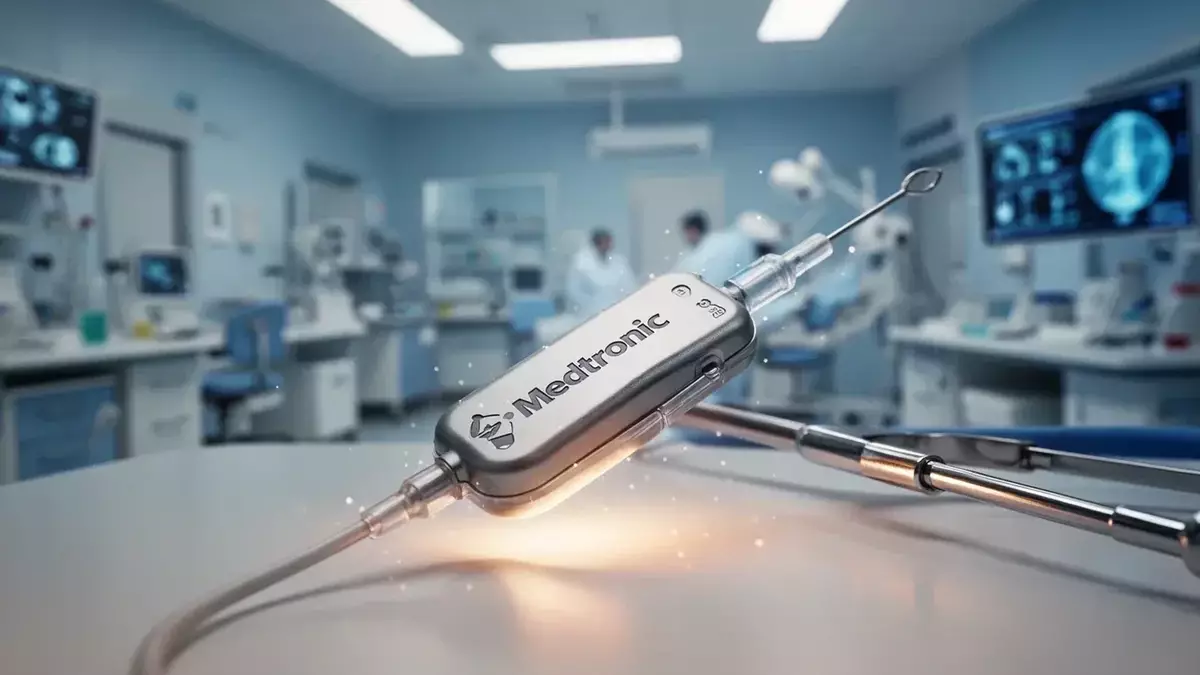
Medtronic just turned in its strongest annual revenue in a decade, yet the stock has shed more than 16% year-to-date. The contradiction stems from two forces pulling in opposite directions: a promising pipeline of new therapies and a punishing tariff that has Wall Street rethinking near-term margins. Last week, the company closed a $550 million acquisition of Scientia Vascular, adding specialized catheter technologies for stroke treatment — a clear sign of where management sees future growth.
The Scientia deal strengthens Medtronic’s neurovascular division, which already generated roughly $2.75 billion in sales last year, up 5%. The technology focuses on high-performance guidewires and catheters used in complex brain procedures, tapping into rising demand for minimally invasive stroke care. Additional milestone payments could follow, depending on how quickly the product line scales.
Beyond stroke, Medtronic’s renal denervation business is gaining real traction. The Symplicity Spyral system, which won FDA approval in November 2023, now enjoys Medicare coverage since October 2025. Over 200 physicians are listed in the company’s physician finder directory, and annualized revenue from the platform has already reached around $100 million. Separately, Medtronic launched the European MORE study to test deep brain stimulation for epilepsy, enrolling 200 patients across 30 centers.
Should investors sell immediately? Or is it worth buying Medtronic?
Analyst sentiment reflects the crosscurrents. Needham reiterated its buy recommendation and $101 price target — roughly 47% above the current share price — pointing to the renal denervation opportunity as a key catalyst. But Bank of America took a different view, slashing its target on June 11 from $110 to $95 after Medtronic flagged a $250 million tariff hit to cost of goods sold, $75 million of which lands in the first quarter alone. Stifel is stuck in the middle, rating the stock a hold with a $95 target. A Stifel survey of 21 physicians found that Medicare coverage is already driving renal denervation volumes, with broader private insurance expected in 2027 and annual volume growth averaging 62% between 2025 and 2028.
The operational numbers are otherwise solid. Fourth-quarter revenue came in at $9.8 billion, up 9.9% year over year, with earnings per share of $1.55 topping expectations. The full-year tally reached $36.4 billion, representing organic growth of 5.8%. The cardiac ablation franchise stood out, expanding 78% globally and 124% in the U.S. For fiscal 2027, management guided for organic revenue growth of 6.75% to 7.25% and adjusted EPS between $5.90 and $6.00.
Income investors, meanwhile, have a reliable anchor. Medtronic will pay a quarterly dividend of $0.72 on July 17, 2026 — the 49th consecutive annual increase. Shareholders of record on June 26 qualify for the payout, which works out to $2.88 per share on a trailing basis.
Technically, the stock trades at around €68.44, just below its 50-day moving average of €68.79 and roughly 25% off the 52-week high of €91.50. Whether the renal denervation ramp and the Scientia acquisition can close that gap — and offset the tariff drag — will become clearer when Medtronic reports its next quarterly results.
Ad
Medtronic Stock: New Analysis - 18 June
Fresh Medtronic information released. What's the impact for investors? Our latest independent report examines recent figures and market trends.