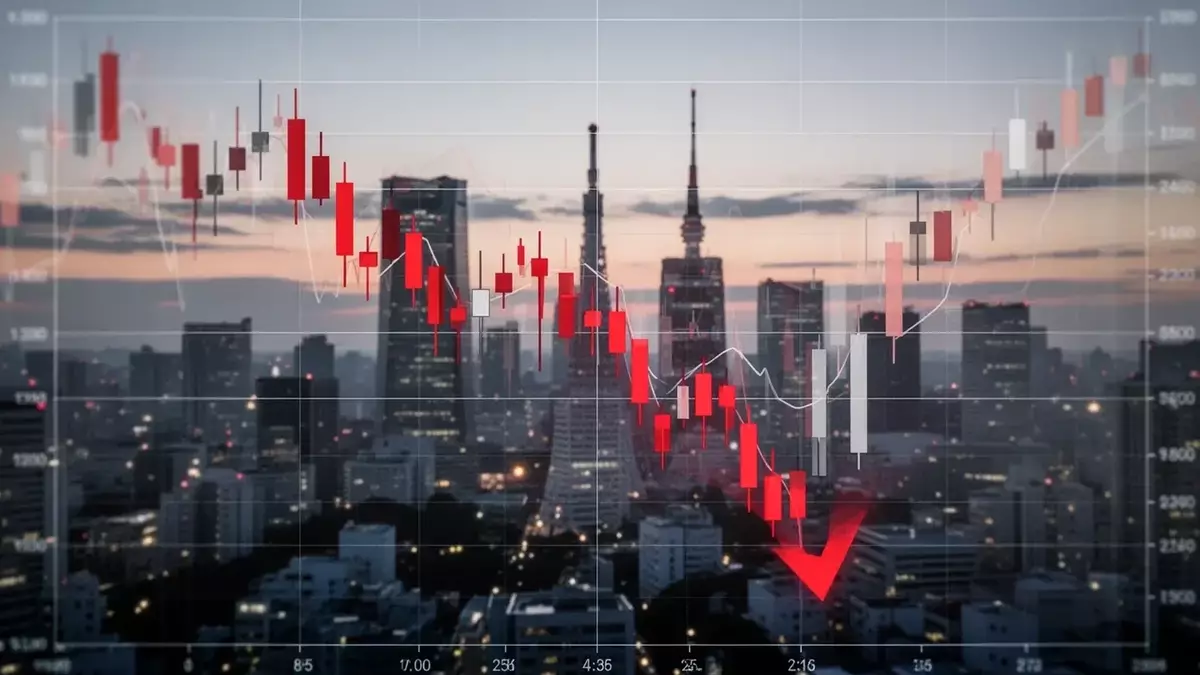
Nikkei 225 Tumbles Below 67,000 as Oil Spike and Tech Rout Trigger Panic Selling
Published on 07/08/2026 at 16:58 | Redaktion boerse-global.de
Japan’s benchmark equity gauge suffered its sharpest daily drop in nearly a month on Wednesday, crashing 2.11 percent to close at 66,819.05 points — a level last seen in mid-June. The selloff was fuelled by a potent cocktail of escalating Middle East tensions, a surge in crude prices and a brutal technology selloff that rippled across from Wall Street.
Crude spike and Middle East jitters rattle Tokyo
The catalyst for the rout came overnight when US forces launched airstrikes against Iranian coastal installations in retaliation for tanker attacks in the Strait of Hormuz. Brent crude shot up more than 6 percent, breaching $78 a barrel, while WTI hovered around $72. The spike reignited inflation fears globally and sent shockwaves through Asian markets. The Nikkei opened at 67,704.16 — already 553 points below Tuesday’s close — and lurched lower as the session progressed, testing intraday lows near 66,800.
Trading volumes surged to 2.36 billion shares, with turnover hitting 11.14 trillion yen, as 960 stocks declined against just 564 gainers on the Prime Market. The anxiety also bled into fixed income, pushing the yield on 10-year Japanese government bonds to 2.870 percent, the highest since May 1997.
Chip stocks hammered as US tech rout crosses the Pacific
Japan’s semiconductor sector bore the brunt of the damage, weighed down by a 4.65 percent plunge in the Philadelphia Semiconductor Index and a 1.16 percent drop in the Nasdaq. Taiyo Yuden cratered 6 percent, Fanuc lost 3 percent, and Tokyo Electron shed 2.4 percent — alone shaving roughly 146 points off the Nikkei. Advantest and SoftBank Group also endured heavy selling, slipping 2.4 percent and 2 percent respectively. Toyota Motor gave up around 1 percent as global trade concerns offset the benefit of a weaker yen.
Should investors sell immediately? Or is it worth buying Nikkei 225?
Yet the selloff was not indiscriminate. A sharp rotation into defensives and energy names offered pockets of strength. KDDI gained 1.69 percent, Konami rose 1 percent, and Kioxia defied the downturn to close 1.16 percent higher on bargain hunting. Oil-linked names such as Inpex, Idemitsu and ENEOS all posted gains as the crude spike buoyed their outlook. Mizuho Financial Group also finished in positive territory.
Technical damage deepens but longer-term trends intact
The Nikkei sliced below its 25-day moving average, signalling a short-term bearish tilt, and is now testing support in the 67,500–66,800 zone. The 14-day relative strength index slid to 45.8, reflecting rising anxiety but not yet oversold conditions. A heavier weekly decline of 5.19 percent contrasts with a still-healthy monthly gain of 4.36 percent and a staggering 68.36 percent year-on-year advance. The index currently sits 8.26 percent below its 52-week high of 72,831.73 points.
Chart watchers note that a “falling wedge” pattern has emerged on the daily chart, suggesting a potential rebound if geopolitical tensions ease. However, the RSI is still pointing lower and the index languishes below its short-term moving averages. The backdrop is further complicated by a weaker-than-expected current account surplus for May, which came in at 3.9683 trillion yen and missed forecasts.
Nikkei 225 at a turning point? This analysis reveals what investors need to know now.
Eyes on Fed minutes and Strait of Hormuz
The yen held near 162 against the dollar, a level that typically aids exporters but was overshadowed by the broader risk-off mood. The 10-year US Treasury yield, at 4.565 percent, remains a key reference point for Tokyo. Market participants are now training their attention on the minutes of the Federal Reserve’s latest meeting, due later on Wednesday. A hawkish tone could push Japanese bond yields higher and pile additional pressure on equity valuations.
For now, the trajectory of the Nikkei hinges on two unknowns: whether the US–Iran standoff escalates further — the Strait of Hormuz handles roughly a fifth of global oil trade — and whether the worst of the tech correction has passed. Until those clouds lift, volatility is likely to remain the dominant theme.
Ad
Nikkei 225 Stock: New Analysis - 8 July
Fresh Nikkei 225 information released. What's the impact for investors? Our latest independent report examines recent figures and market trends.
Disclaimer regarding our articles: No investment advice, no buy or sell recommendation. Information on prices, companies, and markets is provided without guarantee; changes are possible at any time. Stock market transactions can lead to substantial losses. Our articles are created and reviewed in whole or in part automatically with the support of AI.