Rheinmetall’s Papperger Plays the Political Card as Artillery Orders Try to Bridge a €300 Million Gap
Published on 07/04/2026 at 22:23 | Redaktion boerse-global.de
The defence sector is sitting on record order books, yet stock prices remain jumpy. Rheinmetall encapsulates the contradiction. Its backlog stands at roughly €73 billion, but a single lost frigate programme has wiped nearly a third off its share price since January—and now its chief executive is heading to a NATO summit in Ankara to demand hard commitments from politicians before committing more capital.
Rheinmetall shares have bounced 16.63% over the past seven trading days from a 52-week low of €902.50 hit on 25 June, closing Friday at €1,097.00—a slight 0.51% dip on the day. The recovery, however, barely scratches the surface of deeper damage: the stock is still down 8.02% over the past month and a bruising 31.50% since the start of 2026. At 45.01% below its 52-week high from 29 September 2025, the sell-off goes far beyond any single contract setback.
The Bull Case Hinges on Orders and a Solid Balance Sheet
The trigger for the June rout was the Federal Defence Ministry’s decision to award the F126 frigate programme to rival TKMS. Rheinmetall had bought shipbuilder NVL specifically to pursue that contract, so the rejection was a strategic blow—potentially costing the company up to €300 million in annual revenue, by its own estimates.
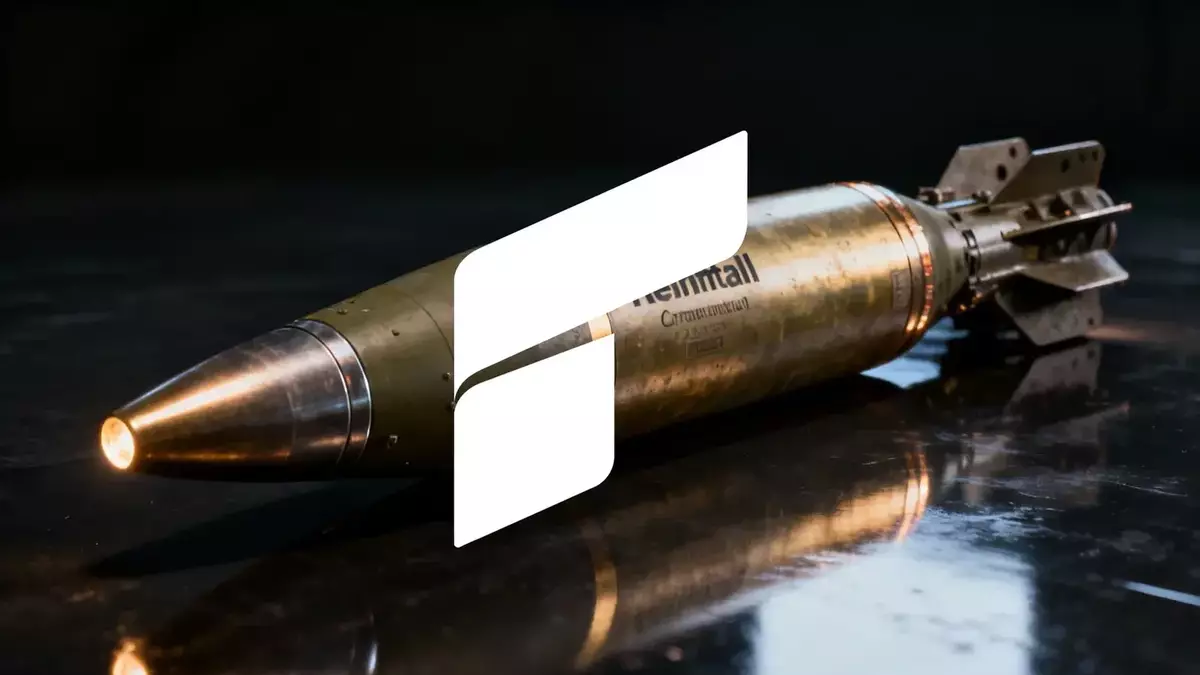
Yet order flow has hardly dried up. In late June, Rheinmetall booked a large Ukrainian order for 155mm artillery projectiles and propellant charges. An unnamed customer also placed an order for four Skynex air defence systems in the high triple-digit million euro range, with Italy set to become the first NATO member to field the system. Additional upside could come from a German defence ministry review into producing US weapon systems such as Tomahawk cruise missiles and PAC-3 interceptors under licence in Germany—a move that would directly benefit the group.
Should investors sell immediately? Or is it worth buying Rheinmetall?
Supporters of the stock also point to a clean balance sheet. Net liquidity is positive, and long-term debt is low relative to equity. The 16.63% rally in seven days suggests the market is starting to treat the F126 loss as an isolated event. A durable ceasefire in Ukraine would not dent NATO demand structurally, though it could shift sentiment toward defence stocks—meaning the absence of a peace deal remains a tailwind for now.
Bearish Signals: Volatility, Integration Headaches, and Political Dependency
Sceptics counter that the share price is still trading well beneath its 50-day (€1,197.09), 100-day (€1,379.77) and 200-day (€1,538.88) moving averages, with the relative strength index at a neutral 46.5. The annualised 30-day volatility of 69.10% underscores a market driven more by headlines than fundamentals.
The operational picture is mixed. Net margins swing sharply between quarters—strong in the final quarter, weak at the start of the year—making it hard to gauge true earnings power. Meanwhile, the NVL acquisition continues to weigh. Rheinmetall is simultaneously integrating the shipbuilder and selling its Power Systems division, with triple-digit, non-cash impairment charges hitting reported earnings. After the F126 rejection, analysts are questioning the logic of the whole marine strategy.
Geopolitical risk is acute. Although direct revenue exposure to Ukraine is modest, daily moves of 5% to 7% have been triggered by individual negotiation updates. Any further contract losses on the F126 model, or a sudden breakthrough in peace talks that spooks the defence trade, could send the stock back towards the €902.50 low.
Rheinmetall at a turning point? This analysis reveals what investors need to know now.
The Ankara Pivot: CEO Armin Papperger’s Political Play
All of this makes the upcoming NATO summit in Ankara the most immediate catalyst for Rheinmetall. CEO Armin Papperger has been vocal in demanding binding procurement guarantees and advance payments from governments before the group commits to expanding production capacity. He describes the transatlantic partnership as indispensable and is pushing for concrete pledges, not warm words.
Whether the summit delivers will determine if the recent bounce can extend towards the moving average band between €1,200 and €1,380, or whether it fizzles as a dead-cat bounce. Beyond Ankara, the key tests include any quantification of the F126 damage in coming weeks and whether the shelved KNDS initial public offering reshapes European defence competition. For now, the RSI of 46.5 is the closest guide to whether buyers or sellers are gaining the upper hand in this consolidation phase.
Ad
Rheinmetall Stock: New Analysis - 4 July
Fresh Rheinmetall information released. What's the impact for investors? Our latest independent report examines recent figures and market trends.
Disclaimer regarding our articles: No investment advice, no buy or sell recommendation. Information on prices, companies, and markets is provided without guarantee; changes are possible at any time. Stock market transactions can lead to substantial losses. Our articles are created and reviewed in whole or in part automatically with the support of AI.