Rocket Lab Secures Prime Role on Space Force Satellites as $3B Equity Facility Clouds Sentiment
05.06.2026 - 06:14:59 | boerse-global.de
Rocket Lab is steadily shedding its image as a mere launcher of small payloads, but the stock’s recent turbulence shows that good news from the Pentagon and analysts can only go so far when a massive dilution facility looms. The company’s transformation into a prime contractor — now cemented by a $90 million U.S. Space Force contract for a geostationary mission — has drawn fresh praise from Stifel, which lifted its price target to $132 from $110 and kept a buy rating. Yet the shares remain 23% below the all-time high of EUR 133.80 set on May 27, caught between operational momentum and capital-market unease.
The Space Force award marks a strategic inflection point. Rocket Lab will build and operate two satellites carrying the “Heimdall” payload, acting as the prime contractor for the first time on a geostationary mission. This role allows the company to capture more value from design through operations rather than outsourcing key pieces. The deal pushes total commitments from the Space Development Agency past $1.3 billion, while the overall backlog hit a record $2.2 billion. At the end of the first quarter, Rocket Lab held $1.2 billion in cash, earmarked in part for the forthcoming Neutron rocket.
Against that encouraging backdrop, a trio of headwinds has whipsawed the stock. A Securities and Exchange Commission filing on May 20 revealed an at-the-market equity program that allows Rocket Lab to issue up to $3 billion in new shares through 16 banks including Goldman Sachs, Morgan Stanley and BofA Securities. The next day shares fell 6.6%. While the company retains discretion over when and how much to tap, the potential dilution now hangs over the stock like a persistent cloud. Days before the filing, four senior executives cashed out roughly $18 million of equity — led by director Alexander Slusky, who sold 60,000 shares for about $9 million. Over the past twelve months, insider sales have outstripped purchases by more than $41 million, a signal that sticks even when trades are pre-arranged.
Should investors sell immediately? Or is it worth buying Rocket Lab?
The sector itself then dealt the third blow. An explosion during an engine test of Blue Origin’s New Glenn rocket in Florida triggered a broad sell-off in space stocks. Rocket Lab alone fell nearly 15% on Monday, dragging shares down alongside Planet Labs and Intuitive Machines. For the week, the company lost roughly 16%, though it still ended a strong month with a gain of over 54%. The stock recently traded at EUR 104.20, up 5.5% on a single day, showing how volatile the recovery has been.
Meanwhile, the underlying business continues to deliver. First-quarter revenue reached a record $200.3 million, a 63.5% jump from a year ago. The Electron rocket maintains a steady launch cadence, providing the operational foundation for more ambitious plans. Revenue for the full fiscal year rose about 46% to $680 million, with analysts expecting another 52% expansion this year. The company’s acquisitions — Motiv Space Systems, now branded Rocket Lab Robotics, and Mynaric — are strengthening vertical integration, enabling Rocket Lab to bundle more spacecraft components and mission services.
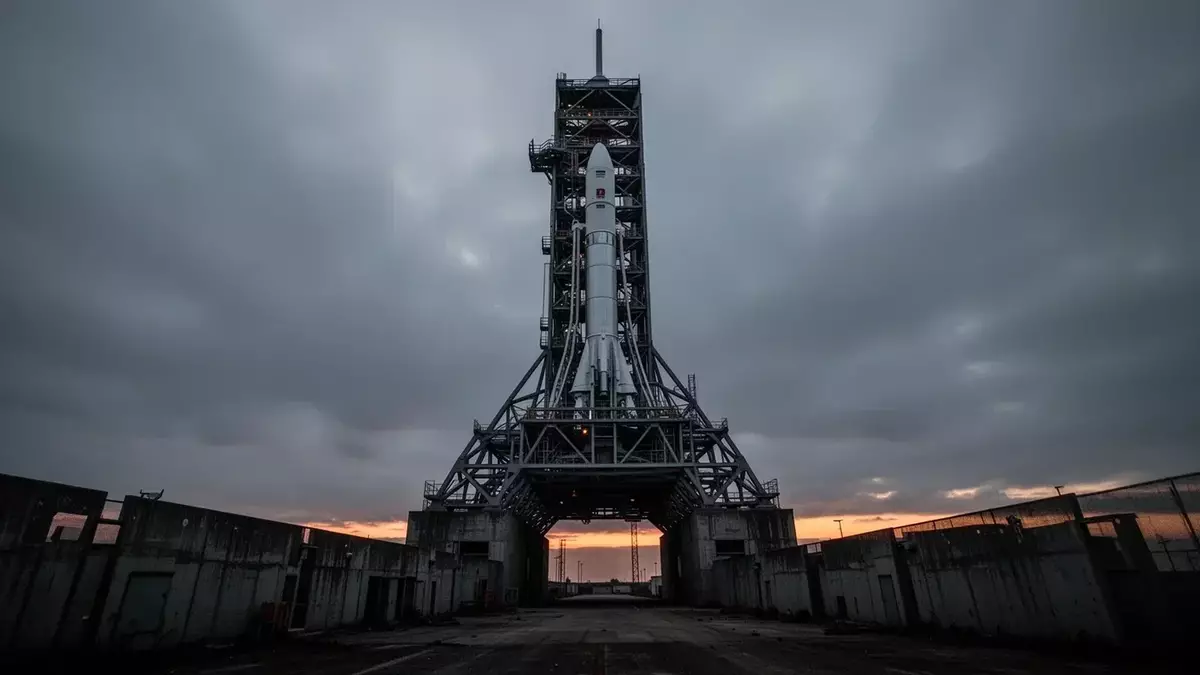
The biggest test remains Neutron, the medium-lift rocket that promises to unlock a much larger addressable market. Originally slated for a debut at the end of 2025, then pushed to mid-2026, the first flight is now expected in the fourth quarter of 2026 at the earliest after a cracked main-stage tank was discovered. Management has already secured five dedicated launch contracts, but the delay gives skeptics room to question the timeline. On an adjusted EBITDA basis, analysts see Rocket Lab reaching profitability in fiscal 2027 with a margin of 7.6%, a scenario that hinges on Neutron reaching the pad.
For now, the backlog and the growing list of government contracts — coupled with a halo effect from SpaceX’s planned initial public offering, which draws attention to listed space players — support the bull case. But the interplay between a record order book, a $3 billion equity facility, and insider exits keeps the stock in a high-stakes dance. The next real catalyst remains Neutron’s maiden flight. If it arrives on schedule, the conversation around dilution could quickly fade into the background.
Ad
Rocket Lab Stock: New Analysis - 5 June
Fresh Rocket Lab information released. What's the impact for investors? Our latest independent report examines recent figures and market trends.