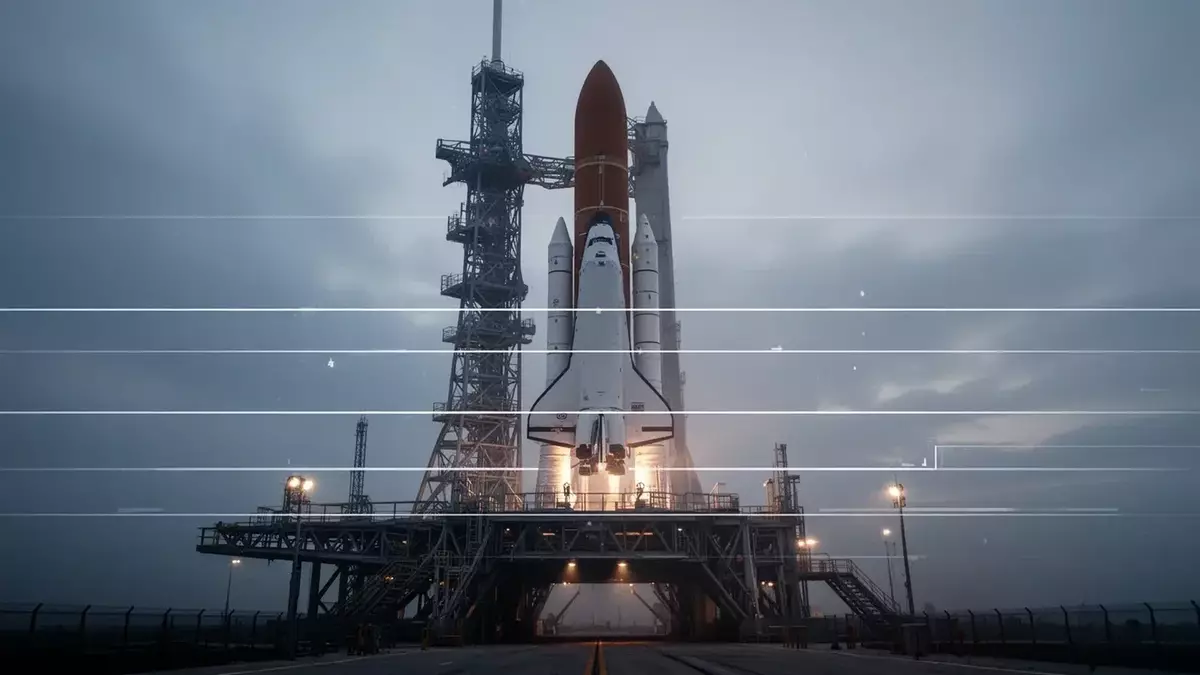
Rocket Lab Surges 6% as Hypersonic Mission and Record Revenue Validate Growth Strategy
11.06.2026 - 21:46:16 | boerse-global.de
Rocket Lab’s modified Electron rocket lifted off from NASA’s Wallops flight facility late Wednesday on a classified hypersonic research mission for the U.S. government. The HASTE flight, the company’s fifth suborbital launch this year, sent shares up more than six percent on Thursday to €96.30 — a move that builds on a year-long rally that has quadrupled the stock’s value.
The company’s finance chief, Adam Spice, argues that the broader launch market is opening a strategic window for the firm’s upcoming Neutron rocket. His thesis: SpaceX is increasingly consumed by Starlink, Starship, and its rumored orbital data-center ambitions, leaving commercial launch customers underserved. “That creates a very good spot for Neutron,” Spice said, as production lines already gear up for an inaugural flight targeted for end of 2026.
The HASTE program itself has become a high-margin profit center. Each suborbital mission generates roughly $10 million in revenue, well above typical commercial flights, and now accounts for one in every five launches Rocket Lab conducts. Spice expects annual growth rates for these defense contracts to hit 50 percent in the near term. That optimism is backed by a record $2.2 billion order book, which ballooned after the company signed the largest contract in its history in June — an agreement covering launches through 2029, including 20 separate HASTE missions for the defense sector.
Should investors sell immediately? Or is it worth buying Rocket Lab?
First-quarter results reinforced the bullish narrative. Revenue reached $200 million, a 63.5 percent jump year-over-year and comfortably ahead of the $190 million consensus estimate. The backlog, now topping $2.2 billion, provides multiyear revenue visibility that most space peers cannot match. Yet for all the momentum, the stock remains roughly 28 percent below its 52-week high of €133.80 set in late May, and has shed seven percent over the past seven trading sessions — a reminder of the volatility that still characterizes the name.
Neutron’s development schedule is the pivotal catalyst on the horizon. The reusable rocket, designed to lift 13,000 kilograms to low Earth orbit, has completed successful engine tests and structural evaluations. Management plans an initial fleet of six boosters, each capable of up to 20 flights, giving a theoretical annual launch capacity of nearly 100 missions. Production is already running at a pace that would yield up to four rockets per year initially.
A successful first flight in 2026 would shatter the current valuation debate and cement Rocket Lab’s status as a genuine competitor in the medium-to-heavy launch segment. Until then, the company’s ability to consistently execute high-value missions — and the market’s willingness to reward that execution — will keep the stock in a tug-of-war between its long-term potential and short-term volatility.
Ad
Rocket Lab Stock: New Analysis - 11 June
Fresh Rocket Lab information released. What's the impact for investors? Our latest independent report examines recent figures and market trends.