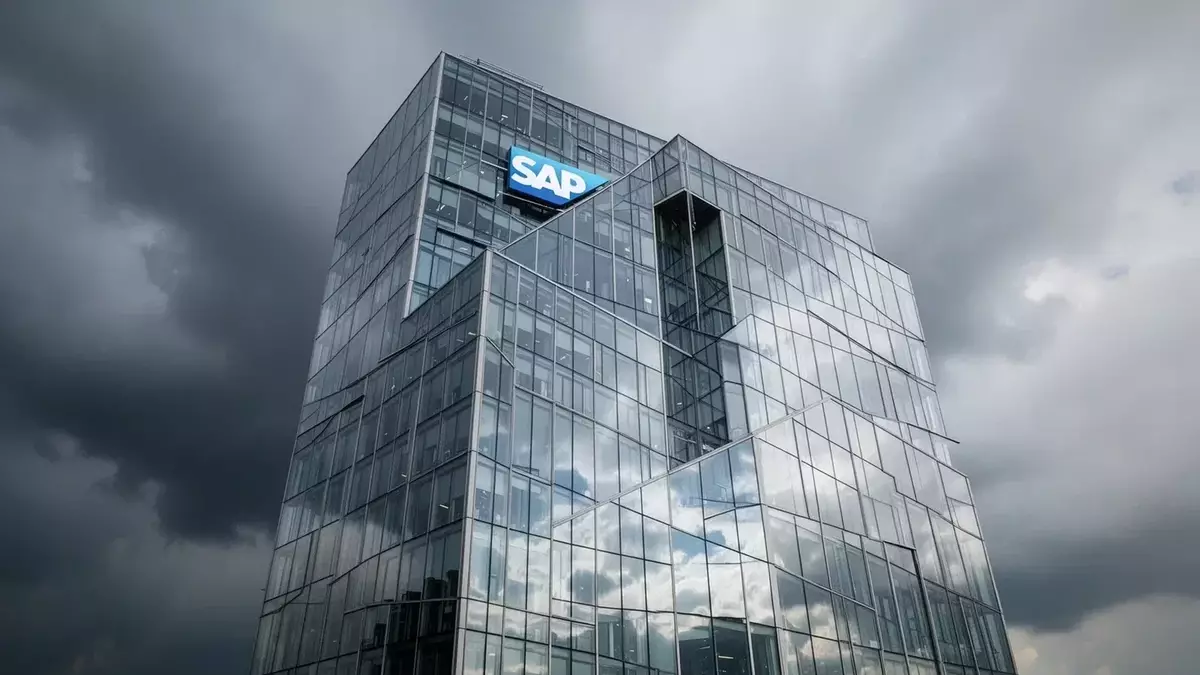
SAP’s Cloud-Driven Vision Clashes with Margin Pain and Investor Jitters
Published on 06/11/2026 at 16:23 | Redaktion boerse-global.de
The software giant that dominates the back offices of the world’s largest companies is caught in a contradictory maelstrom. SAP’s cloud business is humming — its order backlog swelled 20% to €21.9 billion in the first quarter of 2026, and total revenue climbed 6%. Yet the stock has been gutted, losing 29% of its value since January and trading near €142. A chasm has opened between operational strength and market sentiment, and the culprit is clear: the eye-watering cost of the artificial-intelligence arms race.
That friction was laid bare this week when Goldman Sachs slashed its second-half 2026 gross-margin forecast for SAP to 72.8%, down from 73.3%. The revision stems from unexpectedly heavy hardware spending as the company races to build out the cloud infrastructure needed to power hundreds of new AI agents. The investment bank also cut its expected EBIT growth for the period to 15% from 16%. The message is blunt: the AI boom lifts revenue, but the infrastructure bill is coming due.
A Rival’s Splurge Adds to the Pressure
The selloff in SAP shares — now 24% below their 200-day moving average — has deepened after Oracle stunned the market with plans to spend $95 billion in fiscal 2027. That figure blew past all expectations and underscored that the battle for enterprise AI dominance will devour far more capital than previously assumed. JPMorgan, which maintains a neutral rating on SAP, sees a similar cooling across the sector, pointing to comparable trends at Microsoft. The margin narrative that once fueled the cloud dream — rising scale, falling costs — is being rewritten as a capital-intensive slog.
SAP’s own management has not shied away from the spending burden. At the Sapphire 2026 conference in May, the company unveiled its vision of the “autonomous enterprise,” where humans and AI jointly run finance, supply chains and human resources through more than 200 specialized AI agents. The strategy is defensive: a recent survey found that 39% of SAP customers now cite AI capabilities as a primary reason to move to the cloud, and the company must keep them inside its ecosystem. But the technological leap demands billions in upfront datacenter investment, and those dollars flow out long before the subscription revenue trickles back in.
Should investors sell immediately? Or is it worth buying SAP?
The Long Game Meets Short-Term Impatience
The paradox is that SAP is not a struggling business. The cloud backlog of €21.9 billion is a record, and the company expects full-year cloud revenue as high as €26.2 billion. A €95 billion bond placement in May — met with top-tier ratings from S&P and Moody’s — shows that credit markets have no qualms about SAP’s ability to service debt. Yet equity investors are running for the exits. The stock’s relative-strength index of 40.7 signals there is no bottom in sight yet.
The root of the discontent lies in the time lag between vision and revenue. SAP’s customers are famously conservative — they entrust the software with their most critical business processes and are unlikely to hand the reins to AI agents overnight. Analysts are pricing in a slower transformation than the company’s road map suggests. The market wants near-term proof: rising cloud bookings, expanding margins and visible efficiency gains. Instead, it sees capital expenditure running ahead of monetisation.
Patience Test in July
The next big test comes on 23 July 2026, when SAP reports second-quarter results. The company has already signaled a slower growth pace in the current quarter compared with the start of the year. All eyes will be on the cloud order backlog — the €21.9 billion figure — which must expand fast enough to absorb the swelling infrastructure costs. The refinancing of recent acquisitions, funded by May’s blockbuster bond, will also come under scrutiny.
SAP at a turning point? This analysis reveals what investors need to know now.
For now, SAP’s market capitalisation sits at €185.2 billion, a far cry from the all-time highs of last July. The transformation from legacy licensing to cloud subscriptions — and then to an AI-native platform — is a multi-year bet that demands patience most equity holders are reluctant to grant. The bond market is comfortable. The stock market is not. The question is whether SAP can show, quarter by quarter, that its expensive vision is starting to pay off in hard cash.
Ad
SAP Stock: New Analysis - 11 June
Fresh SAP information released. What's the impact for investors? Our latest independent report examines recent figures and market trends.
Disclaimer regarding our articles: No investment advice, no buy or sell recommendation. Information on prices, companies, and markets is provided without guarantee; changes are possible at any time. Stock market transactions can lead to substantial losses. Our articles are created and reviewed in whole or in part automatically with the support of AI.