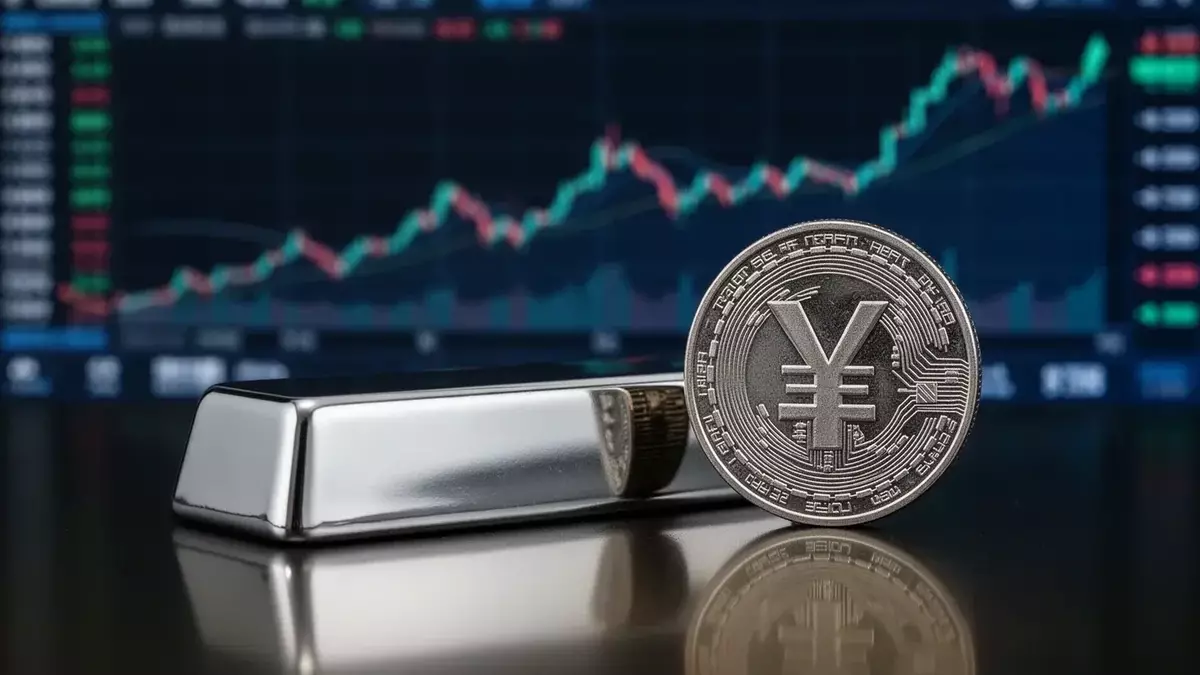
Silver's $57.60 Tumble: Demand Collapse and Fed's Hawkish Turn Trump a Persistent Supply Gap
Published on 07/01/2026 at 22:24 | Redaktion boerse-global.de
Silver has slid to around $57.60 per ounce as of July 1, 2026, caught between a tightening monetary policy outlook and mounting evidence that industrial consumption is cooling faster than anticipated. The decline comes even as the market remains in its sixth consecutive year of supply deficit, a paradox that has forced analysts to reassess their bullish narratives.
Federal Reserve Chair Kevin Warsh has injected a fresh sense of urgency into the rate debate. Speaking at the central bank forum in Sintra, Portugal, alongside other global monetary policymakers, Warsh pointed to the artificial-intelligence boom as a new driver of inflation. Massive corporate investment spending, he argued, is expanding the supply side of the economy in ways that will have "enormous implications" for future policy. While he did not signal the direction of the next move, his comments reinforced the hawkish tilt already evident within the Federal Open Market Committee.
The Fed left its benchmark rate at 3.50%–3.75% in mid-June, but the summary of economic projections shows the PCE price index rising to 3.6% by year-end. A slim majority of FOMC members now anticipate at least one rate hike before December, with some governors penciling in two or three. A sizeable minority still expects rates to remain unchanged through the end of 2026. Traders have responded by pricing in a September rate increase, assigning it a probability just above 51%.
Higher real yields and a stronger dollar are direct headwinds for silver, which carries no yield. The metal’s slide has been aggravated by a parallel deterioration in demand dynamics.
Should investors sell immediately? Or is it worth buying Silber Preis?
The supply narrative, once a pillar of bullish forecasts, is itself softening. The Silver Institute initially projected a deficit of 67 million ounces for 2026, but revised estimates now peg the shortfall at just 46.3 million ounces. The sixth consecutive annual deficit remains intact, but the narrowing gap signals that consumption is losing momentum.
Industrial usage is expected to fall by 3% to 640 million ounces. The solar photovoltaic sector, a key growth driver in recent years, is set to slash its silver content per module. Manufacturers such as LONGi have been retooling mass production lines since the second quarter, increasingly switching to copper-based contacts. Overall photovoltaic demand for silver could drop by 19% this year. Jewelry demand is also weakening, with analysts forecasting a 16% contraction. High-tech segments like electronics and medical devices continue to use the metal intensively, but they cannot offset the broader slowdown.
The macroeconomic backdrop adds further pressure. The World Bank projects global economic growth of just 2.5% in 2026 under its baseline scenario, with a risk scenario of only 1.3% if conditions deteriorate. A soft global economy curbs industrial appetite for silver, while a strong dollar keeps the metal expensive for non-US buyers.
Silber Preis at a turning point? This analysis reveals what investors need to know now.
Unlike gold, silver lacks a central-bank buying backstop. When gold prices fall, reserve managers often step in to accumulate. No such support exists for the white metal, leaving it reliant on financial investors for any sustained rally. Without fresh capital inflows, the structural deficit alone cannot arrest the price decline.
Attention now turns to the FOMC’s scheduled meeting on July 28–29. No new economic projections will be released; the next updated forecasts are due in September. For silver, the near-term path hinges on whether the Fed confirms the hawkish tilt priced into the market — and whether demand can find a floor before the deficit erodes further.
Ad
Silber Preis Stock: New Analysis - 1 July
Fresh Silber Preis information released. What's the impact for investors? Our latest independent report examines recent figures and market trends.
Disclaimer regarding our articles: No investment advice, no buy or sell recommendation. Information on prices, companies, and markets is provided without guarantee; changes are possible at any time. Stock market transactions can lead to substantial losses. Our articles are created and reviewed in whole or in part automatically with the support of AI.