Silver Sinks to December Low as Iran-Fueled Oil Shock and Fed Split Overshadow Persistent Shortage
Published on 07/09/2026 at 18:34 | Redaktion boerse-global.de
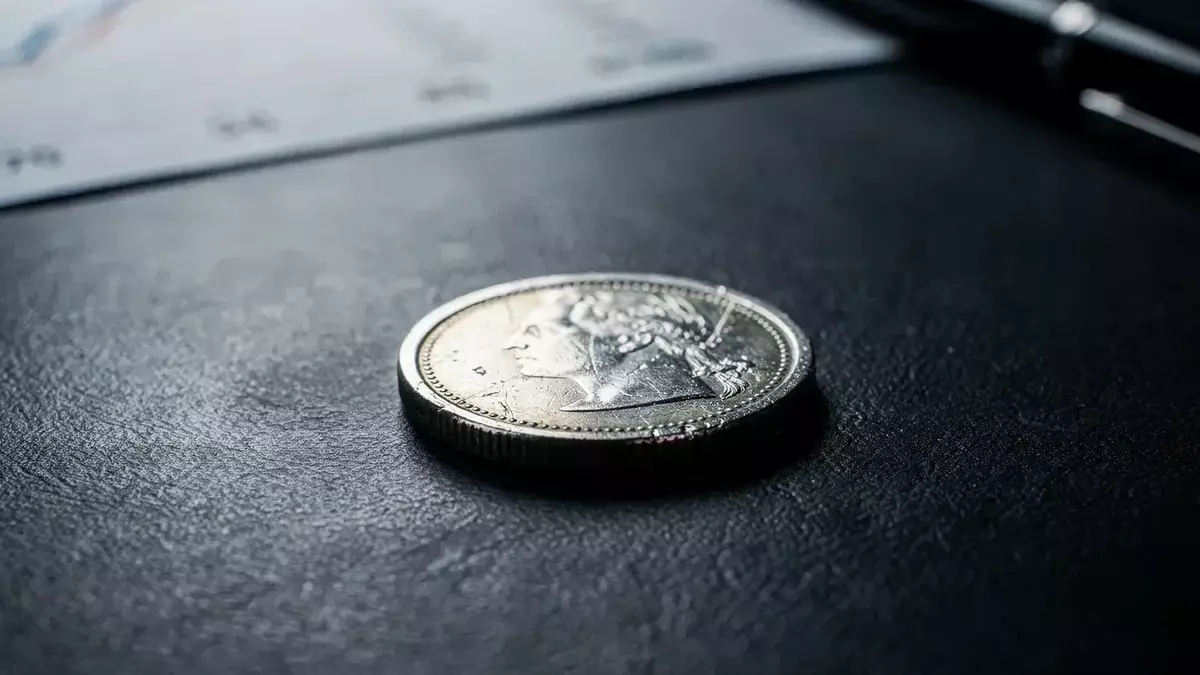
Silver clawed back above $59 an ounce in Thursday morning trade, but the rebound does little to erase the sting of a sharp selloff that dragged the metal to its lowest level since December 2025. The spot price briefly touched $57.56 on Wednesday, a level that still stands as the most severe intraday downturn in five months, before bargain hunters stepped in. The recovery remains fragile: silver now trades a full 52% below its January peak of roughly $121, even as the year-to-date tally still shows a hefty gain of more than 100%.
The trigger for the rout was a sudden escalation in the Middle East. US President Donald Trump declared a preliminary peace agreement with Iran void and issued stark warnings at the NATO summit in Ankara, sending oil prices sharply higher. That geopolitical spark quickly ignited a chain reaction across markets. Expensive crude revived inflation fears, which in turn reignited expectations that central banks will keep policy tight. Higher interest rates are a direct headwind for non-yielding assets such as silver, and the pressure was compounded by the metal's heavy industrial exposure — roughly 58% of demand comes from sectors like solar and semiconductors, which are especially sensitive to economic uncertainty.
The Federal Reserve added its own layer of anxiety. Minutes from the latest meeting, chaired by Kevin Warsh, revealed a deeply divided committee. While the federal funds rate was left unchanged at 3.50%–3.75%, nine of the eighteen members now anticipate at least one rate hike by the end of 2026. Traders have been quick to price in that risk: the implied probability of a September move has jumped to 66%, well above where it stood just days ago. Rising real yields are siphoning capital away from precious metals, and silver has borne the brunt.
Yet beneath the daily price swings, a structural story is playing out that defies the recent weakness. The global silver market is heading for its sixth consecutive annual deficit, with a supply gap that is expected to widen to more than 46 million ounces. This is happening despite a sharp drop in industrial consumption, which is forecast to fall to 650 million ounces — a four-year low — as the photovoltaic sector slashes its silver usage by an estimated 19%. The cost pressure is acute: silver now accounts for nearly a third of total module production costs. Chinese manufacturers are accelerating the shift toward cheaper alternatives; LONGi Green Energy is set to begin mass production of copper-metallized cells in the second quarter, while Aiko Solar is scaling up silver-free modules.
Should investors sell immediately? Or is it worth buying Silber Preis?
The paradox deepens on the supply side. Roughly 70% of global silver output is produced as a by-product of copper, lead, and zinc mining, meaning higher prices do little to coax additional tonnage onto the market. Meanwhile, even as solar companies try to reduce their silver footprint, newer cell technologies are working in the opposite direction. High-efficiency TOPCon cells consume 50% more silver than the older PERC design, and heterojunction (SHJ) cells require double the amount — partially offsetting the savings from substitution.
Recycling, often touted as a relief valve, remains largely ineffective. Each decommissioned solar panel contains up to 25 grams of silver, yet fewer than 10% of old installations are processed through formal recycling channels. The processes are still too labor- and energy-intensive to be economically viable at scale.
What the industrial sector is shedding, however, investors are eagerly absorbing. Physical investment demand has surged 20% year-on-year to 227 million ounces, a three-year high, according to the Silver Institute. That inflow has helped keep a floor under prices, but it has not been enough to reverse the downdraft from the Fed and geopolitical front. The gold-to-silver ratio settled around 69 on Thursday, still reflecting the metal's historically elevated valuation relative to gold.
Silber Preis at a turning point? This analysis reveals what investors need to know now.
For the weeks ahead, traders are watching two key variables: the trajectory of Fed rate policy in 2026 and the temperature of military tensions in the Middle East. As long as rising energy costs keep inflation risks elevated, volatility on the silver market looks set to persist — even as the fundamental deficit story remains firmly intact.
Ad
Silber Preis Stock: New Analysis - 9 July
Fresh Silber Preis information released. What's the impact for investors? Our latest independent report examines recent figures and market trends.
Disclaimer regarding our articles: No investment advice, no buy or sell recommendation. Information on prices, companies, and markets is provided without guarantee; changes are possible at any time. Stock market transactions can lead to substantial losses. Our articles are created and reviewed in whole or in part automatically with the support of AI.