Uranium Energy’s Zero-Sales Quarter Was a Calculated Pause — Here’s Why the $794M Cash Pile and New Mine Output Matter More
12.06.2026 - 16:14:23 | boerse-global.de
Wall Street was bracing for a routine quarter from Uranium Energy after booking $20 million in revenue the prior period. Instead, the company delivered precisely zero dollars in sales, a shock that triggered a near 16% single-day sell-off. But management insists the empty top line was no accident — it was a deliberate freeze on uranium sales as the spot price slipped to $86 per pound.
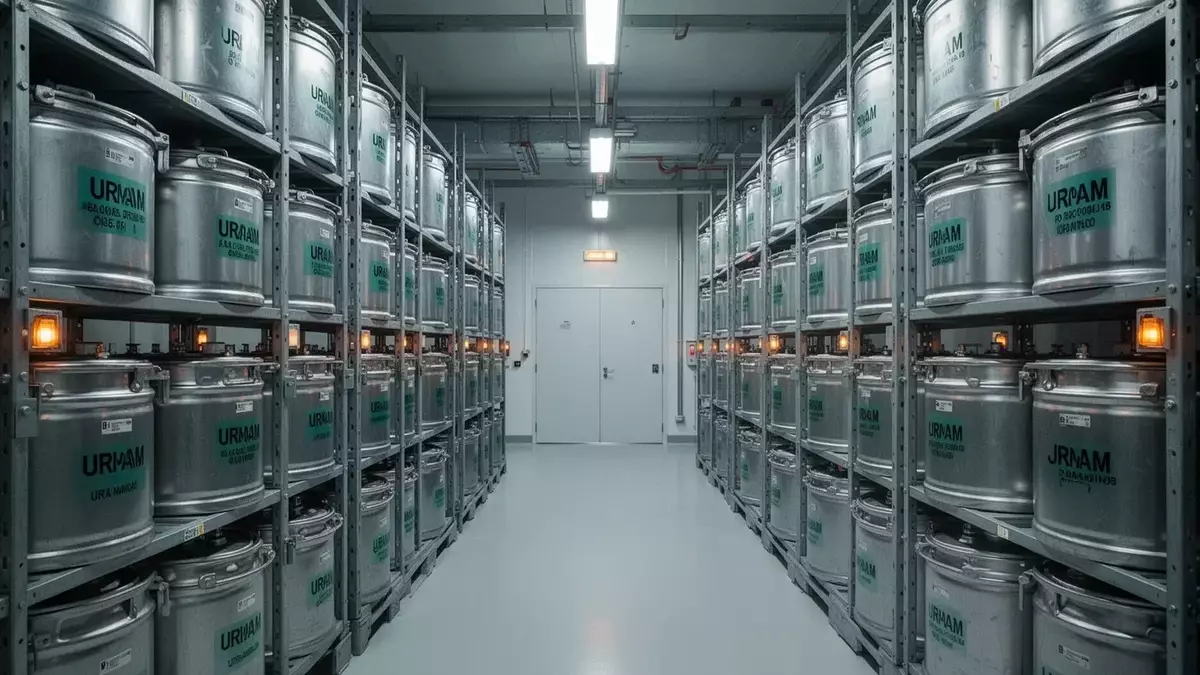
The uranium developer is now sitting on roughly 1.5 million pounds of the nuclear fuel, a stockpile valued at around $127 million at current market prices. Rather than selling into a weakening spot market, the company has opted to hoard its inventory, betting that prices will recover. The trade-off came at a cost: a third-quarter net loss of $52.3 million.
That financial hit was softened by an exceptionally robust balance sheet. Uranium Energy holds $794 million in total liquidity, of which $488 million is pure cash. It carries no debt. The company also has no hedging contracts in place, leaving it fully exposed to any uranium price rally the market might deliver.
Should investors sell immediately? Or is it worth buying Uranium Energy?
Meanwhile, the operational story remains firmly in growth mode. Early April 2026 marked the start of production at Burke Hollow in Texas, the largest new in-situ recovery uranium project in the United States in over a decade. Workers are injecting oxygen and carbon dioxide into the borefield to dissolve uranium from the rock, with the pregnant solution flowing directly into an ion-exchange plant. The facility is expected to hit its initial production targets by the end of the current fiscal fourth quarter.
The build-out extends beyond Texas. At the Christensen Ranch mine in Wyoming, three new wellfields recently came online, and the company is advancing the Ludeman project, which will become its third active mine and feed the central Irigaray processing plant. A separate subsidiary, URNC, is scouting a final site for new refining and conversion capacity, all aimed at creating a fully independent US nuclear fuel supply chain. That ambition aligns neatly with the Department of Energy’s “Nuclear Dominance” campaign to reduce reliance on foreign imports.
Analysts have reacted to the zero-revenue quarter with a mix of caution and conviction. Goldman Sachs trimmed its price target from $18 to $16 but kept a buy rating. H.C. Wainwright held firm at $26.75, and Roth MKM stood by its $17 target. The divergence in views reflects a market trying to weigh the short-term pain of stalled sales against the long-term promise of a vertically integrated uranium producer.
For now, the stock chart tells a brutal story. The shares have lost about 28% over the past month, punctuating a slide that now puts the price at roughly 45% below the January high of €17.34. The current level around €9.34 sits well below the 200-day moving average, and the relative strength index of 38.7 points to fading momentum. A sustained move above €10 is widely seen as the first step toward mending the technical damage. The next few weeks will be decisive: if Burke Hollow delivers a smooth production ramp, management may just have the ammunition it needs to reverse the sell-off.
Ad
Uranium Energy Stock: New Analysis - 12 June
Fresh Uranium Energy information released. What's the impact for investors? Our latest independent report examines recent figures and market trends.