VW’s V2G Bet Can’t Mask the Bleeding in Europe
Published on 06/24/2026 at 18:24 | Redaktion boerse-global.de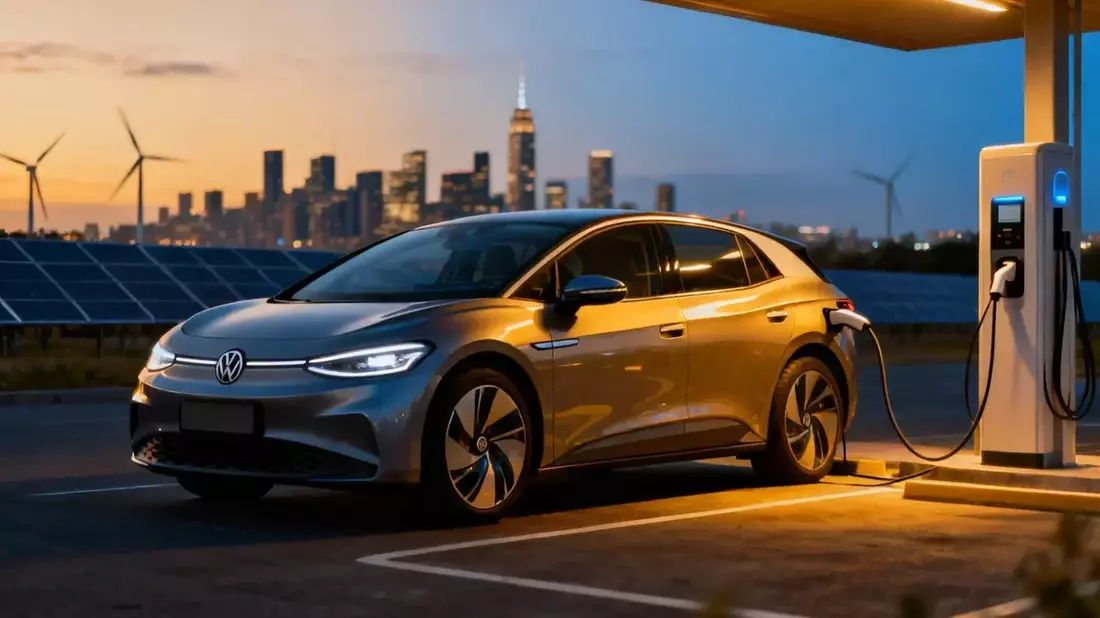
Volkswagen is rolling out a novel vehicle-to-grid offering in Germany, but the market reaction has been unequivocal: the stock slid to a fresh 52-week low on the day of the announcement. The disconnect between the company’s technological ambition and the hard reality of its shrinking European footprint has rarely been starker.
New registration data from the European Automobile Manufacturers’ Association (ACEA), released on 23 June, show that Volkswagen Group’s EU market share is crumbling even as the overall market expands. In May, the region’s auto market grew 3.2% to roughly 955,000 new registrations, yet VW’s group tally fell 3.6% year-on-year to 254,011 units. Its market share dropped from 28.5% to 26.6%. The core Volkswagen brand was hit even harder, with registrations sliding 6.0% and its share narrowing from 11.8% to 10.8%.
Over the first five months of the year, the group’s cumulative registrations inched up 1.5% to 1.267 million, but market share still contracted from 27.4% to 26.7%. The culprit is no secret: Chinese manufacturers are piling into Europe at breakneck speed. BYD posted 26,017 EU registrations in May – nearly three times its year-ago total. Chery surged 240% to 16,282 units, while Leapmotor soared 447% to 8,856. The Stoxx Europe 600 Automobiles & Parts index briefly touched its lowest level since March, with Volkswagen absorbing much of the selling pressure.
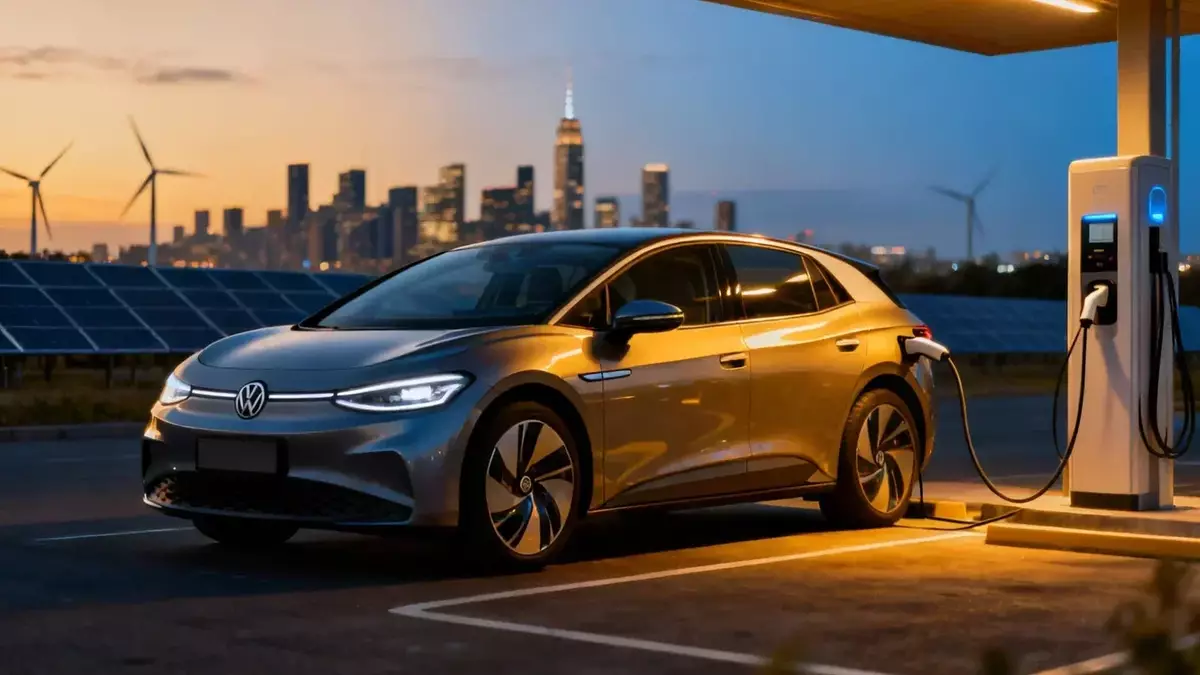
On the same day, VW’s energy subsidiary Elli unveiled an integrated vehicle-to-grid package for the German market. The offering bundles compatible electric vehicles, the Elli BiDi Charger, a dedicated “Volkswagen Naturstrom V2G Flow” tariff, and a control app. It was presented jointly by the Volkswagen, Volkswagen Commercial Vehicles, and CUPRA brands at the Power2Drive conference in Munich. The idea is straightforward: an EV can not only draw power but also feed energy back into the grid during defined windows, potentially lowering mobility costs and adding flexibility to the electricity system.
Should investors sell immediately? Or is it worth buying Volkswagen?
Elli claims a technical base of roughly one million bidirectional-capable MEB-platform vehicles across Europe, of which about 360,000 are in Germany. The programme will initially cover vehicles equipped with ID. Software 3.5 and a minimum 77 kWh battery, as well as all ID. models running ID. Software 6. German customers get first access, with France and the UK to follow once local regulations are in place. The wallbox and tariff will be available for pre-order from the end of 2026. During the first contract year, customers can earn a bonus of up to €720.
What is conspicuously absent, however, is any financial detail. Volkswagen has disclosed neither a revenue target, an investment figure, nor a margin forecast for the V2G initiative. The market’s shrug is telling: VW shares closed the session at €76.54, just a hair above the day’s 52-week low of €76.44. That is roughly 19% below the 200-day moving average, and the year-to-date loss stands at nearly 28%. The 14-day relative strength index registered 23, deep in oversold territory.
The next trading day, Tuesday, brought a modest bounce. The stock settled at €78.24, still only a whisker above a then-52-week low of €77.86. Its 30-day decline was 14.3% and the RSI had eased to 25.5 – still oversold, but no longer extreme. Investors are clearly waiting for something more tangible than a futuristic energy concept.
Volkswagen at a turning point? This analysis reveals what investors need to know now.
Barclays, for its part, remains cautiously constructive. On 23 June, analyst Henning Cosman trimmed the price target from €125 to €120 but kept an Overweight rating and described VW as his preferred pick among European auto stocks. He explicitly noted that the stock’s persistent underperformance relative to the sector index had already been factored into his assessment.
The company will provide its next major update on 13 July with an H1 pre-close conference call, followed by the half-year financial report on 24 July. That is when management will need to demonstrate progress on margins and cash flow – the metrics the market truly cares about. The ACEA’s next monthly data drop, due at the end of July, will reveal whether May’s market share loss was an anomaly or the start of a deeper trend. For now, Volkswagen’s V2G push feels like a promising side story in a thriller where the main plot is turning increasingly ominous.
Ad
Volkswagen Stock: New Analysis - 24 June
Fresh Volkswagen information released. What's the impact for investors? Our latest independent report examines recent figures and market trends.
Disclaimer regarding our articles: No investment advice, no buy or sell recommendation. Information on prices, companies, and markets is provided without guarantee; changes are possible at any time. Stock market transactions can lead to substantial losses. Our articles are created and reviewed in whole or in part automatically with the support of AI.