
ams-OSRAM's VCSEL Bet: Lab Results Are In, Purchase Orders Aren't
Published on 09/28/2026 at 05:50 | Editorial boerse-global.de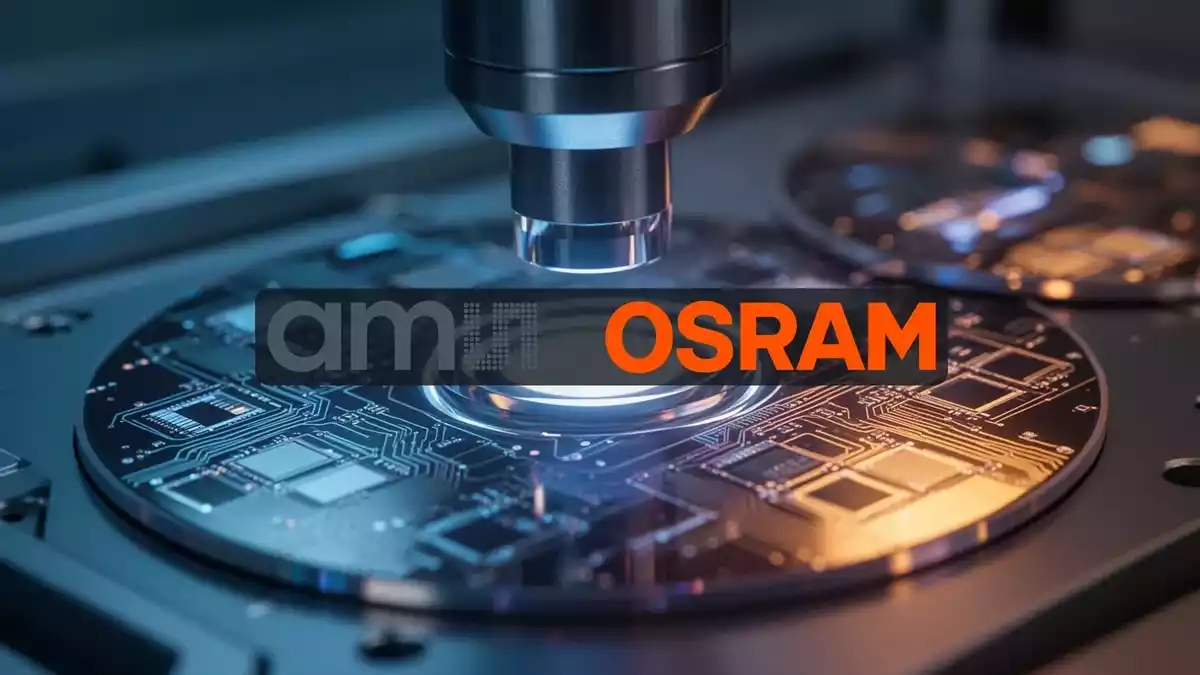
The optical interconnect platform that ams-OSRAM unveiled roughly a week ago has cleared its technical hurdles with flying colors. What it has not yet cleared is the commercial one.
That distinction sits at the heart of the current debate over the Austrian sensor and lighting specialist, whose shares closed Friday at EUR 21.30 after surrendering 4.5% on the session. The pullback marks a pause in a remarkable run: the stock is still up 153% since the start of the year, a rally built on hopes that????-grade photonics and wearable electronics will open new revenue streams.
A platform with impressive specs — and no signed customers
Developed alongside partner BizLink, the pluggable multicore fiber solution pairs ams-OSRAM's 850-nanometer thin-film microVCSEL arrays with a connector-based architecture aimed squarely at optical links inside artificial intelligence systems. The company reported error-free operation at 32 Gb/s, energy efficiency of roughly 0.25 pJ/bit, and reliability validation exceeding 2,000 hours.
Those figures matter because rising compute loads are pushing conventional copper interconnects against thermal and physical limits. For chipmakers, power-sipping optical links are shifting from nice-to-have to necessity. Yet laboratory benchmarks and volume procurement are different universes. Whether the division becomes a durable growth engine hinges on the transition from demonstrators to mass orders from server OEMs and platform operators — and on whether revenue arrives before the development bill does.
Jefferies sees the upside; Deutsche Bank stays cautious
Analyst Janardan Menon of Jefferies raised his price target on September 23 to CHF 25.50 from CHF 21.00, reaffirming a Buy rating and pointing explicitly to the potential of VCSEL micro-emitters in AI infrastructure. Menon also flagged a possible role for Micro-LED emitters in a Meta smart glasses product expected in 2027, adding a second leg to the bull case.
Should investors sell immediately? Or is it worth buying ams-OSRAM?
Not everyone is chasing the story higher. Deutsche Bank Research had already lifted its target to CHF 19 from CHF 16 on September 14, keeping a Hold rating while citing new consumer electronics products and smart-glasses applications. The gap between the two targets — CHF 6.50 — captures the market's core disagreement: how fast can technological wins convert into earnings?
Beyond AI optics, ams-OSRAM continues to serve niches in sensing and illumination. Its imaging-to-display sensing solution for smartphones remains in the portfolio, and UV-C LED technology from the company powers the baby bottle sterilizer sold by UPANG. The ALIYOS Bond Vision demonstrator for control interfaces rounds out a pipeline that spans data centers and living rooms alike.
The timeline problem: costs now, revenue later
The bear case is not about the technology — it is about the calendar. Optical connections in data centers must slot into existing architectures, and qualification processes can stretch timelines considerably. If hyperscalers postpone orders or pivot to alternative designs, development spending starts eating into margins.
Consumer devices present an even starker asymmetry. Analyst forecasts for potential data-glasses supply deals point to 2027 at the earliest, leaving investors to bridge a long stretch in which R&D outlays accumulate before countable revenue flows. Consumer electronics demand is also notoriously volatile; a disappointing end-market reception or a delayed product launch at a technology partner could quickly knock out a central pillar of the current valuation.
What the charts and the calendar say
Technically, the medium-term uptrend stays intact as long as the shares hold above their 50-day moving average of EUR 19.06, leaving room for another run at recent interim highs. A sustained break below that level would likely accelerate profit-taking.
The next hard checkpoint comes on November 13, 2026, when ams-OSRAM reports third-quarter 2026 results — the first real look at how the transformation is translating into the bottom line. Before then, market participants will be watching for the first commercial customer agreements tied to the VCSEL platform presented at the ECOC conference. Binding contracts with data center operators or concrete equipment commitments would be the catalyst that turns technological promise into hard currency. Until such deals materialize, the risk-reward profile remains tethered to one question: can the company move from component to margin-rich mass production quickly enough?
Ad
ams-OSRAM Stock: New Analysis - 28 September
Fresh ams-OSRAM information released. What's the impact for investors? Our latest independent report examines recent figures and market trends.


