
Aviva Launches AI Video Platform to Tackle Workplace Musculoskeletal Risks
Published on 08/24/2026 at 16:07 | Redaktion boerse-global.de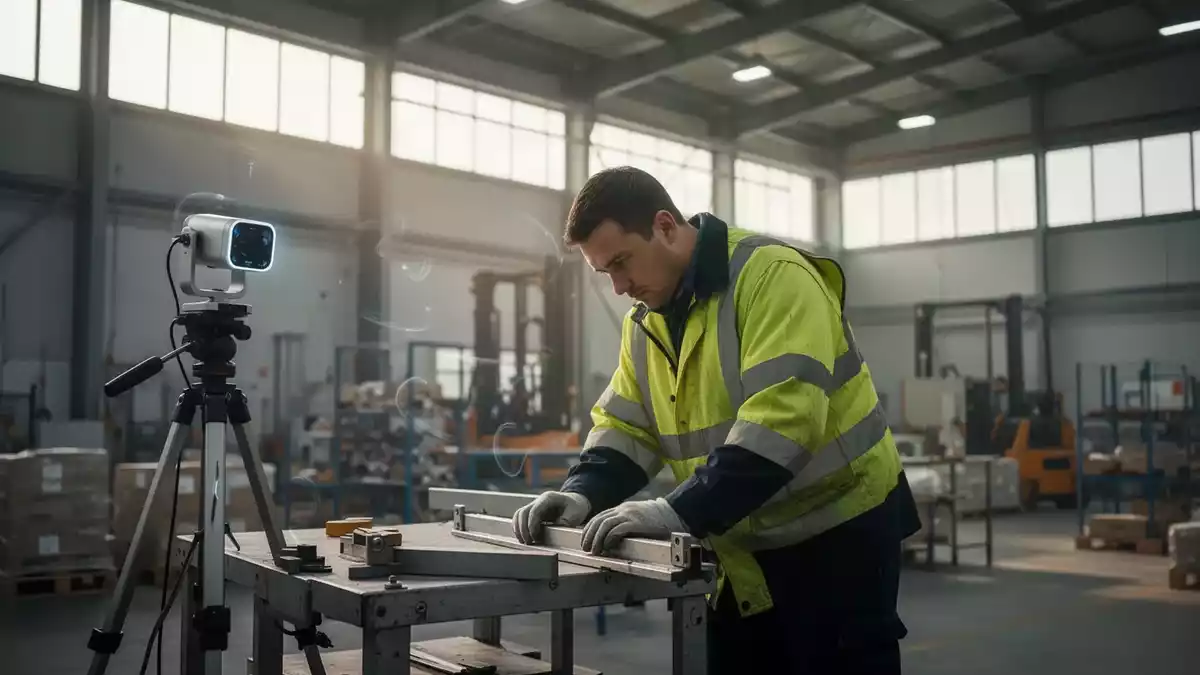
Aviva Global Risk Management Solutions has introduced a new AI-powered video analysis platform designed to identify and mitigate musculoskeletal risks in the workplace. Launched on August 24, 2026, in partnership with Cardinus Risk Management, the initiative aims to help UK employers address the high prevalence of work-related injuries before they lead to long-term absence.
The new tool, known as 3MotionAi, uses AI motion analysis to assess how employees move while performing their duties. By examining video footage, the technology identifies specific ergonomic hazards that could lead to musculoskeletal disorders (MSDs), such as back pain or joint injuries.
Identifying hidden ergonomic hazards before they cause injury is exactly what effective risk management looks like. A free toolkit with 41 ready-to-use templates and checklists helps you document workplace risks systematically and stay compliant. Download the free Risk Assessment Toolkit
The Scale of the Problem
The deployment comes as recent Health and Safety Executive (HSE) data highlights the significant toll of physical health issues in the UK. For the 2024/25 period, the HSE recorded 511,000 workers suffering from work-related musculoskeletal disorders, resulting in an estimated 7.1 million working days lost.
Aviva says early pilot programmes for the AI technology revealed hidden hazards in various industrial settings. In several instances, the software flagged significant physical risks in activities that had previously been categorised as low-risk during traditional manual assessments. The aim is to give employers earlier intervention opportunities to prevent chronic injury and long-term absenteeism.
Research Backs Predictive Approach
The push for AI-driven prevention is supported by parallel academic research. A study from the Queensland University of Technology (QUT), also published on August 24, 2026, demonstrated the effectiveness of machine learning in predicting MSD risks among office workers.
The study, which monitored 810 office-based employees, used six different machine learning models to forecast regional musculoskeletal issues. Researchers identified several key factors influencing injury risk, including time spent sitting, posture, and organisational factors. Individual variables such as sleep patterns and physical height also proved relevant, enabling more specific risk assessments for office environments.
With the Health and Safety Executive reporting over half a million work-related musculoskeletal cases, having the right documentation in place has never been more important. A free Health & Safety toolkit provides risk assessments and checklists covering key UK regulations like COSHH and PUWER, helping you protect your workforce. Get the free Health & Safety Toolkit
Broader Advances in Musculoskeletal Health
The focus on prevention coincides with advancements in clinical orthopaedic procedures. Earlier in the week, on August 22, 2026, the Central Institute of Orthopaedics at Safdarjung Hospital performed its first robot-assisted total knee replacement. The procedure, led by Dr. Bhagwati Prasad Sharma with clinical guidance from Professor Dr. Sumit Sural, was conducted on a 75-year-old patient.
While clinical applications focus on treatment, the integration of AI in risk management signals a broader shift toward data-driven preventative measures. In related developments, a Stanford HAI seed grant was recently awarded to a project led by Dr. Andre Kumar to create an annotated database of 7,500 ultrasound clips, intended to train AI systems in Point-of-Care Ultrasound (POCUS) for better identification of pathologies during diagnostic imaging.


