CATL's Firefly Battery Win Sits Alongside Buybacks and a Truck-Swap Gamble
Published on 10/24/2026 at 16:31 | Editorial boerse-global.de
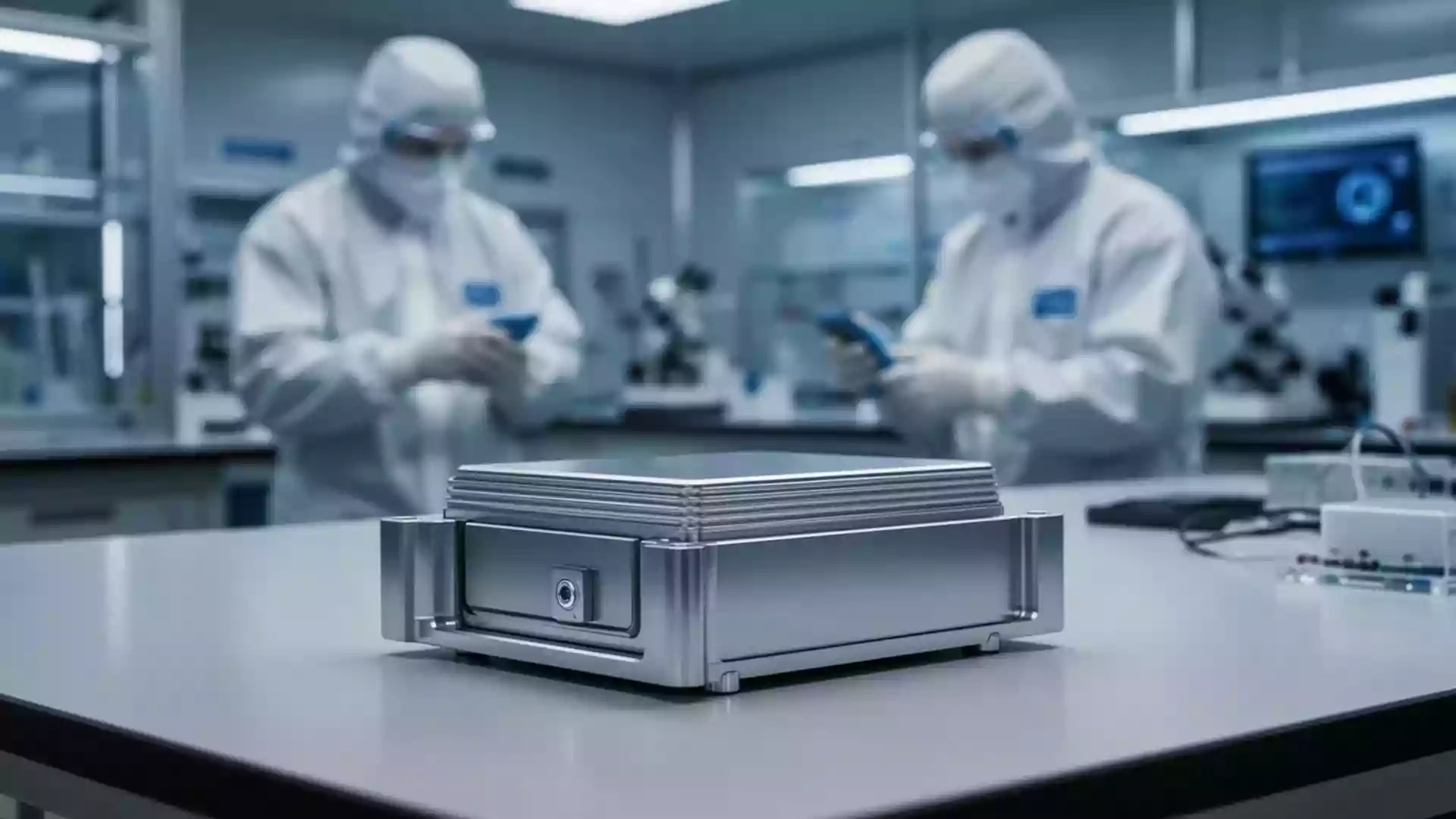
CATL has confirmed that Nio's Firefly will run its Qilin battery in a new 60-kWh pack, giving the compact EV a range of 560 kilometres on China's CLTC test cycle. The pack, which launched a day earlier, uses NCM cells rather than the LFP unit supplied by Sunwoda that has powered the Firefly until now. For the battery giant, the announcement is a tangible product-level marker of a partnership that has so far been mostly a piece of paper: the two companies signed a five-year strategic cooperation agreement in January.
What the confirmation does not carry is a number. No sales volume, revenue contribution or profit effect has been attached to the Firefly deployment, leaving investors to weigh a concrete customer project against the absence of any quantified financial impact.
Three Ways to Buy the Bigger Pack
Pricing details show how Ningde-based CATL and Nio intend to push the larger battery into the market. The Firefly with the new pack starts at 136,800 yuan outright. Under the BaaS battery-rental model, the vehicle itself begins at 79,800 yuan, with a monthly battery fee of 599 yuan on top.
The offer is not confined to new-car buyers. Existing owners can upgrade under certain conditions: outright purchasers pay 17,000 yuan after holding the car for at least a year, while current BaaS customers face a 3,000 yuan service fee before moving onto the higher monthly rental. That retrofit route pulls the installed base into the equation and widens the potential footprint of the Qilin cell inside the Firefly line-up.
Should investors sell immediately? Or is it worth buying CATL?
No Bet on a Single Chemistry
The Firefly deal fits CATL's parallel work across several battery technologies. Akin Li, head of international business, said it remains unclear which chemistry will dominate by 2035, noting that the company is developing LFP, NMC, sodium-ion and solid-state batteries side by side. Li also pointed to substantial hurdles in the commercial mass production of solid-state cells. The Firefly confirmation, by contrast, concerns technology already in service and a vehicle programme already on the road.
Buybacks Put Capital Behind the Story
Alongside the product news, CATL has been putting money to work in its own equity. The company bought back A-shares on Wednesday and Thursday for a combined roughly 1.299 billion RMB, with the shares acquired on Thursday earmarked for cancellation. The move followed a 7.8% gain on Wednesday, when the stock rode a broader recovery in Chinese battery and electric-vehicle names as investors returned to growth shares after a sell-off. That bounce was framed as a rebound from oversold conditions rather than a confirmed turning point — a friendlier tape can ease selling pressure without settling the underlying business questions.
A buyback is not a substitute for operating progress. It shows the company is willing to spend on its own stock; it does not by itself improve competitive standing or guarantee a lasting recovery. The distinction matters most after a sharp drawdown, when corporate demand for its own paper and the earning power of the business answer two different questions.
Revenue Outpaces Profit
Those questions have a hard backdrop in the third-quarter 2026 figures. Revenue climbed 58.58% while net profit attributable to shareholders rose 14.54% — the top line grew far faster than the bottom line. Reuters reported that profit growth fell short of analyst expectations, citing tougher competition in the battery market and slower growth in Chinese car sales. The larger trend, then, is not simply a story of rising demand; for CATL it is also about converting growth into earnings. Stronger business momentum can impress and still miss forecasts.
CATL at a turning point? This analysis reveals what investors need to know now.
Heavy Trucks and 2,000 Swap Stations
The longer-term answer is being sought in heavy trucks. On Tuesday the company unveiled a new battery generation and sketched the expansion of its QIJI battery-swap network, targeting 900 swap stations in China by the end of this year and 2,000 by 2027, according to Reuters. These are build-out goals, not stations already in place. Still, the step ties battery development to a widening swap infrastructure, pushing the industrial wager beyond any single product and giving investors a firmer yardstick than a single session's sentiment.
Read together, the pieces form a sober picture: a market backdrop explains the recent lift, the buybacks show concrete capital deployment, and the network plan describes where CATL wants to direct part of its development. The Firefly contract proves the company can convert partnerships into shipped product. Whether that combination turns into stronger earnings is a question neither the share-price jump nor the battery announcement answers on its own.
Ad
CATL Stock: New Analysis - 24 October
Fresh CATL information released. What's the impact for investors? Our latest independent report examines recent figures and market trends.