
Fatal Incidents and New Reports Spotlight Global Workplace Safety Gaps
Published on 08/14/2026 at 19:17 | Redaktion boerse-global.de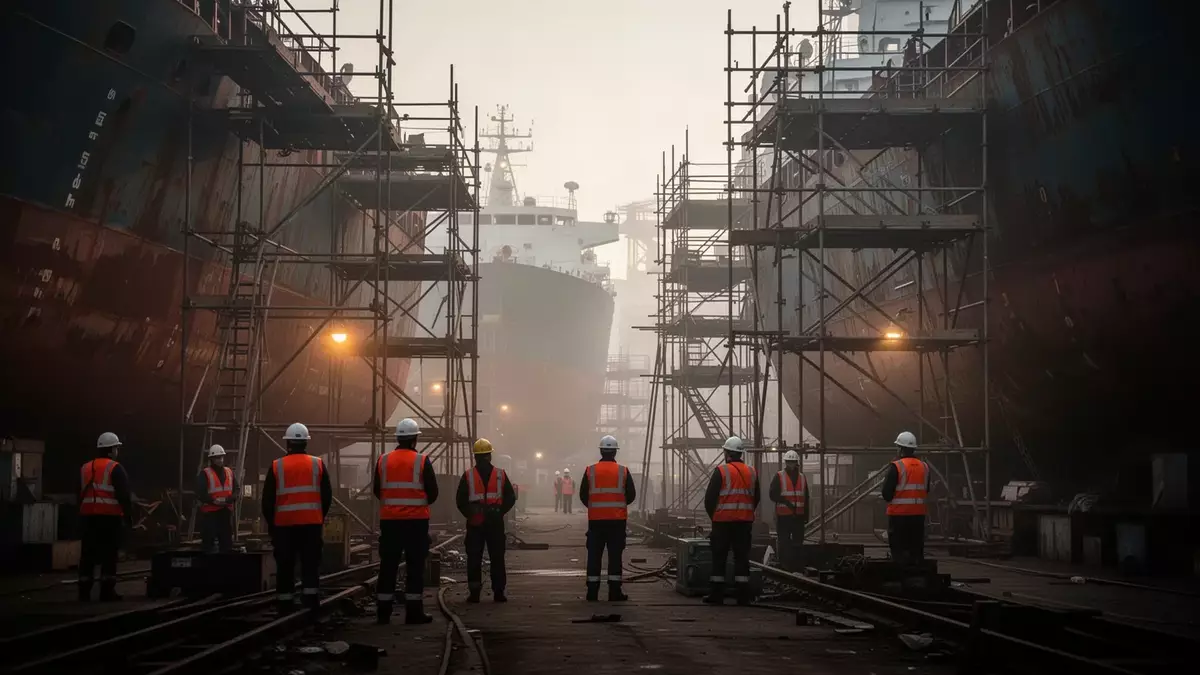
A cluster of fatal industrial accidents and major occupational safety reports released in mid-August 2026 have cast a sharp light on persistent dangers in high-risk sectors worldwide — from ship-breaking in South Asia to construction in the Middle East and chemical manufacturing in North America. For UK employers, the incidents serve as a stark reminder that robust safety protocols, rigorous gas testing and effective enforcement remain critical to protecting workers.
Nine Workers Die in Bangladesh Ship-Breaking Gas Leak
At least nine workers were killed on August 14, 2026, after being exposed to toxic gas at the Ferdous Steel ship-breaking yard in Sitakunda, Chattogram. The incident happened at around 9:00 am while workers were cutting an LNG carrier.
Local fire service officials suggested the tragedy resulted from a failure to make the ship's tanks gas-free before work began, releasing suspected toxins including fluorine, carbon monoxide and carbon dioxide.
Among the confirmed casualties were 22-year-old Sani Jaldas and 27-year-old Palash Jaldas, as well as brothers Mansur Ali, 40, and Nasir Uddin, 38. Several victims were declared dead on arrival at Chattogram Medical College Hospital, with additional bodies recovered from the site later that afternoon.
In response, the Bangladesh Ship Breakers and Recyclers Association formed a five-member committee, led by Captain Anam Chowdhury, to investigate the cause of the leak urgently. A representative for the factory owner said compensation would be provided in line with local laws.
Turkey Records 1,279 Worker Deaths in Seven Months
A report from the Workers' Health and Occupational Safety Assembly covering the first seven months of 2026 documented 1,279 worker deaths in Turkey. Monthly figures rose steadily through spring and summer, peaking at 228 fatalities in June before 214 were recorded in July.
The July data highlighted specific vulnerabilities, noting the deaths of 12 children, 11 women and 14 migrants. Construction remained the most hazardous sector, accounting for 58 fatalities, followed by agriculture with 45 and transport with 20.
Chemical Exposure and Respiratory Disease in North America
New findings from the U.S. Chemical Safety Board (CSB) detailed a fatal incident on April 22, 2026, at the Ames Goldsmith Catalyst Refiners facility in Institute, West Virginia.
The investigation revealed that workers were not required to wear respirators or use gas monitors during a decommissioning process that released hydrogen sulfide, resulting in two deaths and 18 injuries. The CSB noted that the facility lacked written disposal procedures and had not undergone an OSHA inspection since 2018.
Separately, medical researchers have identified growing epidemics of industrial respiratory disease. A study published in NEJM Evidence documented 592 cases of silicosis among quartz countertop workers in California between early 2019 and June 2026, leading to 31 deaths and 65 lung transplants.
A NIOSH study also reported that 32.5% of veteran underground coal miners in central Appalachia now test positive for black lung disease — the highest rate recorded since 1978.
Infrastructure, Enforcement and Offshore Concerns
Safety issues extended to public infrastructure and offshore operations in recent days:
- Kenya: An 11-year-old boy was killed on August 14, 2026, in Siaya County by a fallen power pole, an incident local reports linked to neglected grid maintenance. Similar fatalities occurred in Kakamega on August 12.
- Canada: The Ontario Ministry of Labour launched an investigation into a workplace fatality on August 5, 2026, at the Johnson Electric plant in Ancaster. Separately, the City of Prince Albert was ordered to pay approximately $130,000 in fines and surcharges following a July 2024 incident where concrete blocks fell on a worker.
- United States: OSHA updated its National Emphasis Program for warehouses on July 16, 2026, targeting high injury rates related to forklifts, material handling and heat stress.
- Offshore industry: The 2025 IMCA report indicated that while some safety metrics like lost-time injuries improved, total offshore fatalities doubled compared with previous periods, frequently caused by lifting equipment failures and falls from height.
Industry analysts observed that despite the adoption of environment, health, and safety (EHS) management software to centralize compliance, the Bureau of Labor Statistics still recorded nearly 2.5 million non-fatal industrial injuries in the private sector in recent annual tallies.


