Gold’s Balancing Act: Record Central Bank Buying Meets a Deeply Split Federal Reserve
Published on 07/31/2026 at 05:31 | Redaktion boerse-global.de
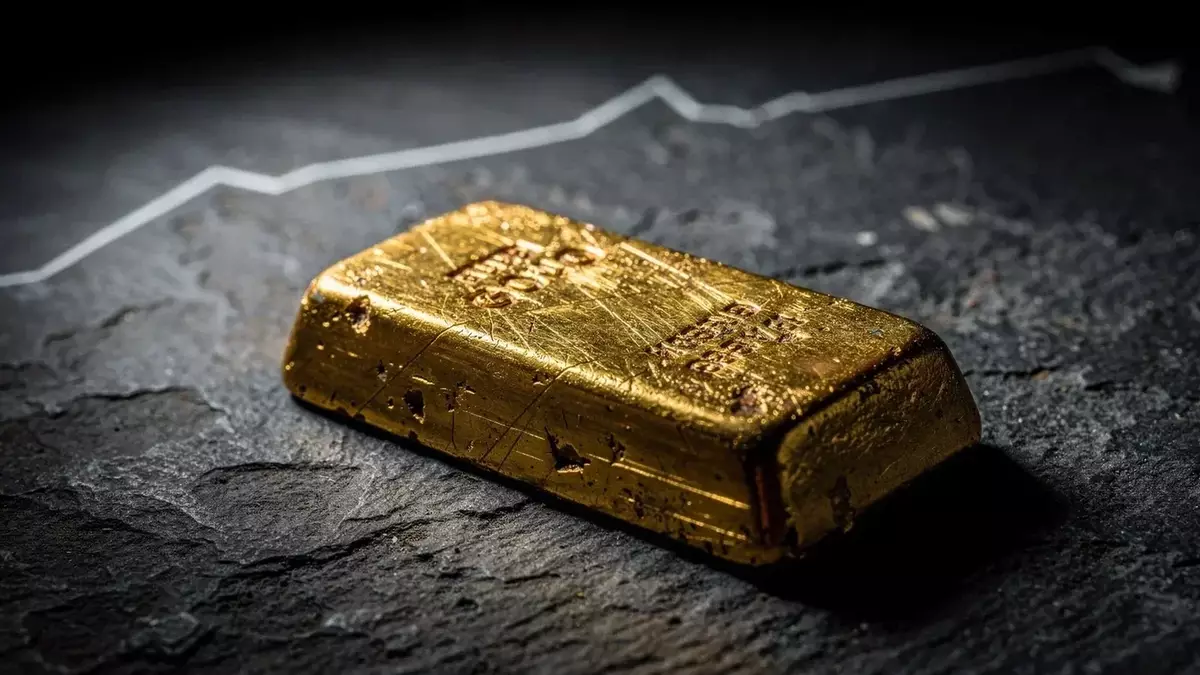
The gold market is being pulled in opposing directions, and the tension is visible in the price action. Bullion settled at $4,168.70 per ounce on Thursday, up 1.03 percent on the day and 2.79 percent higher on the week—a resilience that looks all the more striking given the headwinds stacked against the metal.
A Fed at Odds With Itself
The immediate catalyst for the latest leg higher was currency weakness rather than any fresh surge in physical demand. The US dollar index slid 0.90 percent following Wednesday’s Federal Reserve decision, with traders also pointing to suspected intervention by Japanese authorities as a contributing factor. A softer greenback makes dollar-denominated gold more affordable for overseas buyers, and the metal took full advantage.
The Fed’s policy statement, however, was anything but dovish. The central bank held its benchmark rate at 3.50 to 3.75 percent for a seventh consecutive month, but the 9-to-3 vote marked the first three-person dissent since 2016. Beth Hammack, Neel Kashkari and Lorie Logan all pushed for a quarter-point hike, while Chair Kevin Warsh reiterated that fighting inflation remains the top priority—though he stopped short of offering concrete forward guidance, a reticence some market observers read as a credibility problem.
The dissent is not merely symbolic. CME FedWatch data puts the odds of a September rate increase at roughly 55 to 59 percent ahead of the next meeting on September 15-16. Economist Ed Yardeni has warned that the Fed may need to raise short-term rates to bring long-term yields back under control, lest it face a crisis of confidence.
Should investors sell immediately? Or is it worth buying Gold?
That long end is already flashing warning signs. The 30-year Treasury yield climbed to nearly 5.23 percent—a 19-year high—which ordinarily raises the opportunity cost of holding a zero-yield asset like gold. Yet Thursday’s price action suggests the dollar’s slide is currently overpowering that yield pressure.
Central Banks: A Record With Caveats
Beneath the short-term trading dynamics lies a more complicated structural picture. The World Gold Council’s latest data shows central banks purchased 289 tonnes of gold in the second quarter of 2026—up 62 percent year-on-year and the strongest second-quarter figure on record. Poland added 51 tonnes to its reserves, while China increased its holdings by 33 tonnes.
But the headline masks a significant revision. First-quarter purchases were slashed from an originally reported 244 tonnes to just 57 tonnes, a 76 percent downward adjustment driven by sales from Turkey, Russia and Azerbaijan. Russia offloaded 22 tonnes, bringing its reserves down to 2,282 tonnes—the lowest level since late 2019—and making it the largest seller of the quarter.
The net result: first-half central bank buying totaled 345 tonnes, well below the 415 tonnes recorded in the same period last year and the weakest six-month showing since 2022. The World Gold Council now expects official-sector purchases to run below 2025 levels in the coming quarters.
Andrew Naylor of the World Gold Council nevertheless argues that central bank demand continues to underpin prices despite the pressure from elevated interest rates. A council survey found 89 percent of institutions expect global reserves to keep rising, with 45 percent planning to add to their own holdings.
A Demand Picture in Flux
The broader demand landscape remains uneven. Overall gold demand held nearly steady at 1,269 tonnes in the second quarter, with first-half volumes reaching 2,522 tonnes—up 2 percent year-on-year and worth a record $380 billion. That resilience came despite notable weakness elsewhere: gold ETFs saw net outflows of 45 tonnes, while jewelry demand slumped 17 percent to 278 tonnes, its weakest quarter since the pandemic.
Gold at a turning point? This analysis reveals what investors need to know now.
Geopolitics continues to provide an additional bid. President Trump declared that any agreement with Iran is "over" and threatened further strikes, with CENTCOM confirming large-scale airstrikes on dozens of military targets in southern Iran—reportedly twice the scale of a previous attack. Oil prices swung sharply in response, and while some sessions saw profit-taking in gold, the broader risk-off tone has kept a floor under the metal.
Chart Picture Remains Neutral
Technically, gold is still deep in consolidation territory. The metal sits 25.91 percent below its 52-week high of $5,626.80 from January 29, and the relative strength index at 53.8 points to a balanced market without clear directional conviction.
The path ahead hinges on the September Fed meeting. A rate hike would likely strengthen the dollar and pressure bullion, while the conflicting signals from central bank demand—record buying from some nations offset by selling from others—leave the sustainability of the gold rally open to question. For now, the metal appears content to hold its ground, caught between a hawkish Fed and the steady accumulation of reserves by the world’s monetary authorities.
Ad
Gold Stock: New Analysis - 31 July
Fresh Gold information released. What's the impact for investors? Our latest independent report examines recent figures and market trends.
Disclaimer regarding our articles: No investment advice, no buy or sell recommendation. Information on prices, companies, and markets is provided without guarantee; changes are possible at any time. Stock market transactions can lead to substantial losses. Our articles are created and reviewed in whole or in part automatically with the support of AI.