Gold's Dual Demand Engine: Central Banks and ETF Investors Converge at $4,087
Published on 07/30/2026 at 04:51 | Redaktion boerse-global.de
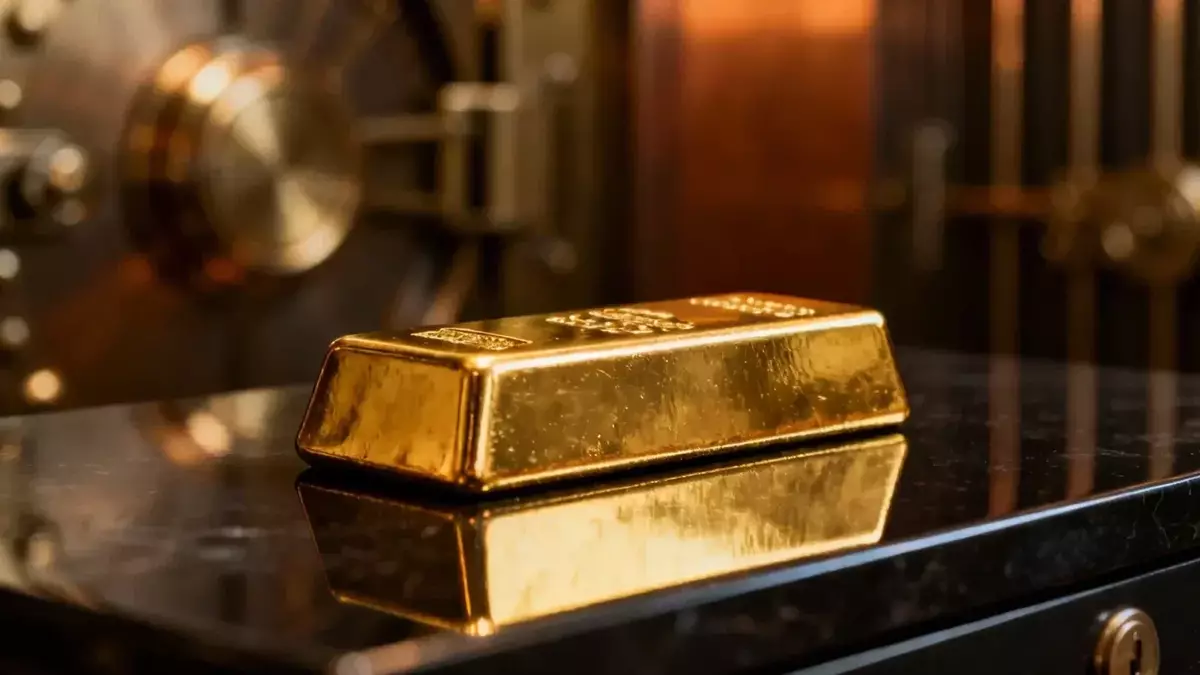
The narrative surrounding gold has shifted in recent days, with two distinct buying forces now operating in tandem to keep prices anchored above the psychologically critical $4,000 level. While central banks have been a steady source of demand for months, institutional investors—who had been conspicuously absent—are now returning to the market in force.
The SPDR Gold Shares, the world's largest gold-backed ETF, recorded an inflow of roughly $557 million on July 24, snapping a five-week streak of outflows. That single-day injection marks a clear inflection point, suggesting that large-scale investors view the current price zone as an attractive entry following the metal's retreat from its January highs. Gold touched above $5,500 per ounce earlier this year but now trades at $4,087.90, a 1.47 percent gain from the prior session. That still leaves a 27.35 percent gap to the 2025 peak.
Central Banks Remain the Steady Hand
While ETF flows have been volatile, central banks have maintained an unbroken buying rhythm. A study by the Official Monetary and Financial Institutions Forum (OMFIF) published July 28 found that 82 percent of surveyed central banks now hold physical gold, up sharply from 71 percent a year earlier. Roughly 51 percent of reserve managers cite geopolitical risk hedging as their primary motivation.
China's central bank has been the most conspicuous buyer, expanding its reserves for the 20th consecutive month. In June alone, the People's Bank of China added 480,000 fine ounces, bringing total holdings to 75.4 million fine ounces. Analysts at BMO Capital Markets suspect the actual figures may be significantly higher than officially reported. This consistent state-led purchasing effectively functions as a price floor, absorbing selling pressure that might otherwise drive gold significantly lower.
Should investors sell immediately? Or is it worth buying Gold?
The Fed Factor and Dollar Dynamics
The Federal Reserve held its benchmark rate steady at 3.5 to 3.75 percent on Wednesday evening, a decision the market had priced at 71 percent probability according to the FedWatch Tool. Chair Kevin Warsh reiterated the central bank's commitment to bringing inflation down to 2 percent.
That steady-as-she-goes posture has strengthened the dollar as a safe haven, particularly amid ongoing tensions with Iran. The greenback's resilience has capped gold's upside, even as geopolitical uncertainty would normally boost the metal. Commerzbank analysts led by Thu Lan Nguyen cut their year-end gold forecast from $4,800 to $4,500 on July 28, citing dollar strength as the primary headwind.
Technically, gold is consolidating well below its long-term trendline. The current price sits 27.35 percent below the year's high and nearly 10 percent below the 200-day moving average. The relative strength index stands at 48.1, a neutral reading that offers no directional bias.
Supply-Side Pressures Build
On the production front, global gold output reached a record 3,671.6 tonnes in 2025, though the year-over-year increase was a modest 0.6 percent despite elevated prices. Major producers like Newmont continue to beat earnings expectations, but rising energy and investment costs are squeezing margins.
The industry is responding with a strategic shift toward district-scale development rather than isolated single-mine projects. The Eureka Mining District in Nevada exemplifies this approach, where multiple deposits are being developed in parallel to share infrastructure and geological data costs.
Gold at a turning point? This analysis reveals what investors need to know now.
What Comes Next
The immediate catalyst for gold's next move will come from monetary policy decisions by the Bank of England and the Bank of Japan later this week, both of which are expected to inject short-term volatility. If Fed Chair Warsh strikes a hawkish tone, the dollar could strengthen further, potentially pushing gold back toward its support zone between $3,850 and $4,000. A more dovish signal, by contrast, would open the door to a test of $4,100.
For now, the tug-of-war between dollar strength and central bank buying has gold locked in a narrow range. The return of ETF inflows adds a new variable to that equation—one that could tip the balance if it proves sustained rather than fleeting.
Ad
Gold Stock: New Analysis - 30 July
Fresh Gold information released. What's the impact for investors? Our latest independent report examines recent figures and market trends.
Disclaimer regarding our articles: No investment advice, no buy or sell recommendation. Information on prices, companies, and markets is provided without guarantee; changes are possible at any time. Stock market transactions can lead to substantial losses. Our articles are created and reviewed in whole or in part automatically with the support of AI.