Infineon Wins the Data-Centre Power Mandate, Then Asks Investors to Trust the Cash
Published on 11/12/2026 at 06:22 | Editorial boerse-global.de
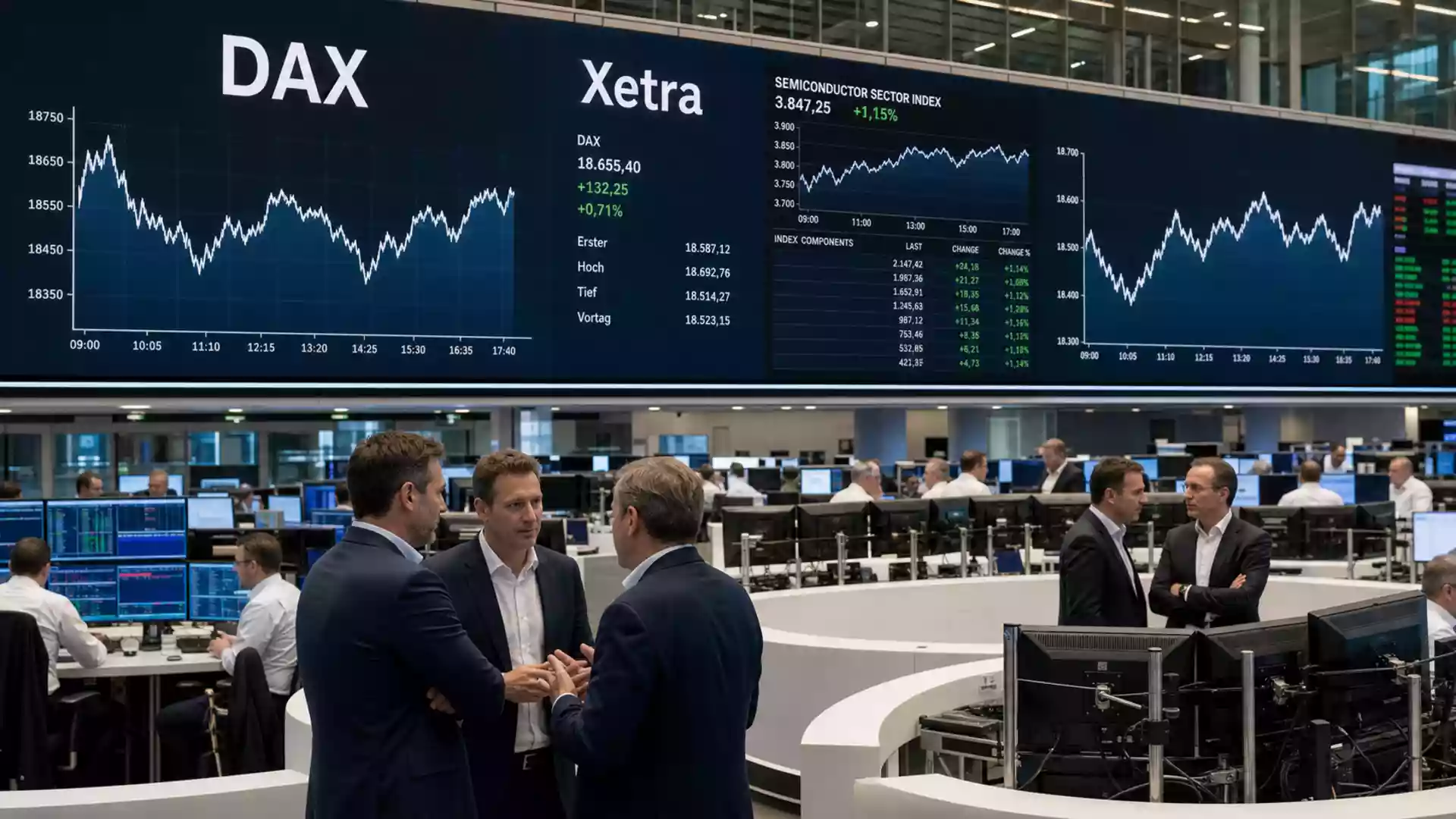
Infineon Technologies has spent the past two years positioning itself as the quiet enabler of the artificial-intelligence boom — not a maker of the processors that hog the headlines, but a supplier of the power semiconductors that keep data-centre racks fed and cooled. On Wednesday, the market finally rewarded that pitch. The stock climbed 6.0%, a move Reuters tied directly to strong quarterly figures and an upbeat outlook, with dpa-AFX noting that Infineon ranked among the DAX's gainers as lower oil prices and easing AI jitters lifted European equities more broadly.
The industrial logic behind the rally is straightforward enough. Infineon is building out silicon-carbide (SiC) and gallium-nitride (GaN) power devices for electricity distribution inside AI data centres, according to Nikkei. SiC power modules destined for semiconductor transformers are slated for mass production in 2026, while a bidirectional GaN power device is still in development. That pipeline — from lab to planned fab — is the real test of the technology story: the products have to prove themselves in industrial deployment before technical prowess turns into a durable business.
A €20 Billion Target, With Data Centres at the Core
Management's guidance for the 2027 fiscal year puts revenue at roughly €20 billion, implying growth of more than 20% and profitability 5 percentage points higher. Close to €4 billion of that total is expected to come from data-centre power supply alone — the demand driver dpa-AFX singled out as the force extending the rally beyond the earnings release.
The just-reported numbers give that ambition a foundation. In the fourth quarter of fiscal 2026, Infineon generated €4.71 billion in revenue, with segment result of €1.12 billion and a segment margin of 23.8%. Full-year fiscal 2026 revenue came in at €16.4 billion.
Investors also learned Tuesday that AI power-supply revenue is running at €1.7 billion for the 2025/26 fiscal year — more than double the prior year. That figure is the clearest evidence yet that the industrial thesis is converting into actual sales, provided Infineon can keep shipping reliably and manufacturing profitably.
Should investors sell immediately? Or is it worth buying Infineon?
Reservations Are Not the Same as Orders
The quality of demand deserves as much scrutiny as its quantity. On Tuesday's earnings call, management discussed capacity reservations — signed and still under negotiation — totalling more than €10 billion. Average terms run two to three years, and prices are not locked in. That makes the reservation book a signal of appetite rather than a guarantee of revenue: the ongoing talks must produce workable agreements, and the eventual pricing has to be economically attractive. Reservation volume, negotiation status and terms belong in the same analysis, because only their interplay determines what the demand is actually worth to Infineon.
Adding to the opacity, management said Tuesday it will stop disclosing a specific order-book figure, stating only that the backlog has continued to grow in qualitative terms. For valuation purposes, that shifts weight onto realised revenue and free cash flow, where execution can be tracked more concretely.
The Cash-Flow Tightrope
Discipline is the price of the buildout. Infineon guided for €3.0–3.5 billion of investment in fiscal 2026/27, alongside free cash flow of around €1.8 billion — or roughly €2.2 billion on an adjusted basis. The expansion is convincing only if the added capacity becomes productive and the expected cash materialises; utilisation, profitability and cash generation will decide the economic payoff of what is, by any measure, a substantial industrial commitment.
Analysts are split on how much of that promise is already in the price. Jefferies cut its target to €74 from €96 on Wednesday while keeping a Buy rating, with analyst Janardan Menon attributing the lower mark to the sector's recent de-rating and describing the company's outlook as potentially conservative.
Shareholder returns round out the picture. Infineon has announced a buyback of up to seven million shares, worth as much as €450 million, reserved exclusively for existing employee participation programmes and due to finish no later than 27 November 2026. For the annual general meeting scheduled for February 2027, the management board intends to propose a dividend of €0.38 per share.
Weighing it all, the operational opportunity looks larger than the risks — as long as Infineon turns its technical position into profitable deliveries. Manufacturing and the customer business must supply the proof, and that execution is the yardstick against which the company's AI narrative should be measured.
Ad
Infineon Stock: New Analysis - 12 November
Fresh Infineon information released. What's the impact for investors? Our latest independent report examines recent figures and market trends.