

Micron's Taichung HBM Line Fires Up as AI Demand Signals Steady the Stock
Published on 10/10/2026 at 18:31 | Editorial boerse-global.de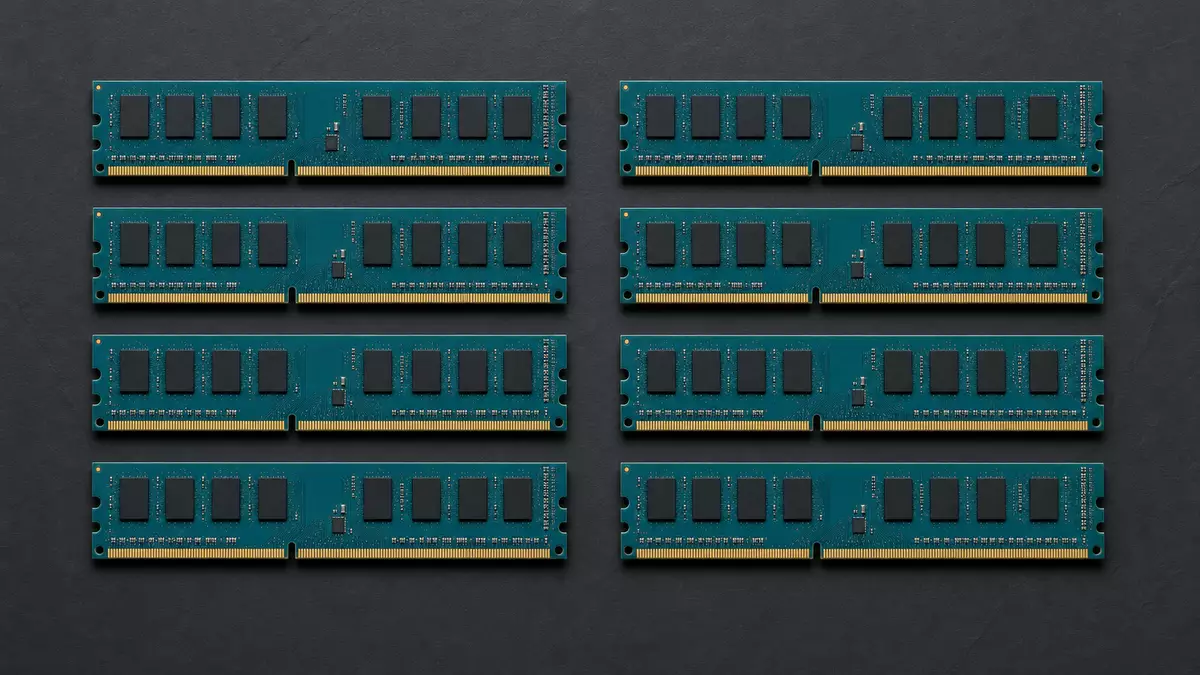
The most consequential bottleneck in artificial intelligence isn't written in code — it's etched into silicon inside climate-controlled cleanrooms. While investors fixate on software models and valuation fantasies, the physical supply of high-bandwidth memory (HBM) determines how fast the entire AI buildout can actually proceed. Micron Technology is betting billions that this hardware layer, not the algorithms, will set the pace.
That bet is now taking concrete shape in Taiwan. According to media reports, the company's Taiwan chairman, Donghui Lu, put Micron's cumulative investment on the island at NT$1.6 trillion through June — roughly $50.2 billion. The second advanced packaging fab at Taichung is scheduled to begin HBM production in mid-October, a milestone that directly addresses the supply constraint at the heart of modern AI server architecture.
Additional capacity won't arrive quickly. New lines in Taoyuan and Tongluo aren't expected to be operational until 2027 and 2028, leaving the market structurally tight in the interim. Micron itself anticipates that supply-side scarcity will intensify further across fiscal 2027 and 2028.
A Record Year, and a Bullish Guide
The numbers behind that expansion are striking. Micron closed fiscal 2026 with record revenue of $133.19 billion. For the fourth quarter alone, the company reported record sales of $54.23 billion and GAAP net income of $37.70 billion.
Management's outlook for the first quarter of fiscal 2027 points to revenue of $61.5 billion, with a variance of $1.5 billion — a range that brackets the $60 billion to $63 billion guidance cited elsewhere. CEO Sanjay Mehrotra has said memory market conditions in calendar 2027 and 2028 should be noticeably tighter than in the current year, with no rebalancing point yet in sight. The company has already raised contract prices for HBM for 2027, according to media reports.
Should investors sell immediately? Or is it worth buying Micron Technology?
Sentiment around the stock has been volatile, driven less by Micron's own results than by conflicting signals about AI spending. On Thursday, a report that OpenAI's annualized revenue was running at only about $50 billion rattled the sector; Micron shares fell 4.8% that day as traders worried about a pullback in high-performance memory orders. The following day brought a counterweight: Bloomberg reported that OpenAI expects annualized revenue of $70 billion or more by year-end, easing fears of an abrupt data-center spending freeze.
Micron stock ended Friday's European session at €919.60, a modest 0.4% decline. Since the start of the year, the shares have climbed 265%, though they sit roughly 17% below their 52-week high.
Labor Friction and Legal Clarity
Rapid expansion brings its own complications. At the Taoyuan site, union members voted 1,994 to 2,012 in favor of authorizing a strike, though no date for any walkout has been set — leaving the practical impact on output uncertain.
On the legal front, Micron cleared a longstanding patent dispute with Netlist through a settlement. The agreement covers a five-year license running from the fourth quarter of fiscal 2026 through the third quarter of fiscal 2031, at $30 million per quarter — a total of $600 million.
Shareholders also received a signal of confidence in the form of capital allocation. The board authorized expanding the share buyback program to as much as $35.16 billion, with repurchases permitted from December 9, 2026, subject to conditions tied to US subsidies.
The picture that emerges is of a company with fat margins, a sold-out product line, and a multi-year runway — one whose fortunes remain tightly bound to the investment cycles of the leading AI developers. The infrastructure for artificial intelligence is built over years, not quarters. And in this cycle, whoever controls the memory controls the tempo.
Ad
Micron Technology Stock: New Analysis - 10 October
Fresh Micron Technology information released. What's the impact for investors? Our latest independent report examines recent figures and market trends.


